
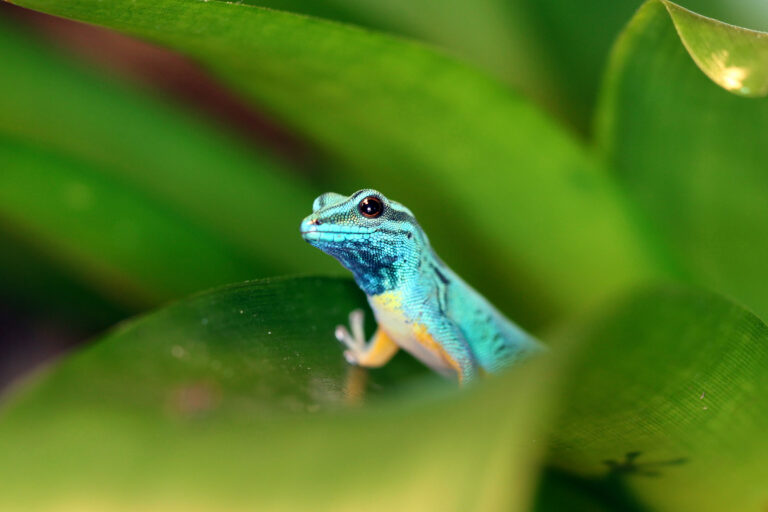
Williams electric blue day gecko is a small Tanzanian reptile whose recovery shows what focused conservation can do, reports Mongabay contributor, Manuel Fonseca. Once heavily collected for Europe’s pet trade, the species is now rebounding because pressure from trade has eased, captive breeding has reduced demand for wild animals, and local people are helping restore the forest it needs. The gecko (Lygodactylus williamsi) lives in only two small forest reserves in central Tanzania, Kimboza and Ruvu, and depends almost entirely on screwpines for shelter, food, basking and breeding. That dependence made it vulnerable. Collectors cut down screwpines to reach the geckos, and by 2009, researchers estimated that tens of thousands had been taken from the wild. The species was later listed as critically endangered, and international commercial trade was banned under CITES, the global wildlife trade convention, in 2017. The work on the ground has mattered just as much. In Kimboza, forest ecologist Charles Kilawe and people from surrounding villages have worked with rangers to remove invasive Spanish cedar, which had spread through the reserve and displaced native habitat. Since 2016, they have cut down nearly 100,000 cedar trees, reduced forest fires by around 80%, and planted about 5,000 native trees a year. Those efforts are helping the gecko’s population return toward earlier levels. They are also improving habitat for other wildlife, including blue monkeys (Cercopithecus mitis), white-chested alethes (Chamaetylas fuelleborni) and trumpeter hornbills (Bycanistes bucinator). For species with tiny ranges, conservation can be very specific work: Keep trade pressure…This article was originally published on Mongabay