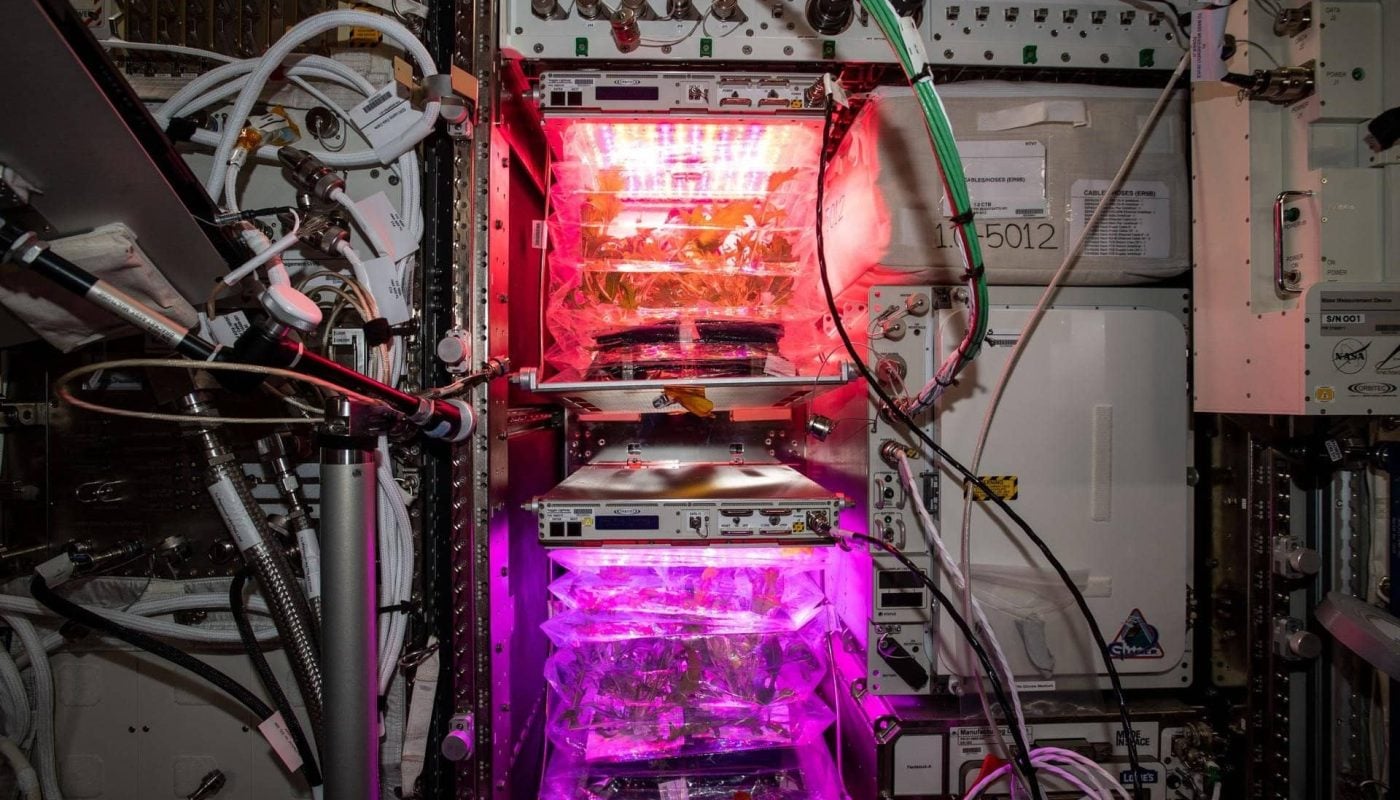
When astronauts explore the Moon, Mars, and other destinations far from Earth in the future, they will need to be as self-sufficient as possible. This is an absolute necessity, given that missions operating beyond Low Earth Orbit (LEO) cannot be resupplied within hours. This essentially means that deep-space exploration and outposts will need to produce enough air, water, food, propellant, and other necessities to see to their needs and keep the mission going.
Typically, this falls under the heading of In-Situ Resource Utilization (ISRU), in which local resources are harvested and used to produce building materials and necessities. Otherwise, astronauts need to bring what they need with them, including plants that remove carbon dioxide, produce oxygen, and even provide a source of plant-based protein. According to new research being conducted at the University of California San Diego (UCSD), bringing plants along on the journey could have the added benefit of producing medicines.
The research was led by engineers with the UCSD Aiiso Yufeng Li Family Department of Chemical and Nano Engineering. They were joined by researchers from the UCSD Center for Nano-ImmunoEngineering, the Shu and K.C. Chien and Peter Farrell Collaboratory, the Institute for Materials Discovery and Design, the Moores Cancer Center, the Center for Engineering in Cancer at the Institute of Engineering in Medicine, and more. The interdisciplinary team’s findings were published on June 5th in npj Science of Plants.
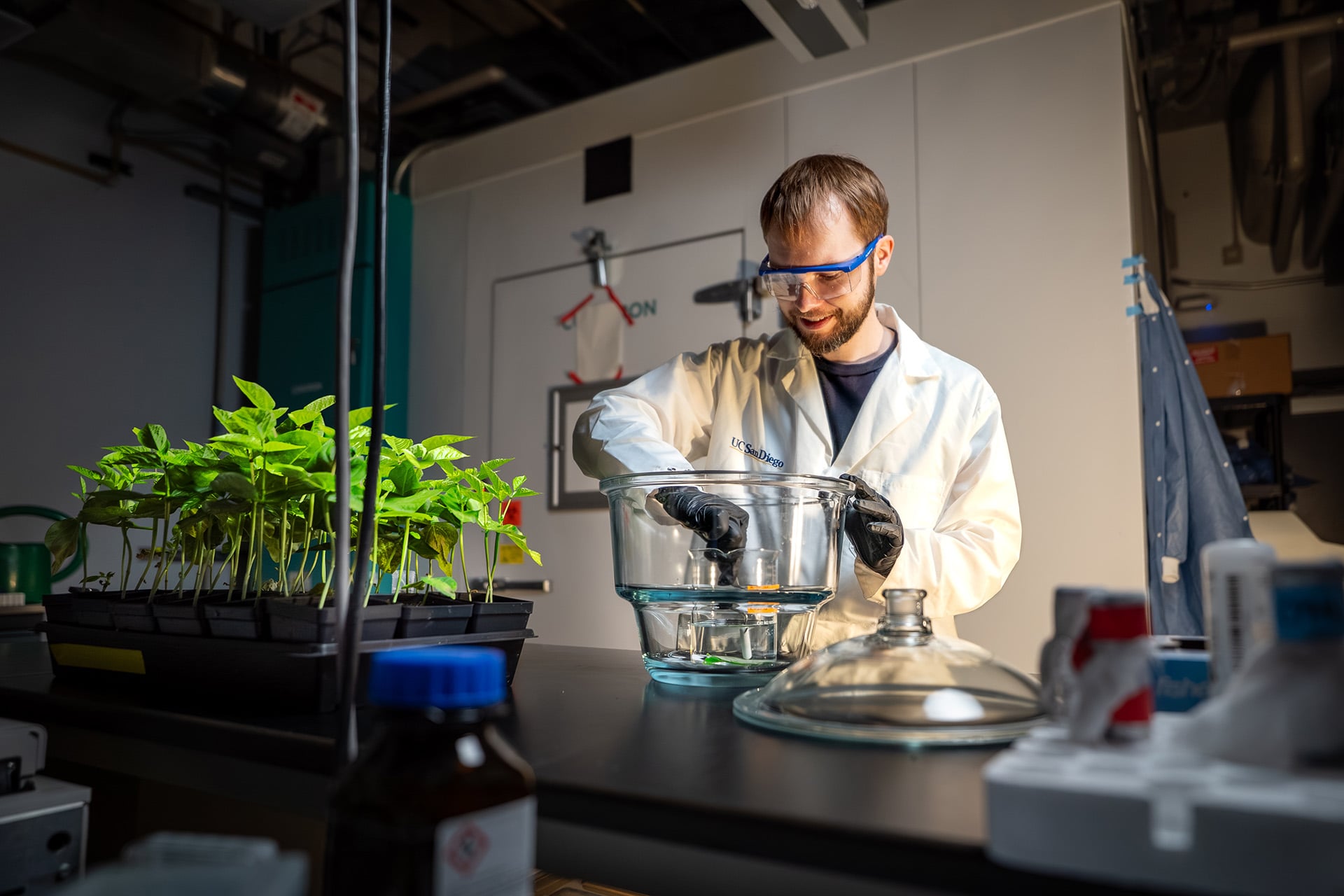 *Patrick Opdensteinen, a postdoctoral researcher at UC San Diego, begins a simplified process to harvest CPMV from a plant leaf. Credit: David Baillot/UCSD Jacobs School of Engineering*
In their paper, the team described a simple method for growing and repeatedly harvesting pharmaceuticals from plants in microgravity, without destroying the plants or generating large amounts of waste. For more than a decade, Steinmetz and her colleagues have been studying a plant virus called cowpea mosaic virus (CPMV). This virus is commonly known to infect legumes, but Steinmetz’s team was focused on its ability to stimulate the immune system to attack cancer cells.
In preclinical studies in mice and clinical studies in canine cancer patients, CPMV has proven effective in combating tumors. To demonstrate their method, Steinmetz’s team used Nicotiana benthamiana and black-eyed pea plants to manufacture CPMV. The next step is the extraction process, which typically involves picking the leaves and grinding them up. Patrick Opdensteinen, a postdoctoral researcher in Steinmetz’s lab and the first author on the paper, explained:
Growing the compound in these plants is simple. They can produce a whole lot of biomass in a short amount of time, and more biomass equals more product. The main difficulty now is figuring out how to get the product out of the plants. You end up with something that looks like a smoothie, and you can imagine getting your product out of that smoothie is challenging. The equipment that we use to do this fills our entire lab. You can’t fit all that on a spacecraft.
To simplify the process, the team turned to a pharmaceutical manufacturing approach known as product secretion. This technique relies on the chemical products of bacterial and mammalian cells, but can also be used with plants. In this case, chemical products are secreted into a compartment within the leaves called the apoplast, a network of interconnected spaces outside the plasma membrane.
The researchers found that they could extract CPMV from the apoplast while keeping the leaves intact by first submerging them in a buffer solution. They are then placed in a sealed vessel under vacuum, causing the apoplast to flood with fluid. Once the leaves are saturated, they are placed in vials and centrifuged at low speed to draw out the CPMV-rich liquid. This is then purified through a filter that separates the larger CPMB particles from the smaller and unusable bits of plant material.
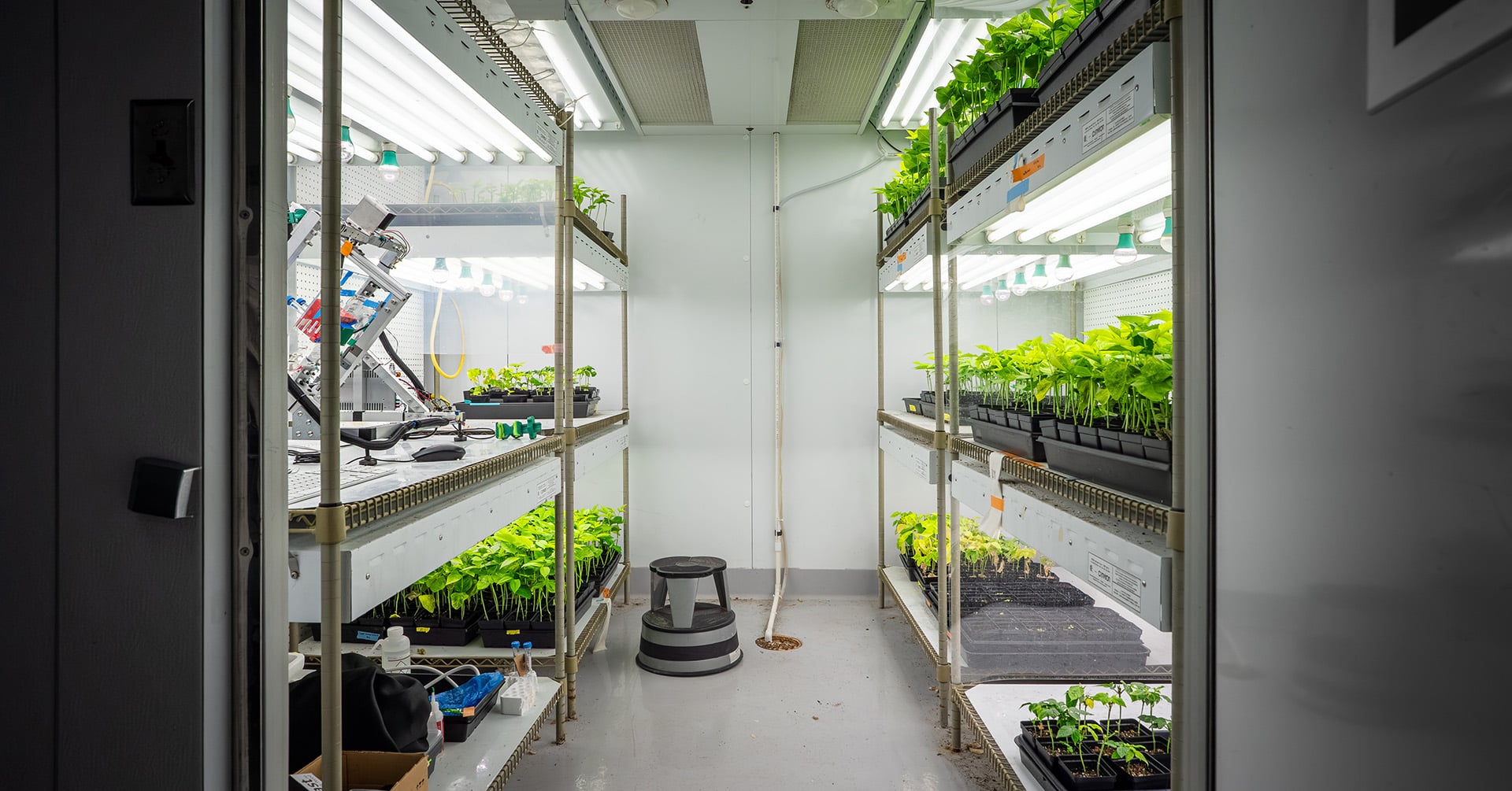 *CPMV is grown from plants in this chamber. Credit: David Baillot/UCSD Jacobs School of Engineering*
This extraction method offers many advantages over current pharmaceutical manufacturing systems, which require large tanks and sterile environments. And as noted, plants are already cultivated in space to provide nutrients and recycle air and water. The method is also easy to scale, as the researchers demonstrated by harvesting and purifying CPMV particles from more than 50 plants in under two hours. Because the leaves remain intact, the plants can continue to grow and could potentially be harvested again and again.
To simulate the microgravity environment of space, the team collaborated with Professor Maziar Ghazinejad and his lab technicians from the Department of Mechanical and Aerospace Engineering at UCSD. Ghazinejad and his colleagues created a custom-built random positioning machine that continuously rotated the plants to counteract gravity effectively. These machines are normally used to study how materials behave in microgravity, but Steinmetz and Ghazinejad saw an opportunity to adapt this approach for plant studies.
To complete the simulation, the plants were exposed to temperature fluctuations and oxidative stress that mimicked the effects of space radiation. This led to slight increases in CPMV production in some cases, which the researchers believe is linked to its nature as a plant virus. “Plants become more susceptible to disease when stressed, which is usually a disadvantage,” Opdensteinen said. “But since our product is derived from a plant virus, we can use that stress response to increase yields.”
This method addresses one of the most pressing needs for astronaut health and safety during long-term missions: the availability of potentially life-saving drugs. Spending extended periods in space, where astronauts are exposed to microgravity and elevated radiation, can take a serious toll on the human body. What’s more, missions aboard the International Space Station (ISS) have found that many drugs degrade more quickly in space, with more than half expiring within three years.
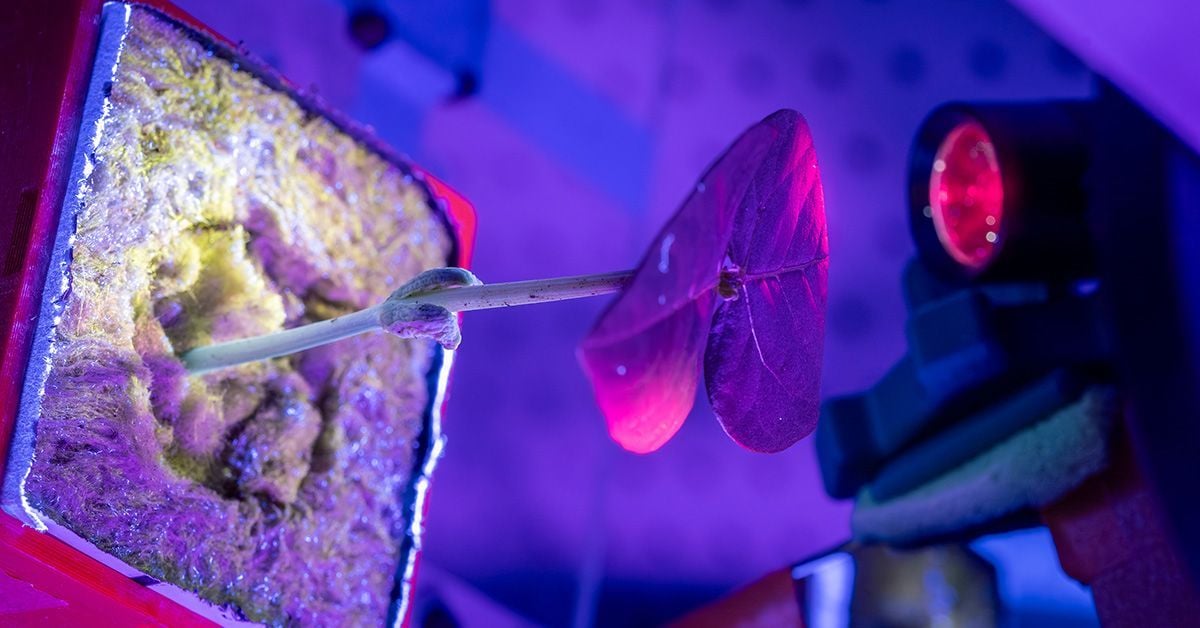 *UC San Diego engineers are growing plants in simulated space conditions to explore their potential for producing pharmaceuticals in space. Credit: David Baillot/UCSD Jacobs School of Engineering*
For missions bound for Mars, the time it takes to make a single transit (6 to 9 months) means that many of the life-saving medications they carry will be rendered ineffective before they come home. The transit time between Earth and Mars also makes resupply missions completely impractical. The team’s method exploits the fact that plants regularly generate useful compounds that can be used as medicine. This effectively makes them potential medicine factories that require very little resources and produce little waste – another plus when traveling far from home in a sealed spacecraft.
“With plants, you can grow complex therapeutic compounds using light, water and soil,” said Nicole Steinmetz, the Leo and Trude Szilard Chancellor’s Endowed Chair at UCSD’s Aiiso Yufeng Li Family Department of Chemical and Nano Engineering. In the meantime, the team will continue to study how conditions in space affect plant processes (e.g., water and nutrient uptake) in the hopes that their method will be tested on actual space missions in the near future.
They will also be working with the Rocket Propulsion Laboratory at UCSD to test how plant seeds and the genetic materials used in their process are affected by the stresses of being launched into space. In addition, they hope their method will lead to terrestrial applications, which could bring low-cost pharmaceutical production to resource-limited areas on Earth. For impoverished nations and communities, and those suffering disruptions from Climate Change, the ability to produce pharmaceuticals in-situ using plants could save countless lives!
Further Reading: UC San Diego Today