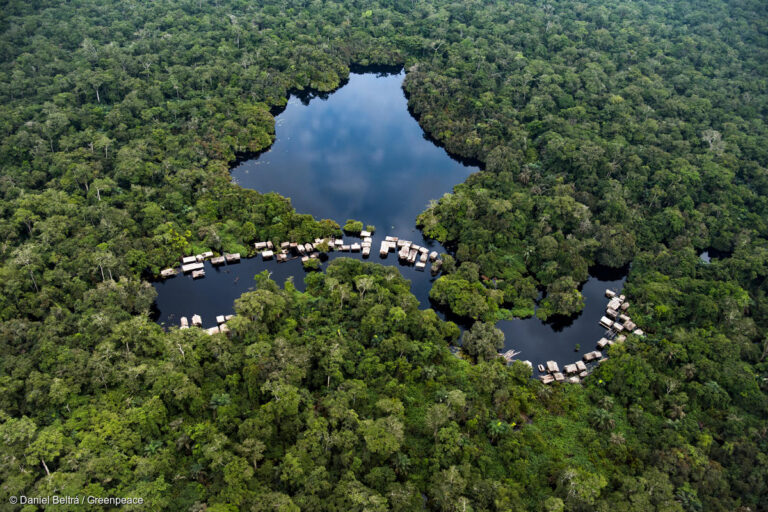
Peatlands are boggy wet ecosystems found from boreal forests in the Russian Arctic to the tropics of central Africa. Typically, when vegetation decomposes it releases carbon dioxide into the atmosphere. However, when that same organic matter falls in a bog and is covered with water, carbon gets trapped and becomes sequestered there, sometimes for millennia. This makes peatlands essential for the world’s carbon balance. Even though they cover just 3% of the Earth’s terrestrial surface, they store nearly a third of the world’s carbon. On this World Peatland Day, June 2, here’s a look at some of Mongabay’s recent peatland reporting: ‘Ancient’ carbon leaking from Congo Basin lakes The largest tropical peatland in the world, located in Africa’s Congo Basin, was only mapped about a decade ago. Scientists believe the Cuvette Centrale peatlands are roughly the size of England and hold some 30 billion metric tons of carbon. Researchers recently found some lakes in the Cuvette Centrale are slowly releasing ancient carbon. Using statistical modeling they estimated that much of the carbon being emitted locally is between 2,000 and 3,500 years old. “[I]t surprised us that almost half was coming from ancient peat carbon,” lead author of the study Travis Drake told Mongabay’s John Cannon. Scientists don’t yet know if the released carbon is a natural phenomenon or a result of something altering the system. Preserving Arctic peatlands with Indigenous knowledge In the frigid Arctic, melting permafrost from climate change is a big driver of carbon emissions from peatlands. Now,…This article was originally published on Mongabay