
Is solar development really eating up as much prime farmland as its opponents suggest?
The Solar Energy Industries Association (SEIA) doesn’t think so. SEIA launched an interactive map comparing solar development’s “limited farmland impact” to that of other major land uses, including suburban development and golf courses.
The new tool comes amid Farm Bill negotiations in Congress and growing scrutiny of solar development and agricultural land use. SEIA argues that the map shows that solar occupies a “remarkably small” share of America’s farmland, especially compared to “permanent land conversion driven by low-density suburban sprawl and recreational uses.”
SEIA found that solar currently uses 0.04% of total U.S. land area and 0.07% of U.S. farmland, and there are no states on the map in which solar uses more than 0.5% of prime farmland. Nearly every state has more abandoned prime farmland than solar-developed prime farmland – nationally, there are 43 acres of abandoned prime farmland for every acre of solar on prime farmland. Additionally, gold courses use 2.6 times more prime farmland than solar, and suburban development since 2014 uses six times more prime farmland than solar, per SEIA’s map.
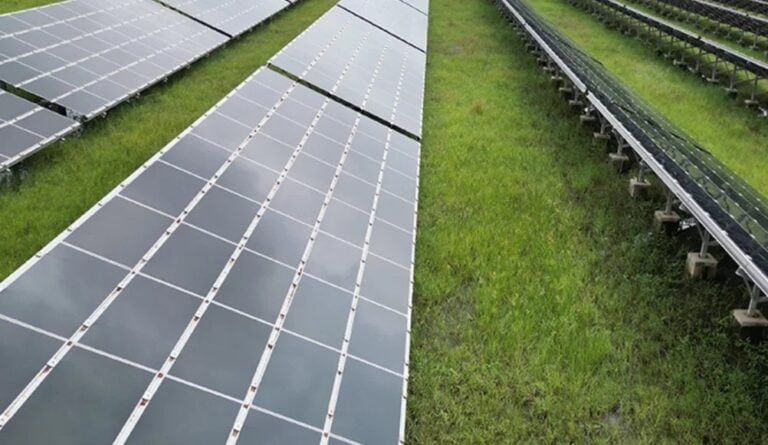
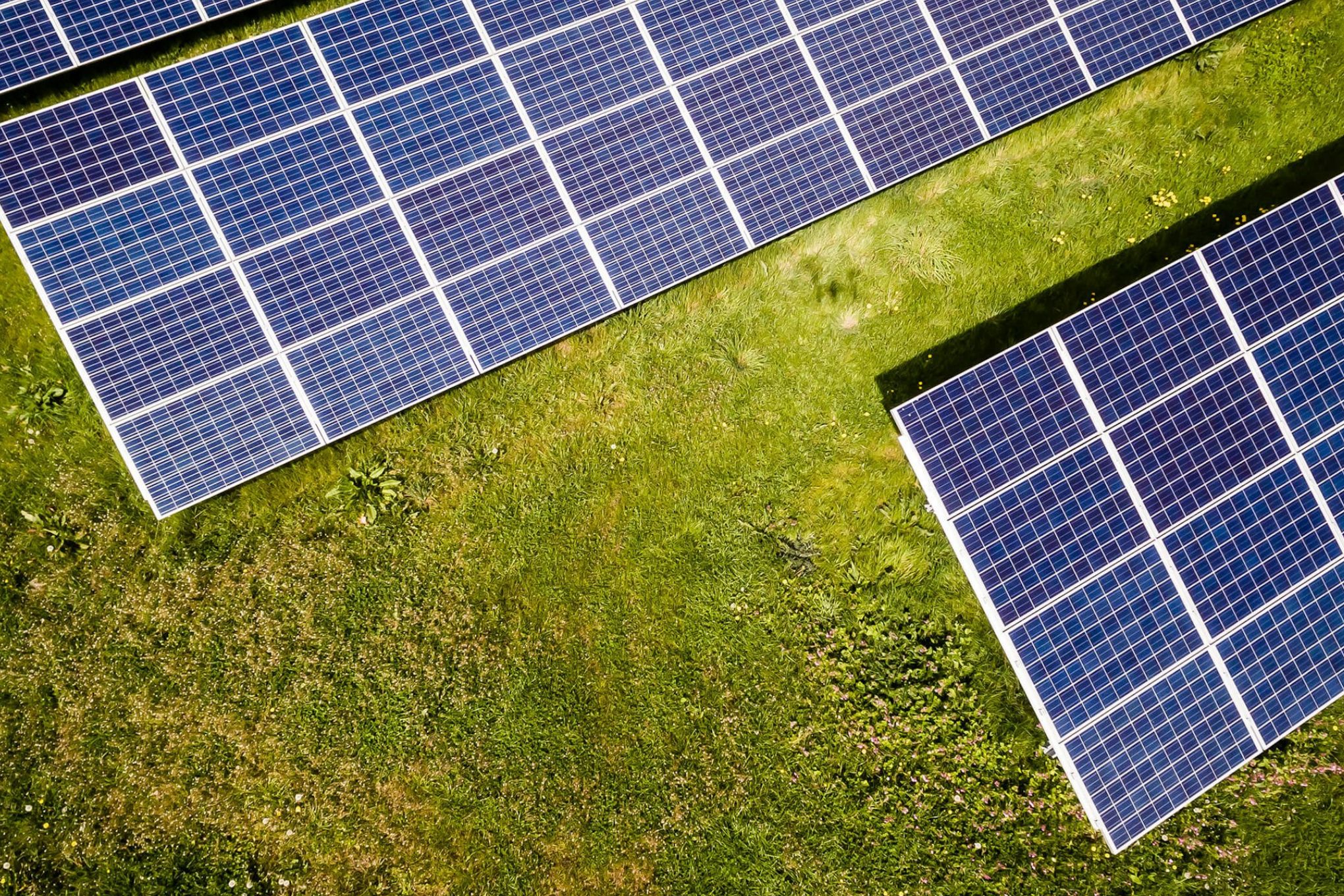
Across the country, many solar projects support dual-use agricultural practices such as grazing and pollinator habitats. SEIA argues that farmers and private landowners are choosing solar as a “stable, long-term source of revenue” that also provides electricity to their communities. The association added that unlike permanent suburban expansion, solar projects can be decommissioned at the end of their operating life.
“America depends on our land to grow our food, build our communities, and power our lives,” said SEIA president and CEO Tim Pawlenty. “Responsible land use means balancing all of those needs. This map helps provide important context by showing that solar and agriculture can thrive together. Solar development uses a very small amount of farmland compared to many other common land uses, while also delivering affordable energy, local tax revenue, and reliable income for farmers and landowners.”
GO DEEPER: Listen to Harvesting sunlight: Agrivoltaics is winning over middle America, a Factor This podcast hosted by Paul Gerke featuring Ethan Winter of the American Farmland Trust, BlueWave Energy’s Jesse Robertson-Dubois, and Ed Baptista of Doral Renewables.
Local opposition to solar has long been an obstacle for green energy developers. But some communities are working to reverse local restrictions, citing the tax benefits and jobs the projects bring and the lease payments from energy companies that can provide stable income to farmers in a volatile industry.
President Donald Trump’s hostility to green energy has battered the industry by wiping away subsidies, loans and tax incentives. But even before his return to the White House, local bans on renewable energy were becoming more common. A 2025 study from Columbia University found that from 2023 to 2024, there was a 16% increase in local laws across 44 states that restricted such projects.
Advocates for solar development on farmland point out that solar is much more efficient than ethanol, which is the end-use for more than 40% of total U.S. corn production, taking up up 30 million arable acres. t takes 31 acres of corn grown for ethanol to produce the same energy as a single acre of solar panels.
Recent polling suggests most farmers are open to large-scale solar projects on their properties if they can still produce crops or raise livestock around the infrastructure. Agrivoltaics, using land for both farming and solar energy generation, can serve as a middle ground, and these projects are becoming increasingly popular.
This article contains reporting from the Associated Press.