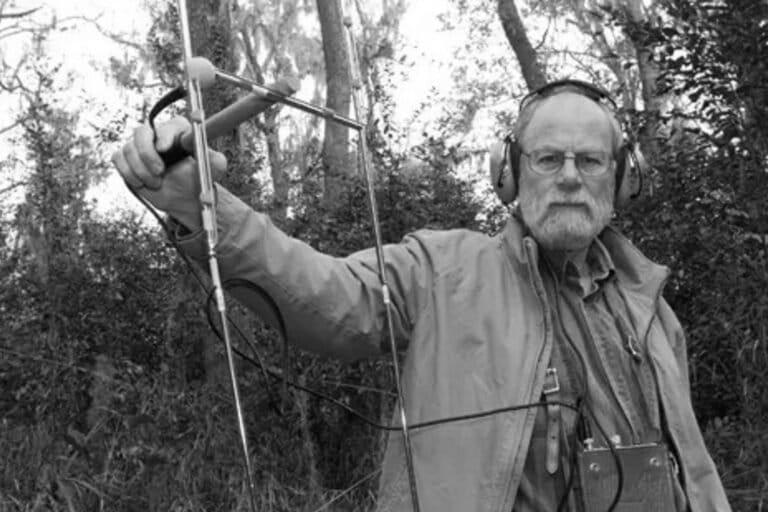
In the 1970s, studying wild tigers still involved more nerve than equipment. A biologist could not rely on camera traps, GPS collars, or satellite-linked data. To understand where a tiger went, what it killed, how far it ranged, and how its territory overlapped with others, someone had to follow it through forests and grasslands with a receiver, a notebook, and enough judgment to stay useful without getting in the way. Radio collars began to change what was possible. They made the movements of secretive carnivores traceable in a new way. For tigers, jaguars, pumas, ocelots, and other animals that were rarely seen directly, they allowed field biologists to replace guesses with records. The work still depended on patience, careful handling, and a capacity to keep thinking when weather, roads, animals, or people refused to cooperate. Mel Sunquist in India. Courtesy of Ullas Karanth Melvin Eugene Sunquist, who died on May 9th at the age of 85, belonged to that generation of field scientists. Born in Morris, Minnesota, in 1941, he became one of the leading biologists of wild cats and large carnivores. He worked in Asia, Latin America, Panama, and Florida, and spent much of his academic life at the University of Florida, where he taught wildlife ecology and conservation from 1987 until his retirement in 2014. To students and colleagues he was “Mel,” a name that suited his manner: steady, spare with words, dry in humor, and difficult to unsettle. Following tigers His best-known early work was on tigers…This article was originally published on Mongabay