
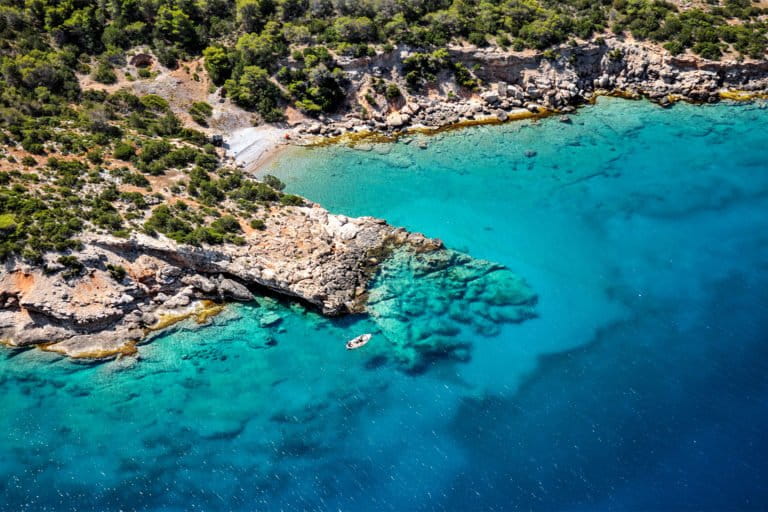
The Mediterranean Sea accounts for less than 1% of the world’s ocean surface water, but it contains roughly 18% of global marine biodiversity. It is home to 150 million people along its coastline (roughly equivalent to Russia’s population). And it sequesters 17.2 million metric tons of CO2 each year. Joining the Newscast this week to talk about the unique biodiversity of the Mediterranean Sea and its threats is journalist Manuela Callari. Callari has written for Mongabay, highlighting the threats to purple sea urchins (Paracentrotus lividus) along the Italian coast. These marine invertebrates are crucial to the health of marine ecosystems, such as those in the Mediterranean, by helping regulate algal abundance and serving as food for predators. However, they are being overfished and even poached in marine protected areas due to demand for them as the primary ingredient in a popular tourist dish: spaghetti ai ricci di mare. “In certain areas of Italy, like Puglia and Sicily, especially and Sardinia … ricci di mare are eaten either raw, or cooked with spaghetti … because [of] this, the sea urchins have been overfished. There are areas that where they don’t exist anymore,” Callari says. While the situation with urchins persists, Italy has been investing in an unprecedented effort to map its entire underwater coastline using deployed sensors to better understand the marine environment and manage conservation efforts. This is allowing them to identify where meadows of the seagrass Posidonia oceanica, which are “absolutely vital” to the Mediterranean ecosystem, persist, Callari says.…This article was originally published on Mongabay