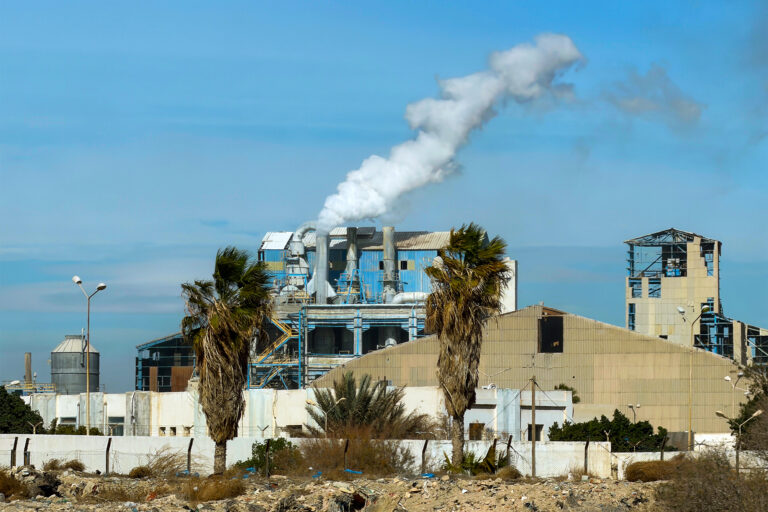
Dalila grew up in the Tunisian coastal city of Gabès and is accustomed to the heavy, acrid smell from the state-owned phosphate processing plant about a 10-minute walk from her home. On days when noxious fumes fill the air, Dalila rushes to tightly shut the windows and tells her children to hurry indoors. She washes them, believing it lessens harmful effects from chemicals. Emissions can last all day. Residents may get little or no advance warning. But one day in September 2025, children were at school when gases spread. Some students fell to the ground, complaining they had difficulty breathing. Others said they felt like they were suffocating. Dalila’s daughter said she felt like she was choking. Dalila rushed her to a government-run hospital. When she asked about test results or the type of substances that may have caused her difficulty breathing, Dalila said she did not get clear answers. The incident sickening the schoolchildren helped spark mass protests in the streets of Gabès, with people waving banners that read “Stop Pollution” and “Move The Plant.” It is not the first time that residents have protested water and air pollution from the factory. Dalila feels that she and others in Gabès are being ignored. They are far from alone. Fishermen report coastal waters were once abundant with fish, but, now, their nets come up empty. Scientific studies provide evidence that environmental damage poses a danger to the health of those living nearby. People take part in a demonstration against pollution…This article was originally published on Mongabay