
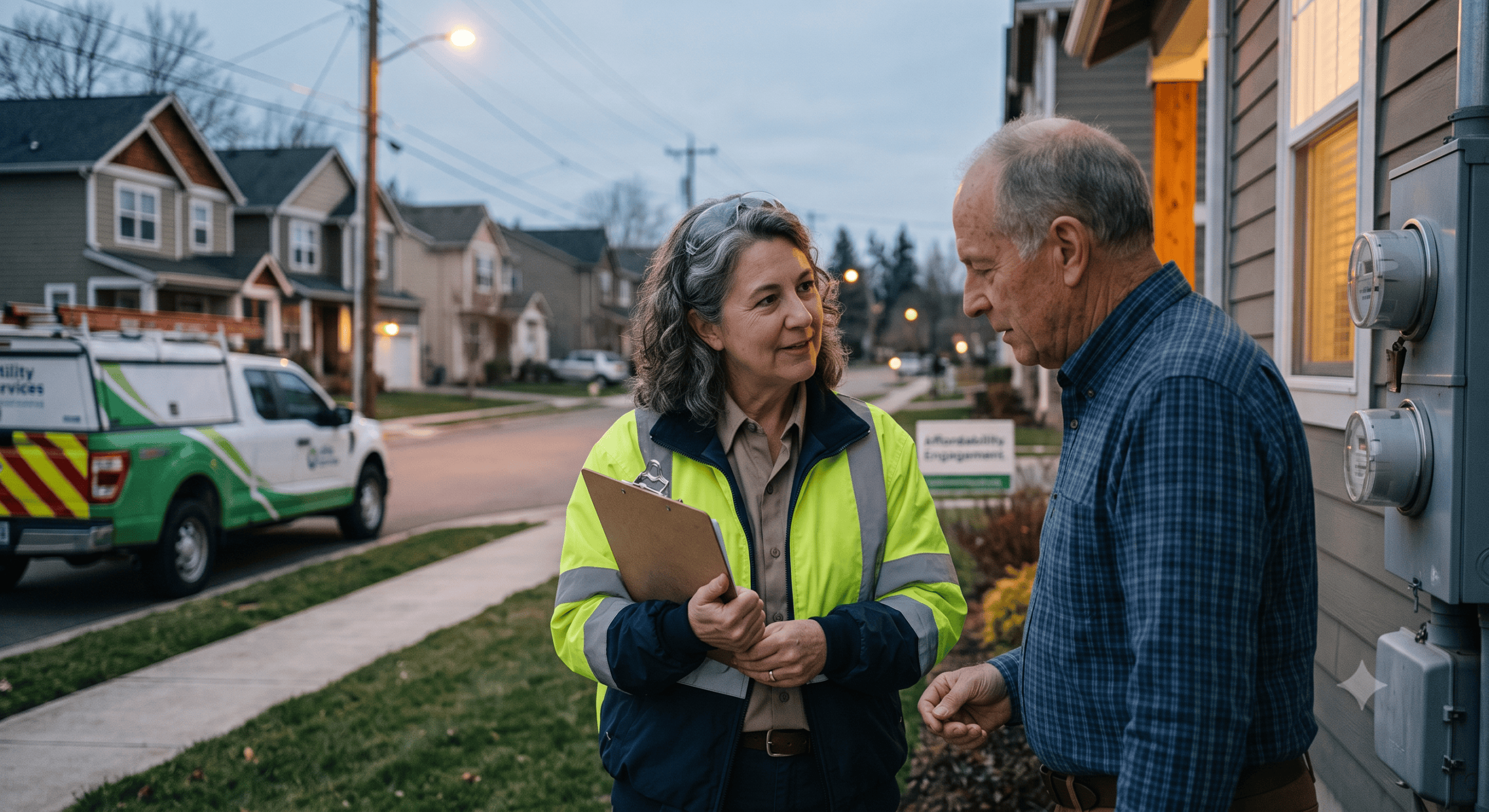

With the rising cost of just about everything continuing to make headlines across the United States, utility affordability has become and remains a top priority for industry leaders. However, keeping bills down isn’t just about rate design or cost cutting, but is directly tied to grid reliability. Consumers expect power to reliably be there every time they flip a switch, just as they expect predictable energy bills, but the frameworks for both are rapidly evolving.
What’s also changing is how maintaining that reliability is increasingly dependent on the customer side of the meter, which is being driven by everything from time-of-use rates to demand response to virtual power plants (VPPs). Connecting these affordability and reliability goals is a top priority across the sector, which is why they’ll be a primary focus of sessions and conversations all across DTECH Reliability & Resiliency, taking place August 25–27 in Chicago.
These shifting dynamics are issues that Nathan Shannon, President & CEO of the Smart Energy Consumer Collaborative (SECC), has seen firsthand. He’s talked about how customer satisfaction and engagement are no longer just talking points for congressional hearings or industry presentations but have instead become essential tools for maintaining grid stability. They’ll also be a key discussion point during his session at DTECH R&R.
During the Exploring Energy Affordability: Barriers and Opportunities session, Shannon will share findings from a nationwide survey of 4,000 Americans that examines whether consumers recognize bill increases, understand the drivers behind them, and feel equipped to manage their home energy use. The results are especially revealing, but what are some of the changes or developments that are driving this evolution?
“Load growth has created an environment where load flexibility and management, including residential VPPs, are significantly more important — essential even — for utilities,” Shannon said. “These programs have been driven by technological innovations and evolving customer expectations; however, load growth has created a new playing field for their importance.”
As we’ve previously detailed, a major strength of SECC’s longstanding DTECH partner event, now called Flexible Energy Forum, lies in initiatives designed to elevate consumer voices. The organization surveys 10,000 to 15,000 U.S. and Canadian utility customers each year to gather insights into their needs and preferences. What those customers are saying has evolved alongside utility understanding of those same realities. Aligning these perspectives is critical to clearing up misconceptions on both sides of the meter, especially as initiatives related to time-of-use rates and demand response become even more of a focus.
“Consumers need to not just be aware of these offerings, but also know how participation will directly impact them,” Shannon told Factor This. “With energy bills being such a concern for consumers, they need assurance that a time-of-use rate, for example, will actually save them money.”
This intersection of customer engagement and grid operations will be central to Shannon’s presentation and woven throughout DTECH Reliability & Resiliency. Attendees will leave with actionable strategies to translate these consumer insights into real-world grid support.
“We’ll highlight the impact rising bills are having on residential customers, both low-income and moderate-income, and look at which programs consumers are actually willing to join,” Shannon said. “Attendees will gain key insights into today’s affordability landscape, which has never been more relevant for grid reliability.”
Learn more about Exploring Energy Affordability: Barriers and Opportunities or register for the event.