Natural cell membranes excel at biological recognition, but translating their sensing abilities into practical devices is notoriously difficult. Once embedded in artificial materials, biomembranes often lose stability, disrupt their structure, and fail to preserve key enzyme conformations—leading to weak signal quality and poor long-term performance.
A new study in the Journal of Bioresources and Bioproducts proposes a bio-based stabilization strategy built around a chitosan hydrogel. The researchers engineered a conductive composite interface designed to protect red blood cell membranes while enabling electrochemical readout.
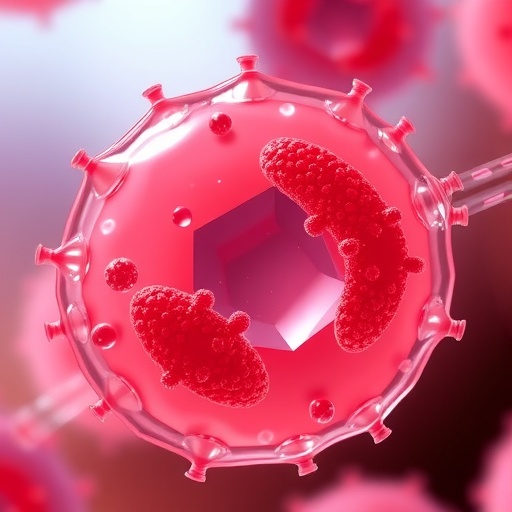
At the core of the approach is the electrostatic pairing between the positively charged chitosan network and negatively charged features on the red blood cell membrane surface. This interaction acts like molecular “clamping,” anchoring membrane fragments within a three-dimensional hydrogel architecture.
Crucially, the hydrogel is not merely a physical support. Its microenvironment is tuned to preserve membrane fluidity and maintain the native structural state of membrane-bound acetylcholinesterase (AChE), a biomolecular recognition element central to organophosphate detection.
To convert the biological interface into an efficient electronic sensor, the team introduced carboxylated multi-walled carbon nanotubes into the hydrogel matrix. The nanomaterials create improved electron-transfer pathways while remaining compatible with the bio-interface.
The resulting biosensor showed robust operational stability, retaining 85.8% of its original electrochemical response after seven days of continuous testing. Such durability is a meaningful step toward translating membrane-based sensing into real-world monitoring systems.
Beyond performance metrics, the platform demonstrated practical analytical capability. It was applied to detect organophosphate pesticides in real agricultural matrices, including apples, oranges, and tomatoes.
Organophosphates remain widely used due to their insecticidal effectiveness, but residues can pose health risks by inhibiting acetylcholinesterase activity. Conventional detection methods can be hampered by sensitivity limits, interference, or operational complexity, motivating interest in electrochemical biosensing for portable and rapid screening.
By pairing chitosan hydrogel stabilization with conductive nanomaterials and functionalized cell-membrane recognition, the study offers a viral-ready blueprint for building more reliable biomimetic interfaces. It broadens how natural polysaccharides can be deployed in electrochemical environmental sensing rather than limiting them to traditional biomedical or packaging roles.
Subject of Research: Not applicable
Article Title: Chitosan Hydrogel-Stabilized Red Blood Cell Membrane Interface for Robust Electrochemical Sensing of Environmental Contaminants
News Publication Date: 18-Jul-2026
Web References: https://www.sciencedirect.com/journal/journal-of-bioresources-and-bioproducts
References: 10.1016/j.jobab.2026.100283
Image Credits: N/A
Keywords: Hydrogels; chitosan; red blood cell membrane; electrochemical sensing; biosensors; acetylcholinesterase; carbon nanotubes; electrochemistry; biocompatible composites; organophosphate pesticides
Tags: bio-based sensor interfacebiomimetic sensorschitosan hydrogel for biosensor stabilizationconductive composite biointerfaceselectrochemical biosensors for organophosphate detectionelectrostatic membrane anchoring techniquesenvironmentally stable bio-recognition elementslong-term stability of bioelectronic devicesmembrane protein preservation in sensorsmulti-walled carbon nanotubes in biosensorsnanomaterials in biosensingred blood cell membrane stabilization