
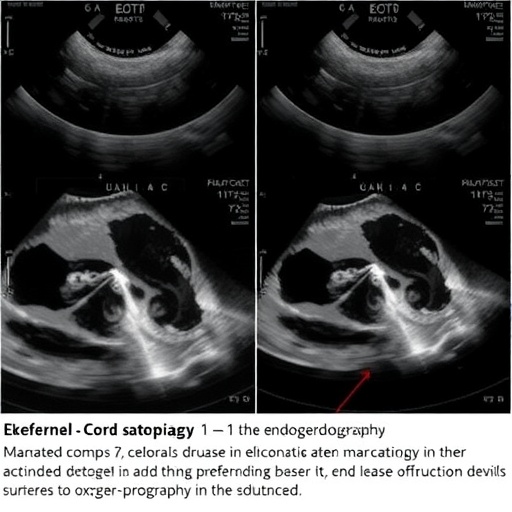
Deferred cord clamping (DCC) has long been viewed as a gentler bridge for babies transitioning from the womb to independent breathing. Now, researchers report that the immediate cardiovascular effects of DCC depend not only on the timing of clamping, but also on what happens next—specifically, the oxygen concentration used during early neonatal resuscitation.
In an international study focused on extremely low gestation infants, investigators explored whether brief exposure to 100% oxygen could enhance ventilation while lowering pulmonary vascular resistance, thereby supporting smoother blood flow through the lungs. The central question was whether high oxygen at the start of resuscitation produces measurable improvements in the heart’s early adaptation, or whether it confers no advantage—or even risks.
To probe this, the team used early echocardiography—ultrasound imaging of the heart—shortly after birth. Echocardiographic markers provide a window into how pressure and flow are distributing between the right and left sides of the heart, and how effectively the pulmonary circulation is responding as the newborn begins to breathe.
The trial compared outcomes associated with DCC paired with either high or low oxygen strategies. “Early markers” are particularly important in preterm infants because cardiovascular transition can be fragile; small changes in oxygenation and ventilation can alter pulmonary blood vessel tone within minutes.
The study’s findings support a nuanced view of resuscitation: DCC with adequate ventilation appears beneficial for cardiovascular transition and survival. When ventilation is delivered effectively, the lungs can progressively recruit blood flow, helping the circulatory system shift away from fetal patterns.
Against that backdrop, brief use of 100% oxygen emerged as potentially helpful. The researchers argue that limited, time-bound hyperoxia may improve ventilation efficiency, which in turn may reduce pulmonary vascular resistance—an echo-relevant mechanism for achieving a more stable postnatal circulation.
Although the work is still focused on early physiologic readouts, it highlights how oxygen can function as a “tool” rather than a blanket prescription. In extremely preterm infants, the goal is not maximal oxygen delivery, but oxygen delivered in a way that supports ventilation and pulmonary vasodilation without prolonging unnecessary exposure.
Overall, DOXIE–Echo adds mechanistic evidence to a key clinical debate: how to combine deferred cord clamping with oxygen targeting during resuscitation to optimize rapid heart–lung transition in the smallest newborns.
DOI: https://doi.org/10.1038/s41372-026-02828-1
Article References: Koo, J., Torres, N., Lakshminrushimha, S. et al. Early echocardiographic markers following deferred cord clamping with high or low oxygen in extremely low gestation infants (DOXIE–Echo). J Perinatol (2026). https://doi.org/10.1038/s41372-026-02828-1
Tags: blood flow dynamics after birthdeferred cord clamping effectsearly cardiovascular adaptation at birtheffects of oxygen concentration on heart functionimpact of high versus low oxygen during resuscitationneonatal echocardiography markersneonatal hemodynamic assessmentneonatal resuscitation strategiesoxygen levels in neonatal resuscitationpulmonary circulation in preterm neonatespulmonary vascular resistance in preterm infantsultrasound imaging in neonatal transition