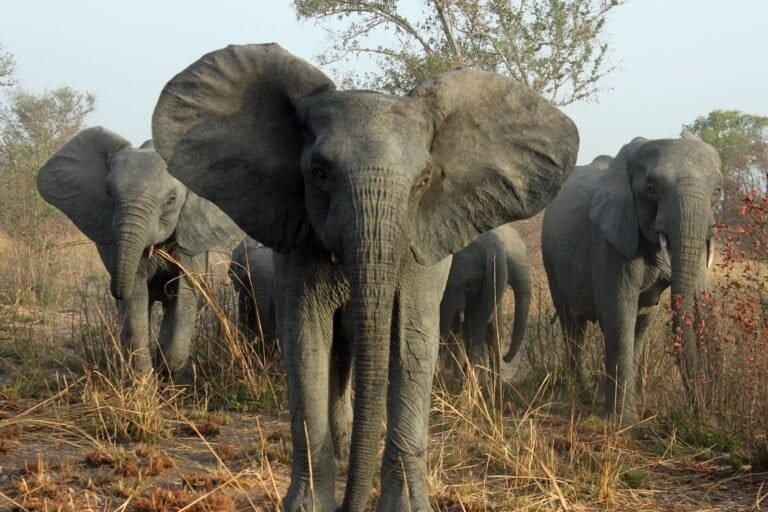
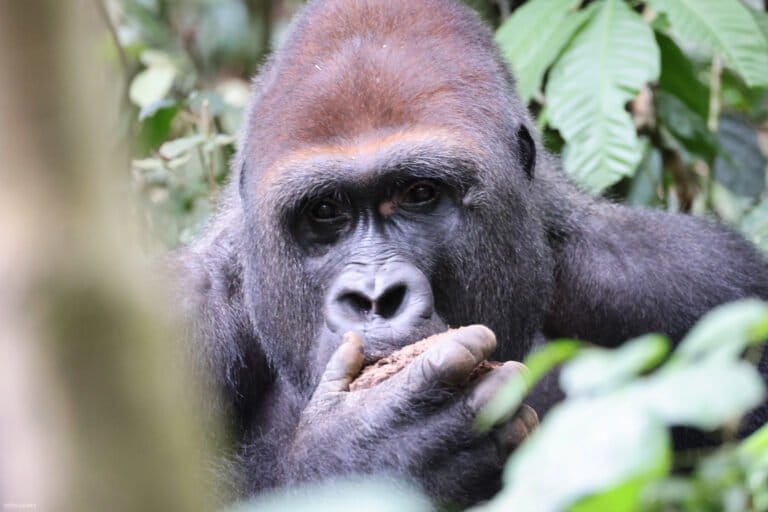
Founder’s Briefs: An occasional series where Mongabay founder Rhett Ayers Butler shares analysis, perspectives and story summaries. In the Central African Republic, a country often seen mainly through the lens of instability, a different story is unfolding in its southwest. In March, Mongabay Africa program director David Akana and I spent time in and around Dzanga-Sangha National Park, speaking with researchers, conservationists, community members, and park officials. What we heard was not quite reflected in the usual narrative. Bayanga, the town at the park’s edge, has seen a modest rise in visitors. Dzanga Bai, where forest elephants gather in high densities within the park, and a population of habituated lowland gorillas, remain the main draws. According to local officials, around 800 tourists visited in 2025, a small figure by global standards, but meaningful locally. “There is growth,” said Gervais Pamongui, a deputy director of the Dzanga-Sangha Protected Areas. He attributed this to both the site itself and a degree of stability that has held in the region. Others made similar points, though often with caveats. A tour guide, Léonce Madomi, described the country’s reputation for insecurity as “both true and false,” noting that Bayanga has largely avoided the disruptions seen elsewhere. Lodges report steadier business. Guides and trackers have more consistent work. Some residents point to income that supports school fees or medical care. Yet the gains are uneven and limited in scale. Tourism employs a narrow slice of the population, and basic constraints remain, from poor roads to food…This article was originally published on Mongabay