
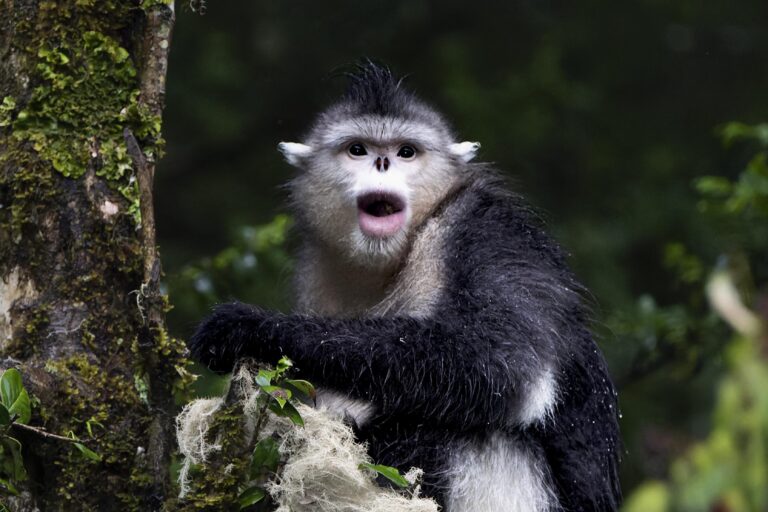
As biodiversity on Earth faces rapid decline, scientists are advocating for a new conservation approach: Save habitat for primates and protect countless other species along with them. For long, conservation efforts and funding have prioritized umbrella species such as tigers and giant pandas on the basis that protecting the vast areas they depend on can help protect other wildlife that live in the same ecosystems. A 2025 study found that monkeys, apes and other charismatic primates are potential “umbrella species” as well. They, too, often require large tracts of healthy habitat to survive. And by safeguarding the vast territories these animals need, countless other wildlife that share their ecosystem would also be protected, researchers say. The researchers analyzed the habitats of 16 primate species across China’s biodiverse Yunnan province. They also examined the ranges of 601 species of threatened and endemic mammals, amphibians, birds and reptiles, as well as 4,010 species of seed plants found in Yunnan. Their analysis showed that if just 30% of Yunnan were designated a primate conservation priority area, 86% of the animals and 72% of the seed plants would have about a third of their habitats protected. Protecting that area would also protect for more than half of the provinces’ annual carbon storage, the study found. Conservation groups elsewhere, too, have advocated for protecting the habitats of charismatic primate species as a way to extend protection to several other species. For example, the nonprofit Rainforest Trust has sought to protect habitats of the critically endangered…This article was originally published on Mongabay