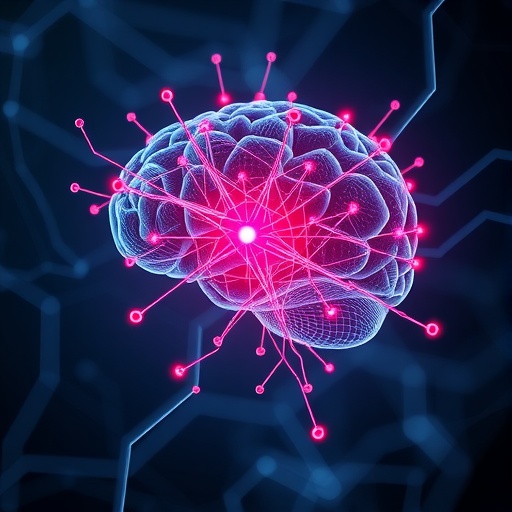
The artificial intelligence boom has an energy problem. Every question sent to ChatGPT, every image generated by an AI system and every recommendation produced by a large model depends on data centers packed with power-hungry processors. As demand for generative AI accelerates, researchers are searching for computing technologies that can deliver advanced intelligence without reproducing the enormous energy costs of conventional systems. One of the most promising approaches is neuromorphic computing, which attempts to imitate the way the human brain processes information.
A research team led by Senior Researcher Seongsik Park of the Semiconductor Technology Research Division at the Korea Institute of Science and Technology (KIST) has developed a learning technique designed to make neuromorphic artificial intelligence more accurate and more efficient. Called A²SG, or Adaptive and Asymmetric Surrogate Gradients, the method improves the training of spiking neural networks, a class of AI models inspired by the brain’s sparse, event-driven communication system. The research was accepted as a regular paper at the International Conference on Machine Learning, or ICML 2026, and presented on July 7 at the conference in Seoul, the first time the event has been held in South Korea.
Unlike conventional artificial neural networks, which continuously exchange numerical values, spiking neural networks communicate through brief electrical-like events known as spikes. Neurons remain largely inactive until incoming signals reach a threshold, allowing the system to process information only when necessary. This event-driven operation can dramatically reduce energy consumption, particularly in applications where data arrive intermittently, such as cameras, wearable sensors, drones and other edge devices. Yet the same biological realism that gives spiking networks their efficiency has made them difficult to train.
Modern deep learning systems generally improve by calculating gradients. These mathematical signals indicate how much each parameter in a network contributed to an error and in which direction the parameter should be adjusted. The process, known as backpropagation, allows a model to refine itself over millions or billions of training examples. Spiking neurons, however, produce abrupt, discontinuous spikes rather than smooth numerical outputs. Because a tiny change in an input may not immediately alter whether a neuron fires, the exact gradient can become zero or undefined, preventing conventional optimization methods from effectively updating the network.
To overcome this obstacle, researchers use substitute functions called surrogate gradients. These functions approximate the missing gradient around a neuron’s firing threshold, making it possible to apply gradient-based learning to spiking models. The KIST team’s A²SG method advances this strategy in two directions. Its adaptive component changes the gradient behavior according to the circumstances of training, while its asymmetric component reflects the fact that biological neurons do not respond identically on either side of their activation threshold. Together, the two mechanisms provide a more informative learning signal than a fixed, conventional surrogate gradient.
The team applied A²SG to a large-scale spiking neural network based on the transformer architecture, the influential design that underpins systems such as ChatGPT and many modern vision and language models. In large-scale ImageNet image-recognition experiments, the approach achieved what KIST described as world-leading accuracy among spiking neural networks. The result is important because ImageNet is widely used as a demanding benchmark for visual recognition, and performance at this scale can reveal whether a method is suitable for models far larger and more complex than laboratory prototypes.
The reported gains were not limited to accuracy. According to the research team, A²SG required approximately one-sixth of the computational overhead associated with Google’s leading training method while delivering better recognition performance. The method also produced consistent improvements across a broad range of network architectures and applications, from relatively small models to large transformer-based systems. That versatility could be crucial for neuromorphic AI, since a training technique that works only for one specialized architecture would have limited practical value.
The significance of the work extends beyond software benchmarks. Because A²SG can be implemented without changing the underlying hardware, it could potentially be deployed on existing systems before specialized neuromorphic processors become widely available. Its low-power advantages could support on-device AI in smartphones, smartwatches, medical wearables and autonomous drones, where sending data continuously to a distant data center is costly, slow or impractical. The same principle could benefit smart sensors that must operate continuously while powered by small batteries or harvested energy.
KIST researchers say the technology may also help South Korea strengthen its position in AI semiconductor development. The institute plans to continue training and validating large-scale models and to connect the learning algorithm with neuromorphic hardware under development. Future work will include applying the method to next-generation processors such as the probability-based Random Processing Unit, or RPU, being developed at KIST. If those efforts succeed, the combination of efficient algorithms and specialized chips could create AI systems that respond locally, consume far less electricity and reduce dependence on centralized computing infrastructure.
Park said the research addresses structural limitations that have slowed progress in neuromorphic AI and expands the prospects for practical low-power intelligence. The broader challenge is now to demonstrate that these gains can survive the transition from controlled benchmarks to real-world devices, where latency, reliability, memory capacity and hardware variability all matter. Still, by narrowing the performance gap between brain-inspired spiking networks and conventional deep learning while reducing training costs, A²SG offers a striking glimpse of how the next generation of AI could become both more capable and less energy-intensive.
Subject of Research: Low-power neuromorphic artificial intelligence, spiking neural networks and surrogate-gradient learning.
Article Title: A²SG: Adaptive and Asymmetric Surrogate Gradients for Training Deep Spiking Neural Networks
News Publication Date: 7-Jul-2026
Web References: https://doi.org/10.48550/arXiv.2606.11236
References: A²SG research paper, arXiv:2606.11236; Proceedings of the International Conference on Machine Learning (ICML 2026).
Image Credits: Korea Institute of Science and Technology (KIST)
Keywords
Neuromorphic computing, spiking neural networks, artificial intelligence, surrogate gradients, low-power AI, AI semiconductors, transformer networks, ImageNet, KIST, A²SG
Tags: adaptive surrogate gradient learningbrain-inspired computing technologiesbrain-mimicking hardwareenergy-efficient artificial intelligenceevent-driven neural processingICML 2026 AI advancementsinnovative AI energy solutionsKIST neuromorphic researchlow-power neural network computingneuromorphic AI training methodsspiking neural networkssustainable AI development