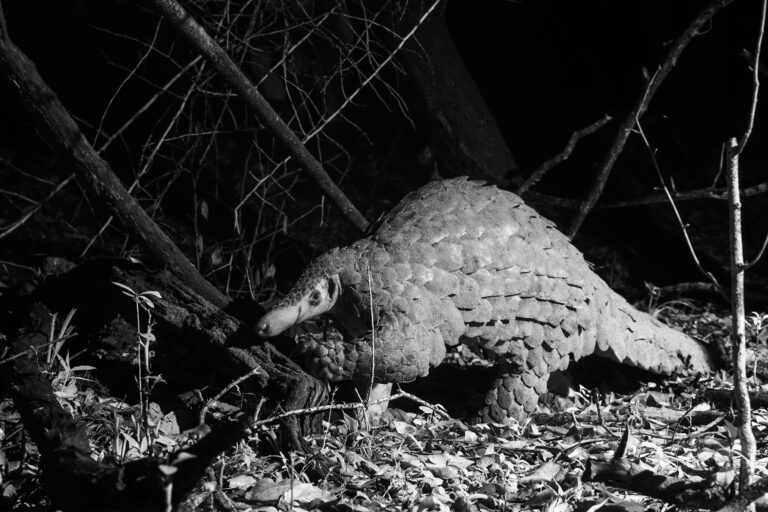
Naserian, a giant ground pangolin, lived for about two years in Kenya’s last remaining stronghold for this animal, Nyekweri Forest. When researchers from The Pangolin Project began tracking her in 2025, they observed her threading her way through a landscape where forests, farms and fences increasingly intersected. Each night, she emerged from the darkness of Nyekweri Forest and moved through a shifting mosaic of woodland, farms and grazing lands on the western fringes of Kenya’s Maasai Mara National Reserve. Researchers watched on computer screens from their outpost near the reserve, tracking Naserian’s GPS signal as she followed familiar paths across a patchwork of privately owned parcels of land. Then one night, the signal stopped. A team from the Kenya-based pangolin research organization headed to the site. Naserian lay dead beneath an electrified fence. After years navigating a changing landscape, a single charged wire had ended her life. A landscape closing in Giant ground pangolins (Smutsia gigantea) are endangered across their fragmented Western and Central African range, with their numbers decreasing. Kenya’s only known population resides in Nyekweri, but it isn’t the safest place for them. Since 2022, researchers have recorded 15 deaths in the area, including 14 by electrocution on electric fences. With fewer than 30 believed to remain in Kenya, every death carries outsized consequences. The giant ground pangolin — the largest of the eight species, all of which live in Africa and Asia — occurs naturally at low densities. They normally give birth to just one offspring at…This article was originally published on Mongabay