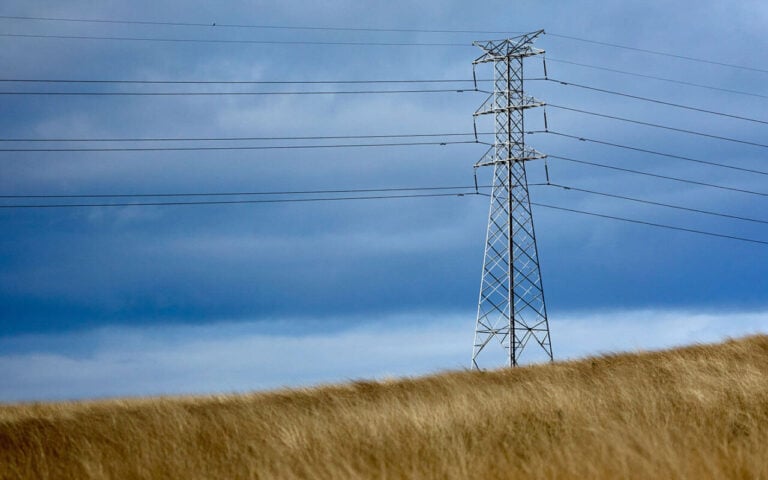
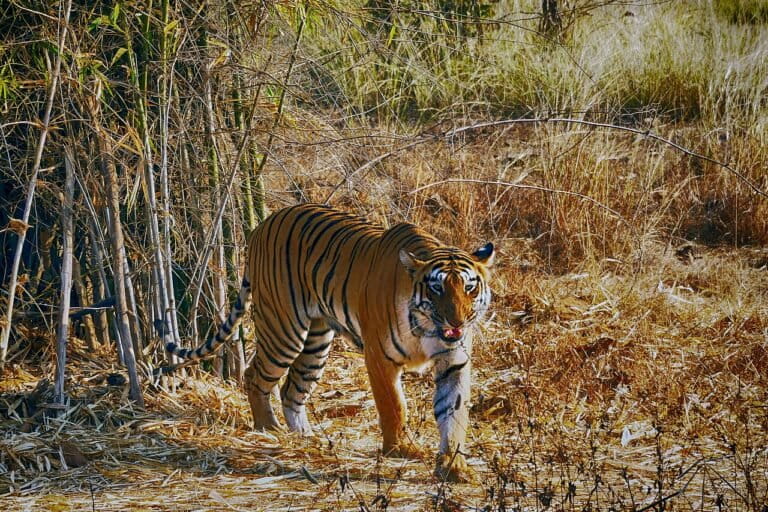
A forested tiger reserve in southern India is home to a thriving population of spotted and sambar deer, nilgai antelopes, and wild pigs — all ideal prey for tigers. Yet the reserve has no resident tigers, reports contributor Nivedhika Krishnan for Mongabay India. Kawal Tiger Reserve in the state of Telangana connects key tiger populations in the reserves of Tadoba-Andhari, in Maharashtra state to the west, and Indravati, in Chhattisgarh state to the east. Since 2015, researchers have confirmed that only 15 tigers entered Kawal from Maharashtra. Of these, only two were females. Lead researcher Imran Siddiqui told Mongabay India that tigers traveling from Maharashtra to Kawal face heavy infrastructure throughout their journey. “The corridor is fragmented by open-cast coal mines, the Ada irrigation project, electrified farm fences, and the main Hyderabad-Nagpur railway line,” Siddiqui said. “National Highway 44 acts as the most formidable barrier of all with its heavy traffic and high fencing. It isn’t just one obstacle — it is a cumulative mosaic of risks that forces dispersing tigers to turn back.” He added that while male tigers dispersing from their birthplace are “bolder risk-takers” and can move long distances through human-dominated landscapes, female tigers are more risk-averse and “require quiet, undisturbed habitat to raise cubs.” “Crossing busy highways, railways, and mines poses a massive perceived threat to females,” Siddiqui said. “That is why males occasionally dodge traffic to reach Kawal, but females turn back. Without females, you simply cannot build a breeding population.” Anish Andheria, president and…This article was originally published on Mongabay