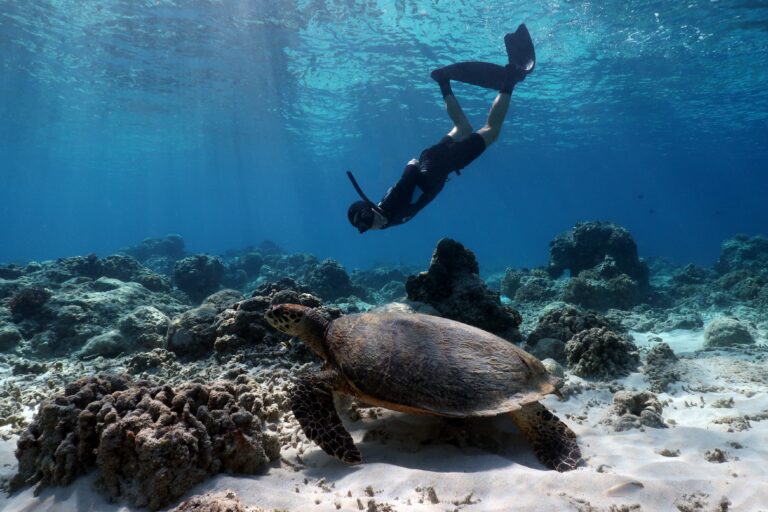
Sanur is where tourism took off in Bali. A coastal town overlooking the Lombok Strait where the Pacific Ocean flows into the Indian Ocean, artists and travelers began frequenting its shores in the 1920s. Today, the local economy still depends on income from visitors seeking its sun-kissed sands and cozy waters that hold the promise of encounters with all manner of tropical marine life. But new research indicates all is not well with Sanur’s precious marine ecosystems. Its coral reefs are steadily degrading, despite multiple efforts to rehabilitate them by planting coral fragments or building artificial reefs. The recent study, published in Ocean & Coastal Management, found reef restoration initiatives in Sanur often take place without first addressing the primary drivers of coral decline, such as sediment runoff and wastewater discharge. “People see the visible impact on the coral reef, so they feel it’s urgent to do something about it there,” study lead author Min Chung, a master’s student at the University of Tokyo, told Mongabay in an interview. “But in reality, and efficiency wise, it’s obviously more effective to address the more fundamental drivers [of coral loss].” By analyzing reef health data and interviews with 18 stakeholders who have influence over the use and management of Sanur’s reefs, Chung and her colleagues identified complex and competing interests between many different groups, from government agencies, local authorities and community organizations to academics, fishers and tourism operators. “There are differing views on how to preserve coral reefs and the role tourism…This article was originally published on Mongabay