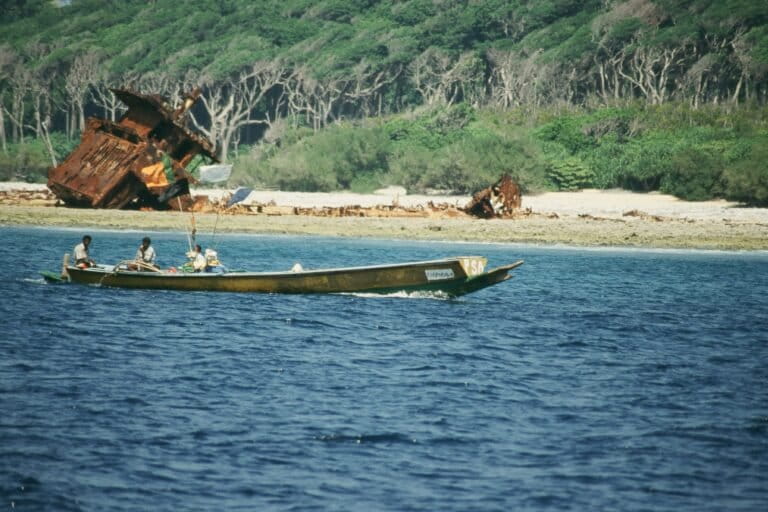
Isolated and contacted Indigenous tribes in India’s Andaman and Nicobar Islands face threats from illegal fishing, mega-development projects and misinformed government welfare policies that undermine their self-sufficiency, says Manish Chandi, a former research scholar who has spent decades working with tribal communities in the region. Chandi worked with the communities while he was with the Andaman Nicobar Environment Team and the Nature Conservation Foundation. He is also a former advisory board member of the Tribal Research Institute under the Andaman and Nicobar Administration. In an interview with Mongabay’s Latoya Abulu, Chandi says that protecting Indigenous autonomy is vital for both tribal survival and environmental conservation in the Andaman and Nicobar Islands, which lie southeast of mainland India. The archipelago’s tribal reserves — home to Indigenous groups that live in voluntary isolation, such as the Sentinelese of North Sentinel Island and the Shompen of Great Nicobar Island — contain some of the region’s richest biodiversity, outperforming the roughly 100 official national parks and wildlife sanctuaries across the islands, Chandi says. This is because the tribal reserved areas are both large and “have not been used for timber extraction and settlement and therefore retain the biodiversity of both various habitats and also species,” Chandi tells Mongabay. However, several escalating pressures threaten these communities. Chandi notes that commercial trawlers and poachers frequently infiltrate coastal buffer zones, harvesting sharks, lobsters and turtles that island communities depend on for subsistence. On Great Nicobar Island, a government-proposed development project directly overlaps with ancestral foraging grounds and…This article was originally published on Mongabay