
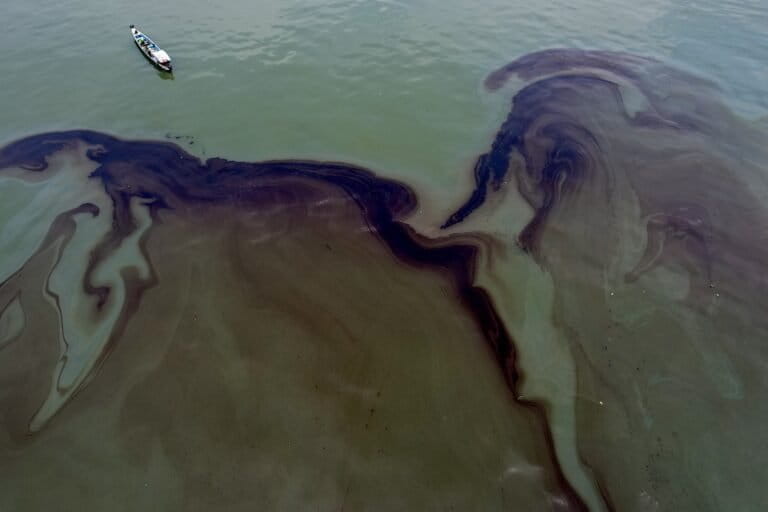
Oil slicks from ships and offshore oil platforms cover nearly 1.6 million square kilometers (618,000 square miles) of the ocean surface each year, an area slightly larger than the nation of Mongolia. The estimate comes from a recent report by Skytruth, a U.S.-based nonprofit that used satellite imagery, machine learning and vessel tracking data to trace global oil pollution in the oceans between 2023 and 2025. According to John Amos, CEO of Skytruth, this kind of pollution was largely invisible before satellite imagery made it possible to track. “Any vessel operator could be pretty confident that nobody was going to notice what they were doing out in the middle of the ocean,” Amos told Mongabay by phone. “So that’s changed. We can see it now.” Much of the vessel oil slicks come from bilge waste, a mix of oil and water that collects in the bottom of a ship’s hull during operation. Tankers sometimes also wash out their cargo holds and flush crude oil residue into the sea. “It’s nasty oily dirty gunk that you just want to get rid of,” Amos said. “And the easiest thing to do with it is just pump it out into the ocean while you’re at sea.” According to the report, most of these discharges are illegal under MARPOL, the international treaty on pollution from ships. A MARPOL treaty adopted in 1973 allows vessels to discharge bilge water containing no more than 15 parts of oil per million parts of water. SkyTruth used modeling…This article was originally published on Mongabay