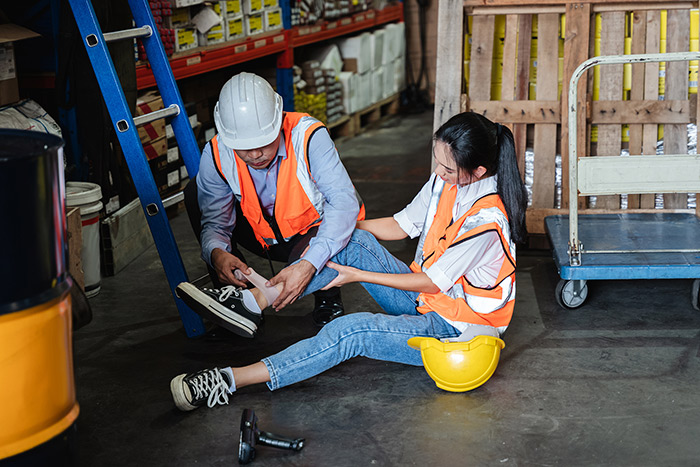
Did you know same-level falls injure workers every day? But with a few simple changes, these falls can be prevented.
By Cam Mackey, President & CEO, International Safety Equipment Association (ISEA)
When we talk about falls at work, most people picture a worker on a roof, a ladder or high up on a scaffold.
We know a fall from height can be catastrophic.But there’s another fall hazard that workers face every day, and it doesn’t t even require feet leaving the ground.
Picture a wet floor. Loose gravel. An extension cord across a walkway. Mud tracked into a building. Oil near a machine. A loading dock slick from rain or snow. Even a small step up that catches the toe of a boot.

Minor slip or trip hazards are easy to dismiss right up until someone gets hurt.
The numbers tell us we should be paying more attention.
In 2024, the Bureau of Labor Statistics reported nearly 480,000 cases involving falls, slips and trips that took people out of work. In fact, slips, trips, stumbles and falls on the same level occurr more often than falls from height.
Not only are people getting hurt, but there’s also a financial cost. Liberty Mutual’s 2025 Workplace Safety Index estimates that same-level falls cost U.S. employers $10.5 billion annually in medical expenses and lost wages. That makes them the second-most costly cause of serious workplace injuries.
This isn’t a minor safety issue.
And preventing these injuries starts with recognizing that what’s under a worker’s feet deserves the same attention we give to the hazards above their head.
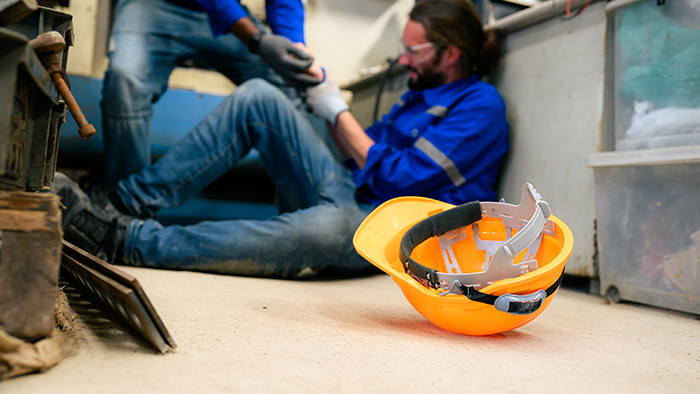
There’s a natural tendency to connect the seriousness of a fall with how far you’re falling.
Workers know what can happen if they fall 10 or 20 feet. Guardrails, fall arrest systems, training and other controls are built around the hazards they face up there.
A same-level fall seems different. You’re standing on the floor one second and on the floor the next.
But the distance between the two doesn’t tell you how serious the injury can be.
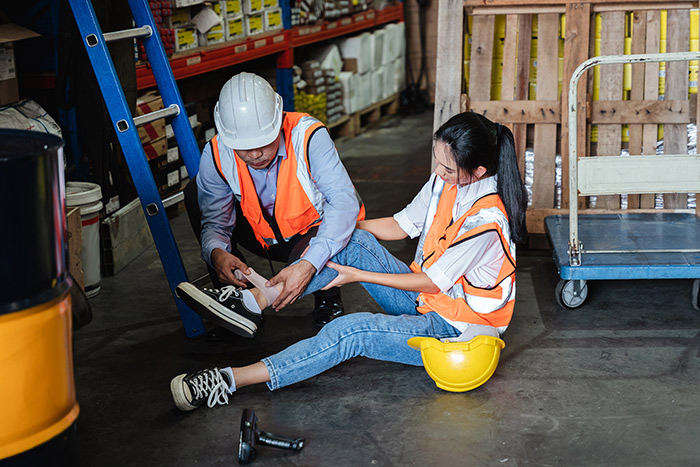
A worker who slips can land on a hip, shoulder, wrist or knee. A backward fall could mean theirhead banging against concrete, heavy equipment, or another unforgiving surface. A worker would likely reach out to try and break their fall and could suffer a fracture or serious soft tissue injury.
And the injury doesn’t have to be dramatic to have lasting consequences. Sprains, strains and other musculoskeletal injuries can mean weeks away from work, physical therapy and lingering pain. That affects more than a company’s injury record. It affects the worker;’s paycheck, their family and the ability to do the things that they normally do outside work.
That’s why preventing falls in the first place matters.
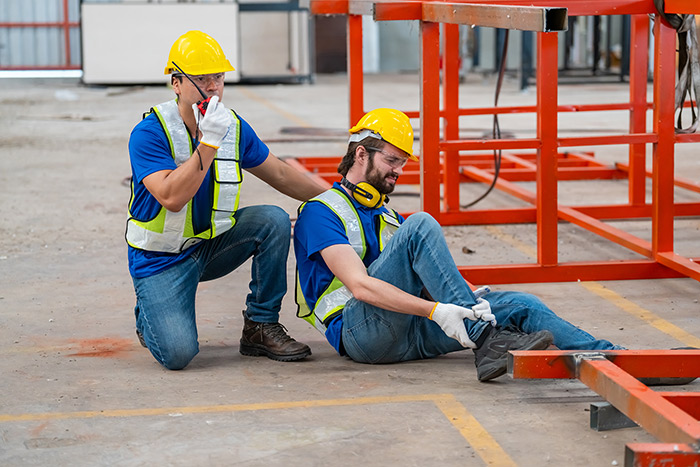
One of the simplest things a safety team can do is to walk the workplace the way a worker actually experiences it. View it from the worker’s perspective.
And not just during an annual inspection. Walk it at the beginning of a shift. Walk it after it rains. Walk it during cleanup. Walk it when materials are being delivered. Walk it when production is at its busiest.
Conditions change.
A warehouse floor that’s perfectly safe first thing in the morning may have shrink wrap, cardboard or spilled liquid on it by lunch time. A construction entrance may be dry in the morning and covered in mud after an afternoon storm. A restaurant kitchen moves quickly between dry, wet and greasy conditions throughout the day. Healthcare workers move between carpet, tile and recently cleaned floors dozens of times during a shift.
The hazard isn’t simply “the floor.” It’s the combination of the walking surface, contaminants, the work being performed and the footwear being worn.
Workers put a lot of trust in their footwear, as they should. In fact, more than 37 million American workers wear protective footwear. But there’s no single outsole that is ideal for every workplace condition.
The traction needed on an outdoor construction site is different from what’s needed on a smooth warehouse floor. A worker regularly exposed to water needs different slip-resistant performance than someone working around oils or other contaminants.
That means choosing footwear simply because it’s labeled a “work boot” or because it has an impressive looking tread isn’t enough.
Slip resistance needs to be considered against the actual conditions workers encounter.
This is where standards and testing matter.
Modern footwear testing can evaluate how footwear performs under defined combinations of flooring materials and contaminants. That gives employers and safety professionals better information than appearance, price or a generic slip-resistance claim.
But the test results still have to be connected to the job.
Before choosing footwear, ask some basic questions:
- What surfaces do workers spend most of their time walking on?
- Are those surfaces usually dry, wet, oily or exposed to other contaminants?
- Do workers regularly move between indoor and outdoor environments?
- Are ramps, stairs or uneven surfaces common?
- Does the work itself create debris or contaminants that affect traction?
The goal isn’t to find the shoe with the biggest number on a specsheet. It’s to find footwear suited to the hazards workers actually face.
Good footwear can reduce risk, but it can’t fix a workplace that’s full of preventable hazards.
If a pipe leaks onto a walkway every afternoon, the answer isn’t simply giving everyone better boots. Fix the leak.
If packaging material often ends up blocking an aisle, figure out why and change the process.
If electrical cords cross a walking path, reroute them.
If workers repeatedly track water through an entrance, improve drainage, matting or housekeeping.
Fall prevention works best when employers follow the hierarchy of controls: eliminate a hazard where possible, reduce exposure through engineering or administrative controls, and use PPE as part of the overall solution.
Workers have an important role, too.
Report the spill instead of stepping over it. Move obstructions when it can be done safely. Say something when a walking surface has become damaged or slippery. Replace footwear when the outsole is worn down instead of waiting until the shoe completely falls apart.
These little acts can make a big difference.
Even the right footwear doesn’t stay right forever. Outsoles wear down. Tread disappears. Materials can harden or degrade. Contaminants can get stuck in the soles.
Workers should get into the habit of looking at the bottom of their footwear. If the tread is wearing, traction may be reduced. If the outsole is separating from the shoe, replace it. If grease, mud or debris is packed into the tread, clean it according to the manufacturer’s instructions.
Employers that require safety footwear should also think about replacement as part of the program. A footwear policy that specifies the right protection but leaves workers wearing worn-out boots for years isn’t much of a footwear program.
The same principle applies to fit and comfort. Workers who spend eight, 10 or 12 hours on their feet need footwear they can actually work in. Poorly fitting shoes change the way someone walks, create fatigue and make workers lesse likely to wear it. Protection has to work in the real world.
There’s an important lesson in the numbers surrounding same-level falls: familiar hazards are not necessarily harmless hazards.
We walk across floors, parking lots, warehouses, jobsites and production areas so many times that it’s easy to stop thinking about the surface we’re actually walking on.
The answer isn’t to tell workers, “be more careful.” They deserve more than that.
Employers should identify where slips and trips are happening, understand what’s causing them, address hazards that can be eliminated and make sure footwear is selected for the actual environment.
Workers should understand what their footwear is designed to do, inspect it regularly and speak up when conditions change.
A fall doesn’t have to start on a roof or scaffold to change someone’s life.
Sometimes the hazard is right under your feet.
Slip-resistant footwear should be selected for the conditions where it will actually be worn. Before purchasing or specifying footwear, consider:
- Walking surface: Concrete, tile, metal, wood and outdoor terrain create different traction demands.
- Contaminants: Water, oil, grease, mud and other materials can affect outsole performance differently.
- Work environment: Consider whether workers move between indoor and outdoor areas or encounter changing conditions during a shift.
- Testing: Look for footwear with slip-resistance performance data relevant to the workplace conditions.
- Condition: Even properly selected footwear needs to be inspected and replaced as the outsole wears or becomes damaged.
About the Author:
Cam Mackey is President and CEO of the International Safety Equipment Association (ISEA), the voice of the safety equipment industry. ISEA represents the companies that make, supply, and test the PPE and safety technologies that protect more than 127 million American workers every day.