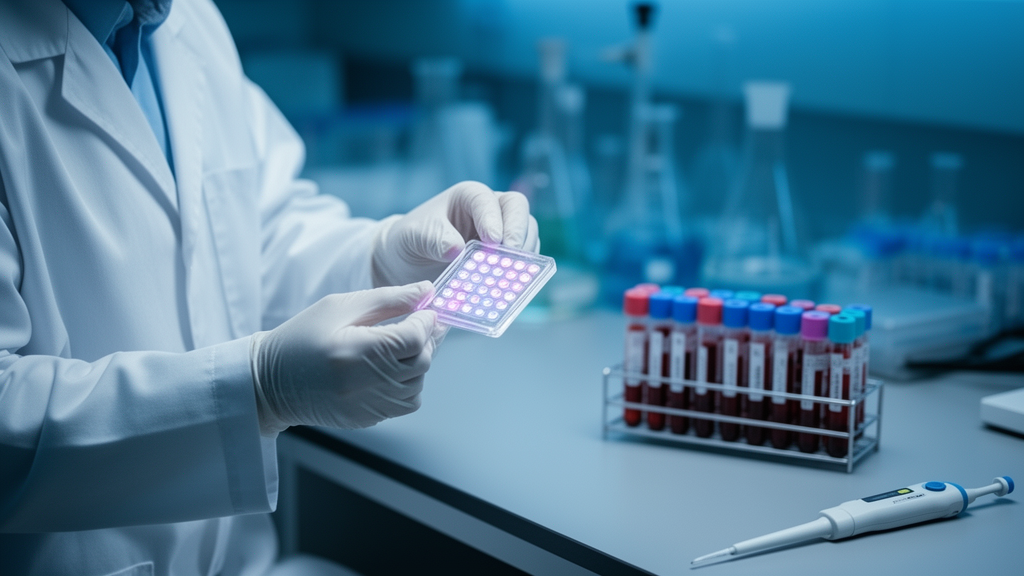
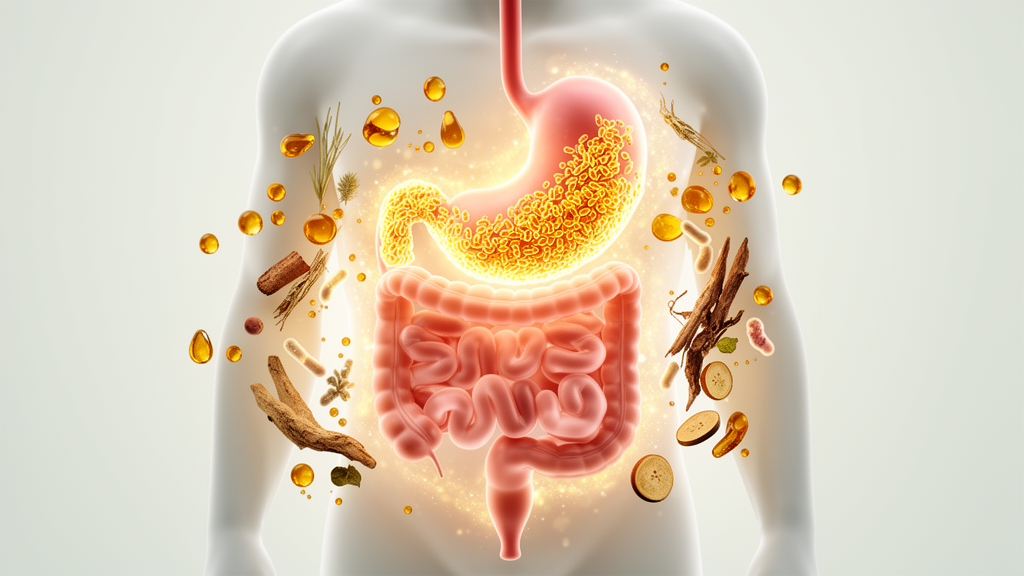
A traditional Chinese herbal formula called Chaihuang weikuining, or CHWKN, appears to protect the stomach lining against alcohol-induced ulcers largely by reworking the community of bacteria living in the gut and then damping down a key inflammatory signaling pathway, according to a new rat study published in Frontiers in Microbiology. The work, led by researchers at Zhejiang Chinese Medical University in Hangzhou, combined classical ulcer modeling with antibiotic-mediated microbiota depletion, fecal microbiota transplantation and 16S rDNA sequencing to build a causal case that the gut microbiome is not merely a bystander in the formula’s gastroprotective action but a necessary mediator of it.
Gastric ulcer disease remains a substantial global health burden, driven by factors including Helicobacter pylori infection, non-steroidal anti-inflammatory drug use and excessive alcohol consumption. Ethanol exposure is a widely used experimental trigger of gastric injury because it rapidly damages the mucosal barrier through oxidative stress, epithelial disruption and a surge of inflammatory signaling. When ethanol floods the stomach lining, it provokes the release of pro-inflammatory cytokines such as interleukin-1β, interleukin-6 and tumor necrosis factor-α, which amplify tissue damage. The Janus kinase/signal transducer and activator of transcription pathway, particularly JAK1/STAT3, is a central regulator of these inflammatory cascades, and its activation has been linked to mucosal injury and ulcer progression. What upstream forces control this signaling in gastric ulcer disease, however, has remained incompletely understood.
CHWKN is a multi-herb formula containing Astragalus membranaceus, Bupleurum chinense, Polygonum cuspidatum, Cyperus rotundus, Codonopsis pilosula, Paeonia, Glycyrrhiza uralensis, Cinnamomum cassia, Zingiber officinale, Ziziphus jujuba and maltose, and it has been clinically applied in China for gastric disorders. To characterize its chemistry, the team extracted the formula in boiling water, concentrated the preparation and analyzed it by ultra-high-performance liquid chromatography coupled with mass spectrometry. Carbohydrates and their derivatives made up roughly a quarter of the detected components, with amino acid derivatives accounting for about 15 percent, followed by flavonoids at 11 percent, terpenoids at 9 percent and phenolic acids at 4.5 percent. The ten most abundant constituents included trehalose, L-arginine, emodin-8-O-beta-D-glucopyranoside, sucrose, citric acid and albiflorin. Because carbohydrates and amino acid derivatives can serve as substrates for gut microbes while flavonoids and phenolics exert immunomodulatory effects, the composition hinted at a dual capacity to influence both host inflammation and microbial homeostasis.
The researchers first tested the formula’s protective power in male Sprague-Dawley rats given a single gavage of absolute ethanol at 5 milliliters per kilogram to induce gastric ulcers. Fourteen days of treatment with either a low dose of 7.5 grams per kilogram or a high dose of 15 grams per kilogram of CHWKN markedly alleviated the pathological damage. Hematoxylin and eosin and periodic acid-Schiff staining showed improved mucosal integrity compared with untreated ulcer-model animals, and quantitative analysis revealed a significantly reduced ulcer index. The formula also raised serum pepsinogen I levels and the ratio of pepsinogen I to pepsinogen II, markers indicating improved gastric secretory function and reduced mucosal atrophy. Notably, these effects were comparable to those achieved with omeprazole, the standard anti-ulcer drug given at 20 milligrams per kilogram, which served as the positive control.
The anti-inflammatory signature was equally striking. Ethanol exposure drove up circulating levels of interleukin-1β, interleukin-6, tumor necrosis factor-α, myeloperoxidase and lipopolysaccharide, while suppressing the anti-inflammatory cytokine interleukin-10. CHWKN treatment reversed all of these changes, mirroring the pattern seen with omeprazole. Quantitative PCR then showed that ethanol markedly upregulated expression of the Jak1 and Stat3 genes in gastric tissue, and that both CHWKN and omeprazole significantly suppressed that expression. Taken together, the data suggested the formula blunts ethanol-induced gastric inflammation at least in part by inhibiting JAK1/STAT3 signaling, but the critical question of whether the gut microbiome was required for this effect remained open.
To answer it, the team turned to a rigorous depletion experiment. Rats received a two-week cocktail of vancomycin, ampicillin, neomycin and metronidazole in their drinking water, effectively wiping out their gut bacteria, a reduction confirmed by quantitative PCR of the bacterial 16S rRNA gene. When microbiota-depleted rats were then given ethanol and CHWKN, the formula’s protective effect largely collapsed. Histology revealed aggravated mucosal injury, increased epithelial erosion and enhanced inflammatory infiltration compared with CHWKN-treated rats with intact microbiomes. The improvements in pepsinogen I levels and the pepsinogen I to II ratio were significantly diminished, and the elevated levels of pro-inflammatory cytokines, myeloperoxidase and lipopolysaccharide returned, alongside a drop in interleukin-10. Crucially, the suppression of Jak1 and Stat3 expression was abolished without gut bacteria, indicating that the microbiome is essential for both the tissue-protective and anti-inflammatory actions of the formula.
Fecal microbiota transplantation then provided the causal counterpart to the depletion experiment. Donor rats had been treated with ethanol alone or with ethanol plus CHWKN for 14 days, and fresh fecal suspensions were prepared, homogenized and gavaged into antibiotic-treated recipients once every two days for 14 days. Recipients that received microbiota from CHWKN-treated donors showed significantly improved gastric mucosal integrity, with reduced epithelial damage and inflammatory cell infiltration, compared with recipients that received microbiota from ethanol-only donors. The transplanted CHWKN-associated microbiota also restored gastric secretory function, lowered the pro-inflammatory cytokine panel and raised interleukin-10, and markedly suppressed Jak1 and Stat3 expression. In other words, the microbial community shaped by the herbal formula was by itself sufficient to confer protection against gastric injury and inflammation in previously germ-depleted animals.
Sequencing of the 16S rRNA gene added a compositional dimension to the functional findings. Alpha diversity indices, including Chao, ACE, Shannon and Simpson measures, showed no significant differences among groups, meaning the formula did not substantially change microbial richness. Beta diversity analysis, however, revealed a clear separation between the ulcer-model and CHWKN-treated groups at the amplicon sequence variant level, indicating a genuine reshaping of community structure. Ethanol enriched taxa from families such as Anaerovoracaceae, Lachnospiraceae, Oscillospiraceae, Ruminococcaceae and Desulfovibrionaceae, while the control group harbored more Lachnospiraceae NK4A136 group, Christensenellaceae R-7 group, Allobaculum and Rothia. CHWKN treatment enriched Prevotellaceae, Dubosiella and Faecalibaculum, and, notably, increased potentially beneficial bacteria such as Lactobacillus while reducing the ethanol-driven expansion of norank_f_Muribaculaceae, partially reversing the dysbiosis induced by alcohol exposure.
The authors are careful about what the sequencing can and cannot establish. They acknowledge that reliance on 16S rRNA profiling alone cannot definitively pinpoint the functional bacterial taxa and metabolites mediating the protective effects, and they note that definitive attribution of causality to specific species, such as Lactobacillus, would require targeted bacterial depletion or reconstitution experiments. Still, prior work cited in the study lends plausibility to the Lactobacillus connection: Lactobacillus rhamnosus GG has been reported to facilitate gastric ulcer healing by shifting the balance of apoptosis toward proliferation and promoting angiogenesis, and L. rhamnosus SHA113 and its conditioned medium have shown anti-inflammatory activity against ethanol-induced mucosal damage. The observed reduction in serum lipopolysaccharide, a pro-inflammatory endotoxin from Gram-negative bacteria, was also microbiota-dependent, disappearing with depletion and returning with transplantation, which points toward a microbiota-inflammation axis in which microbial remodeling restrains LPS-driven JAK1/STAT3 activation, possibly through microbial metabolites or microbe-host interactions that remain to be fully elucidated.
The study’s limitations frame how far its conclusions can travel. The work was conducted in a rat model of ethanol-induced injury, so extrapolation to human gastric ulcer disease, and to the clinical use of CHWKN, awaits pharmacokinetic, toxicological and clinical studies. The specific microbial taxa and metabolites responsible for the effects remain unidentified, and the molecular mechanisms linking microbial changes to JAK1/STAT3 signaling require further investigation, ideally with metabolomics and mechanistic follow-up. Nevertheless, the triangulation of evidence, protection lost with microbiota depletion and restored with transplantation of CHWKN-shaped communities, offers unusually strong support for a causal, microbiota-dependent mechanism. The authors argue that, in contrast to single-compound therapies, CHWKN concurrently addresses microbial dysbiosis and mucosal inflammation through a dual mechanism, positioning the formula as a promising multi-target candidate that could one day serve as an adjunct or alternative to antibiotics and proton pump inhibitors in gastric ulcer management.
Subject of Research: Microbiota-mediated gastroprotective effects of the traditional Chinese formula Chaihuang weikuining against ethanol-induced gastric ulcer in rats
Article Title: Chaihuang weikuining protects against ethanol-induced gastric ulcer through modulation of gut microbiota and inhibition of JAK1/STAT3 signaling
Article References: Fu, A., Guo, R., Wang, K., Zhuge, H., Ying, G., Ma, W., Ding, Q., Li, S., Bao, J., & Yu, W. (2026). Chaihuang weikuining protects against ethanol-induced gastric ulcer through modulation of gut microbiota and inhibition of JAK1/STAT3 signaling. Frontiers in Microbiology, 17, 1924725. https://doi.org/10.3389/fmicb.2026.1924725
Image Credits: AI Generated
DOI: 10.3389/fmicb.2026.1924725
Keywords: gastric ulcer, Chaihuang weikuining, gut microbiota, JAK1/STAT3, ethanol-induced injury, fecal microbiota transplantation, 16S rDNA sequencing, Lactobacillus, inflammation, traditional Chinese medicine, omeprazole, rat model
Tags: 16S rDNA sequencingChaihuang weikuiningethanol-induced injuryFecal microbiota transplantationgastric ulcergut microbiotainflammationJAK1/STAT3Lactobacillusomeprazolerat modeltraditional Chinese medicine