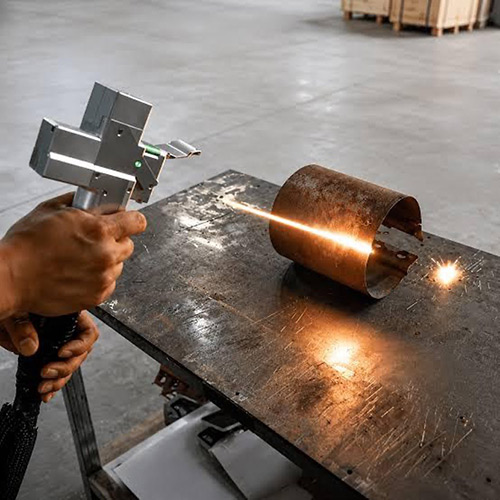
A go/no-go framework for replacing abrasive blasting and chemical stripping with fiber laser cleaning.
Every fabrication and maintenance shop has one: the blast cabinet in the corner, the chemical dip tank behind the barrier, and the crew member who spends half their shift on surface prep. It is familiar, and familiarity makes it easy to stop asking what it actually costs. When plant managers finally tally the whole bill — consumables, waste disposal, compliance paperwork, and downtime — surface prep is often one of the most expensive per-square-foot operations in the building.
Laser cleaning has matured into a serious alternative for a growing list of jobs. It is not a replacement for every blasting application, and pretending otherwise is how plants end up with an expensive machine that runs twice a month. The useful question is narrower: which of your current prep jobs would be cheaper, cleaner, or safer if they moved to a laser — and which ones should stay right where they are?
The invoice for blast media looks manageable. Everything around it is where the money goes.
Abrasive blasting consumes media on every pass, and spent media is classified as waste the moment it leaves the cabinet. If the coating being removed contains lead, chromium, or other regulated substances, that waste moves into a costlier disposal stream, and the volumes add up quickly on continuous production. Chemical stripping carries its own recurring line items: solvent and stripper purchases, ventilation, and the disposal of contaminated sludge under hazardous waste rules.
Then there is downtime. Blast cabinets and dip tanks batch parts. A weldment waits until the cabinet is free, a coating line waits until the batch clears QC, and every one of those queues is work-in-progress sitting still. Plants that have moved prep inline with the laser report the biggest gains here — not because the laser is faster per part in every case, but because the part never leaves the cell.
Two regulatory fronts shape the economics of legacy prep methods in the United States.
The first is silica dust. OSHA’s respirable crystalline silica standard sets a strict permissible exposure limit, and blasting operations on concrete, stone, or certain castings can approach or exceed it without engineered controls. That means exposure monitoring, medical surveillance, and respiratory protection programs — each with administrative cost attached. Noise follows the same logic: shot and grit blasting routinely runs well above the action level, dragging hearing conservation programs along with it.
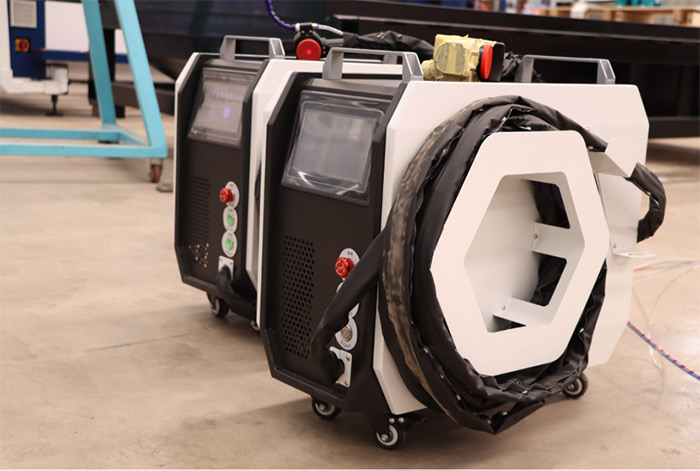
The second is the waste stream itself. Spent blast media and spent chemical baths are governed by hazardous and solid waste rules that vary by state, and the disposal certificates accumulate as surely as the material does. A laser, by contrast, produces a fine particulate that a properly sized fume extraction unit captures at the source — a single filter change replaces an entire waste manifest cycle on most jobs. The contamination still has to be handled correctly, but the volume and the paperwork shrink dramatically.
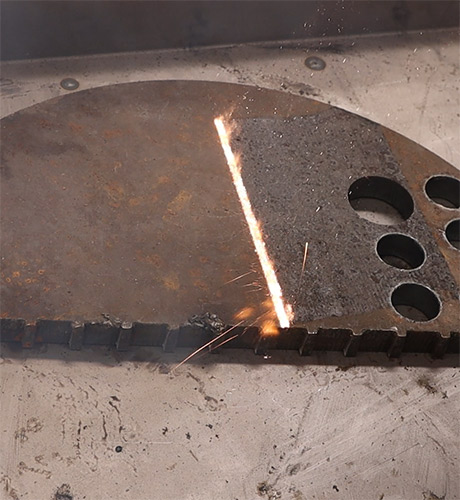
Laser cleaning works by vaporizing and ejecting contamination with short, high-energy pulses. The substrate reflects most of that energy, which is what makes the process selective. That selectivity defines the applications where it wins:
Weld and braze preparation. Laser removing mill scale, oil, and oxide along a weld seam improves penetration and reduces porosity, and doing it inline — a pass with the laser, then the torch — eliminates the queue in front of the blast cabinet. This is the single most common entry point for fabricators.
Coating and paint removal on durable substrates. Steel, cast iron, and aluminum take laser stripping well, including spot removal for weld-through zones and full stripping for recoat work.
Mold, tooling, and equipment maintenance. Rubber and polymer residue on injection molds, carbon buildup, and rust on idle machinery all come off without media embedding in the surface or dimensional change on the tool.
Pre-treatment before coating and bonding. A cleaned, micro-textured surface improves coating adhesion, and for structural bonding it can replace grit-blast-and-solvent sequences entirely.

Being honest about the limits is what separates a buying decision from a whitepaper.
Laser cleaning is a line-of-sight process. Deep internal bores, complex internal geometries, and dense fins that a blasting nozzle can reach indirectly are poor candidates. Highly reflective alloys such as copper and brass demand higher power and more conservative parameter sets — doable, but with less process margin. And where the goal is heavy bulk removal or deliberate surface roughening across large areas, blasting still delivers more profile per dollar on some work. Glass, soft polymers, and thin foils can be damaged by the wrong pulse settings, so process trials on real production parts are not optional — they are the whole ballgame.
Before budget season turns curiosity into a capital request, work through five questions:
Add media and solvent purchases, waste disposal invoices, labor hours in the prep area, and the queue time prep creates downstream. Plants are consistently surprised by the total.
Weld prep, coating removal, mold maintenance, and pre-treatment are natural fits. If eighty percent of your volume is internal-geometry work, stop here.
Silica monitoring, hearing conservation, and hazardous waste manifests all have annual costs. Removing even part of that burden changes the payback math, sometimes decisively.
Pulse energy and average power matter more than headline wattage. Rust and paint on heavy steel ask for different parameters than residue on an aluminum mold, and a reputable supplier will run your parts before quoting.
The controls look like a CNC: load a recipe, hold the gun, go. Training is measured in days, but laser safety — eyewear, controlled areas, interlocks — needs a real program, not a laminated card.
Teams that want a neutral starting point can compare specifications and application notes from established manufacturers such as Yihai Laser and ask every bidder to trial actual production parts rather than showroom samples.