However, a new review published in Cell Communication and Signaling highlights a critical limitation in this natural repair mechanism. The newly formed vessels are often structurally immature, poorly perfused, and hyperpermeable.
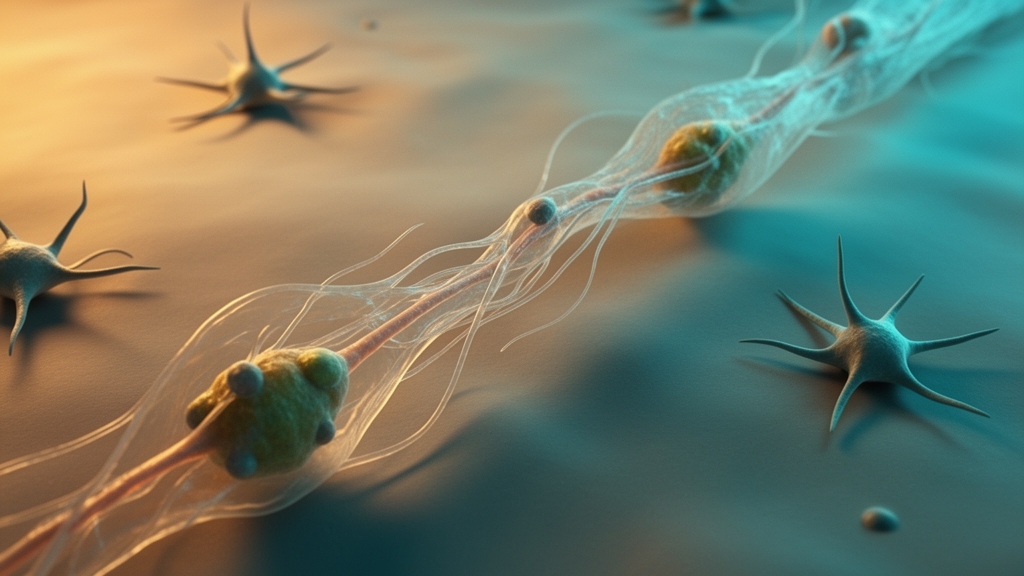
During vascular sprouting, these cells transiently acquire a specific state known as the tip-cell state. Tip cells occupy the leading edge of vascular sprouts and are responsible for guiding the direction of new vessel growth. They respond to specific environmental signals, including hypoxic signals, gradients of vascular endothelial growth factor, and cues from the extracellular matrix.
A central theme of the review is the concept of endothelial plasticity. The authors distinguish between fixed endothelial subpopulations and dynamic functional states. Tip and stalk-associated phenotypes are not permanent identities but rather reversible states that individual endothelial cells can transition into and out of. This plasticity is regulated by complex signaling pathways, including VEGF-Notch signaling, metabolic remodeling, and cell-cell interactions.
The review traces the continuum of reparative cerebral angiogenesis from the initial sprouting phase to functional maturation. It emphasizes the contributions of tip-cell-like endothelial states to directed migration, endothelial rearrangement, and early vascular network patterning.
Beyond endothelial cells, the review discusses the coordinated contributions of other cellular and molecular players in vascular repair. The authors note that the repair process is further complicated by factors such as inflammation, oxidative stress, matrix metalloproteinase activation, and endothelial senescence.
The study type is a review, synthesizing existing knowledge on tip-stalk endothelial plasticity in the context of post-stroke cerebrovascular repair. The scope of the review is broad, covering the molecular mechanisms of tip-cell behavior, the cellular interactions that drive vascular maturation, and the pathological factors that impede repair. The review establishes an integrated framework spanning vascular sprouting, vascular maturation, and barrier restoration.
The review emphasizes the need to shift therapeutic strategies in stroke care. Instead, therapeutic strategies should aim to promote vascular normalization and functional blood-brain barrier restoration.
By distinguishing early sprouting events from later maturation and barrier restoration, the review offers a nuanced perspective on cerebrovascular repair. It underscores the importance of timing and coordination in the repair process.
Subject of Research: Tip-stalk endothelial plasticity in post-stroke cerebrovascular repair
Article Title: From vascular sprouting to blood–brain barrier restoration: tip–stalk endothelial plasticity in post-stroke cerebrovascular repair
Article References: Wu, X., Tang, X., Li, Z., Wang, J., Jiang, J., Li, J., Tang, Z., Zhou, L., & Ai, K. (2026). From vascular sprouting to blood–brain barrier restoration: tip–stalk endothelial plasticity in post-stroke cerebrovascular repair. Cell Communication and Signaling. https://doi.org/10.1186/s12964-026-03308-x
Image Credits: AI Generated
DOI: 10.1186/s12964-026-03308-x
Keywords: ischemic stroke, angiogenesis, blood-brain barrier, endothelial plasticity, tip cells, vascular repair, VEGF-Notch signaling, cell communication, vascular, sprouting, blood, brain
Tags: angiogenesisbloodBlood-brain barrierBraincell communicationendothelial plasticityischemic strokesproutingtip cellsvascularvascular repairVEGF-Notch signaling