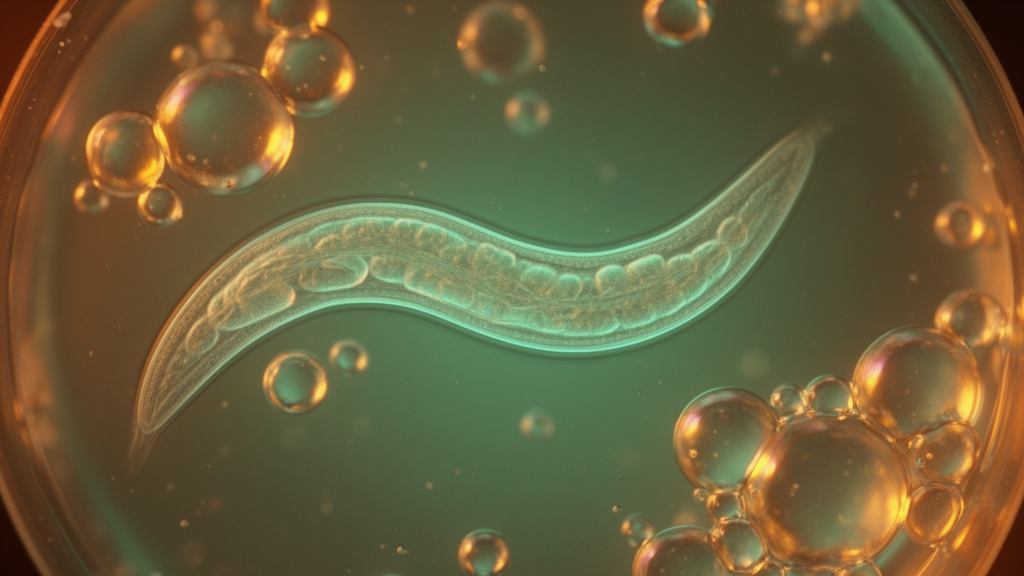
A newly published investigation into edible mushroom constituents has demonstrated that hydrocolloid fractions extracted from Tremella fuciformis Berk significantly extend the lifespan of the model nematode Caenorhabditis elegans. Researchers Zhiguo Zhang and Ziyue Wang evaluated the physiological and genetic impacts of these fungal hydrocolloids, demonstrating that the preparations prolong nematode longevity by reducing the internal accumulation of reactive oxygen species. Using quantitative molecular assays, the authors established that supplementation with Tremella hydrocolloids drives a marked transcriptional upregulation of the transcription factor skn-1, an integral component of the insulin and insulin-like growth factor signaling cascade. Crucially, the experimental findings indicated that this life-extending action does not require the activation of the classic longevity gene daf-16, revealing an independent genetic pathway through which fungal polysaccharides fortify cellular defenses against oxidative damage. The research provides a rigorous experimental framework elucidating how traditional mushroom components support organismal resilience at cellular and molecular levels.
Tremella fuciformis Berk belongs to the phylum Basidiomycota, the order Tremellales, and the family Tremellaceae, and is commonly referred to in commercial and culinary contexts as snow fungus, white Auricularia, or silver ear fungus. Long valued as a popular culinary and functional fungus, Tremella is recognized for its dense nutritional composition, containing substantial amounts of dietary proteins, essential minerals, and unique hydrocolloid structures formed predominantly by complex Tremella polysaccharides. Historically incorporated into functional diets to support pulmonary health and enhance gastrointestinal performance, the fungus has demonstrated various physiological activities in scientific investigations, including anti-tumor, antioxidant, and anti-aging properties. Previous biological evaluations confirmed that Tremella hydrocolloid complexes possess notable radical-scavenging capacities and prolong survival in laboratory models; however, the precise molecular pathways driving these life-extending effects previously remained incompletely resolved. Clarifying these biological pathways is vital for validating the health care value of fungal components and establishing scientific foundations for developing mushroom-derived functional products.
At the organismal level, aging represents an intricate biological process marked by progressive physiological decline, leading over time to reduced physical mobility, diminished exercise capacity, and compromised immune defenses. Under normal physiological conditions, living organisms maintain a dynamic equilibrium between endogenous oxidative processes and defensive antioxidant systems to safeguard cellular structures against damage. However, when the metabolic clearance rate of intracellular reactive oxygen species declines, accumulated oxidative stress causes extensive cellular disruption, which accelerates senescent phenotypes and contributes to chronic aging-related diseases. Consequently, eliminating or neutralizing reactive oxygen species or boosting intrinsic antioxidant enzyme machinery has emerged as a major strategy in anti-aging research. In this context, Caenorhabditis elegans serves as a premier in vivo model organism, possessing a thoroughly mapped genetic background, a compact lifespan, and more than sixty-five percent genetic conservation with human disease-associated genes, permitting rapid and rigorous evaluation of prospective anti-aging compounds.
The molecular architecture governing longevity in Caenorhabditis elegans is fundamentally organized around the evolutionarily conserved insulin and insulin-like growth factor signaling (IIS) network, which coordinates organismal growth, metabolic homeostasis, and stress responses. Prior nutritional investigations had revealed comparable phenomena in nematodes; for instance, polysaccharides isolated from Panax notoginseng decreased reactive oxygen species while extending average lifespan, anthocyanin-rich purple wheat extracts increased nematode survival by ten point five percent, and specific peptide fragments derived from sesame cake upregulated skn-1 expression to suppress oxidative stress without stimulating daf-16 expression.
To isolate and characterize the active constituents of Tremella fuciformis, Zhang and Wang implemented a multi-stage extraction protocol using dried mushroom material purchased in Jinan, China. The dried fruiting bodies were soaked in warm water for fifteen minutes to absorb moisture before being pulverized in a mechanical wall breaker for thirty seconds. This crushed material was extracted in distilled water maintained at one hundred degrees Celsius for two hours, followed by filtration through muslin cloth to separate insoluble remnants. The resulting liquid filtrate was collected as water-soluble Tremella hydrocolloid (WS-THD). To obtain distinct fractions based on solubility, absolute ethanol was added to another portion of the filtrate to establish a seventy-five percent ethanol concentration. Following a twelve-hour incubation at four degrees Celsius, the mixture was centrifuged at four thousand revolutions per minute for ten minutes. The collected precipitate formed ethanol-insoluble Tremella hydrocolloid (EIS-THD), while the concentrated supernatant yielded ethanol-soluble Tremella hydrocolloid (ES-THD).
Synchronizing Caenorhabditis elegans cultures was essential to ensure developmental uniformity across all biological assays. Wild-type hermaphroditic worms were cultivated at twenty degrees Celsius on nematode growth medium agar seeded with Escherichia coli OP50 until reaching the egg-laying phase. Nematodes were thoroughly rinsed from culture plates with M9 buffer and allowed to settle by gravity for five minutes before removing the supernatant, a washing cycle repeated four to five times to remove bacterial residue. The settled adult worms were subjected to alkaline hypochlorite lysis, utilizing a solution of one millimole per liter sodium hydroxide, thirty percent hypochlorite, and double-distilled water in a two-to-one-to-one ratio for eight minutes. After centrifugation at four thousand revolutions per minute for two minutes, isolated eggs were rinsed five to six times with M9 buffer to eliminate residual lysate. The purified eggs were subsequently cultured on growth medium at twenty degrees Celsius for forty-eight hours to develop into synchronized L4-stage larvae.
Synchronized L4 larvae were fed varying concentrations of the Tremella hydrocolloid fractions for one day to examine their effects on internal antioxidant defenses and enzymatic activities, using untreated worms as controls. Following treatment, nematodes were homogenized using an ultramicro cell disintegrator and centrifuged at six thousand revolutions per minute for two minutes to obtain clarified tissue supernatants. Protein concentrations were quantified using bicinchoninic acid assay kits to enable normalized comparative measurements. Spectrophotometric analyses revealed that treatment with ten to twenty milligrams per milliliter of EIS-THD or ES-THD caused statistically significant increases in total antioxidant capacity. At fifteen milligrams per milliliter, WS-THD, EIS-THD, and ES-THD elevated total antioxidant capacity by zero point zero five, zero point one two, and zero point one four millimoles per liter, respectively. Furthermore, catalase activity increased across treatment groups receiving five to fifteen milligrams per milliliter of hydrocolloids, with EIS-THD at ten, fifteen, and twenty milligrams per milliliter eliciting marked enhancements in catalase-mediated radical clearance.
To measure the impact of Tremella hydrocolloids on intracellular oxidative burden directly, the researchers utilized the cell-permeable fluorogenic probe 2′,7′-dichlorodihydrofluorescein diacetate (DCFH-DA). Synchronized nematode eggs were reared on hydrocolloid-treated plates for four days, collected with M9 buffer, and transferred into black ninety-six-well microplates containing one hundred micromoles per liter DCFH-DA. Positive control groups were pre-treated with thirty percent hydrogen peroxide for one hour to trigger oxidative stress, whereas negative controls remained unexposed. Following a two-hour dark incubation at twenty degrees Celsius, the nematodes were anesthetized with one millimole per liter levamisole and mounted on glass slides. Fluorescence microscopy performed on an Olympus IX73P2F instrument and analyzed via Image-Pro Plus software demonstrated significant reductions in reactive oxygen species across treated groups. Worms exposed to five milligrams per milliliter of WS-THD, EIS-THD, and ES-THD exhibited fluorescence decreases of sixty-four point one five percent, seventy-seven point zero five percent, and seventy-eight point five four percent, respectively.
To identify the genetic pathways driving this physiological protection, the authors analyzed the expression of longevity-related genes using quantitative real-time PCR (qRT-PCR). Total RNA was extracted from treated and control nematodes using TRIzol reagent, with RNA concentrations and purity evaluated using a Q5000 analyzer. Complementary DNA was synthesized using the HiScript III first-strand kit with genomic DNA wiper, followed by amplification on a Line Gene 9600 Plus instrument with ChamQ Universal SYBR master mix under standard forty-cycle parameters. Gene expression was calculated using the comparative 2^-ΔΔCt method normalized against the housekeeping gene gdp-1. The analysis demonstrated that daf-16 transcript levels showed no statistically significant differences between hydrocolloid-treated worms and control cohorts. In contrast, skn-1 expression was dramatically upregulated by two point eight nine times in the WS-THD group, two point seven three times in the EIS-THD group, and three point five zero times in the ES-THD group relative to untreated controls.
Administration of WS-THD, EIS-THD, and ES-THD extended the mean lifespan of Caenorhabditis elegans by twenty-two point zero two percent, twenty-two point two two percent, and twenty-nine point one seven percent, respectively, compared to untreated control groups. The researchers concluded that Tremella hydrocolloids promote antioxidant enzyme production and suppress reactive oxygen species accumulation through the selective activation of skn-1 rather than daf-16, corroborating an independent regulatory mechanism within the insulin-like signaling pathway. Beyond physiological benefits, the investigators noted that WS-THD and EIS-THD display superior water-holding capacities suitable for commercial processing. While findings in nematode models cannot be directly equated with human outcomes without clinical testing, the investigation provides a rigorous molecular foundation supporting the potential utilization of standardized Tremella hydrocolloids in functional foods, nutritional supplements, and cosmetic formulations aimed at counteracting oxidative damage and physiological aging.
Subject of Research: Anti-aging mechanisms of Tremella fuciformis hydrocolloids in Caenorhabditis elegans
Article Title: Research on the mechanism of Tremella hydrocolloids mediating anti-aging of Caenorhabditis elegans
Article References: Zhang, Z., & Wang, Z. (2026). Research on the mechanism of Tremella hydrocolloids mediating anti-aging of Caenorhabditis elegans. Agricultural Products Processing and Storage, 2(1), Article 3. https://doi.org/10.1007/s44462-025-00036-2
Image Credits: AI Generated
DOI: 10.1007/s44462-025-00036-2
Keywords: Tremella fuciformis, Caenorhabditis elegans, hydrocolloids, skn-1 gene, daf-16, reactive oxygen species, catalase activity, oxidative stress, insulin-like growth factor signaling, lifespan extension, antioxidant defense, WS-THD, EIS-THD, ES-THD, qRT-PCR, DCFH-DA assay, functional foods
Tags: antioxidant defenseCaenorhabditis eleganscatalase activityDAF-16DCFH-DA assayEIS-THDES-THDfunctional foodsHydrocolloidsinsulin-like growth factor signalingLifespan extensionoxidative stressqRT-PCRreactive oxygen speciesskn-1 geneTremella fuciformisWS-THD