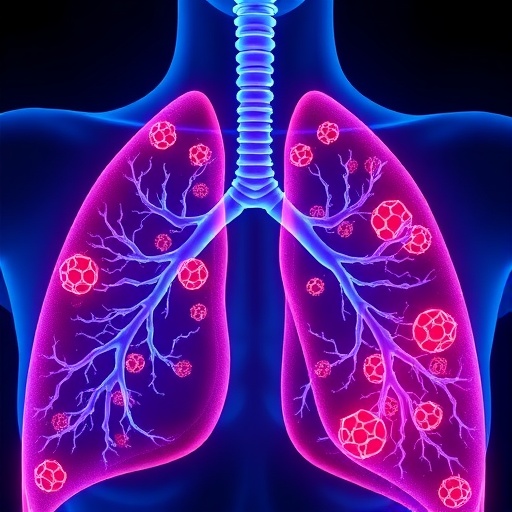
In a groundbreaking new study set to reshape our understanding of viral pathogenesis and the inflammatory cascades triggered by influenza A virus (IAV) infection, researchers have uncovered a pivotal role for the G protein-coupled receptor 84 (GPR84) in exacerbating lung inflammation. The investigation, conducted by Jiang, Zeng, Xu, and colleagues, details a sophisticated molecular mechanism where GPR84 activation initiates a deadly cellular process known as PANoptosis through the orchestration of the Z-DNA binding protein 1 (ZBP1)-PANoptosome complex. This discovery not only deepens the mechanistic insight into lung injury during IAV infection but also unveils potential therapeutic targets to mitigate the deadly consequences of viral inflammation.
Influenza A virus remains one of the most persistent threats to global health, precipitating seasonal outbreaks and occasional pandemics with significant morbidity and mortality worldwide. The pathology of IAV infection is predominantly driven by hyperactive inflammatory responses in the lung tissue, yet the precise molecular drivers behind this exacerbated inflammation have remained elusive. Through a combination of in vivo and in vitro experiments, this study elegantly demonstrates that GPR84, previously recognized primarily for its roles in metabolic regulation and immune cell signaling, is a critical amplifier of lung inflammation following viral invasion.
Central to the pathological process described is the engagement of ZBP1, a cytosolic sensor known to detect viral RNA and DNA elements, which subsequently triggers PANoptosis, a relatively recent molecular concept denoting a unique form of programmed cell death that integrates pyroptosis, apoptosis, and necroptosis pathways. Jiang and colleagues provide compelling evidence that GPR84 activation leads to the formation of a specialized multiprotein platform—the PANoptosome—where ZBP1 acts as a molecular hub orchestrating this orchestrated cell demise. This mechanism serves as both an antiviral defense and a double-edged sword, as dysregulated PANoptosis contributes significantly to lung tissue damage and inflammation.
Mechanistically, the study details how GPR84 engagement amplifies the expression and activation of ZBP1, promoting the assembly of the PANoptosome complex. This complex recruits and activates key molecules such as caspases, receptor-interacting protein kinases (RIPKs), and inflammasome components that collectively propagate the PANoptotic cascade. The researchers demonstrate that this cascade results in the release of inflammatory cytokines and damage-associated molecular patterns (DAMPs), accelerating the inflammatory milieu in the respiratory tract and contributing to the pathological sequelae of IAV infection.
In murine models genetically deficient in GPR84, the research team observed a marked attenuation of lung inflammation and reduced PANoptosis during IAV challenge. These findings provide convincing in vivo validation that GPR84 is not merely correlative but causative in mediating deleterious inflammatory responses. The ablation of GPR84 signaling diminished the recruitment of inflammatory immune cells and lowered the levels of key pro-inflammatory cytokines such as TNF-α, IL-6, and IL-1β, underscoring the receptor’s significant role in immune dysregulation induced by viral infection.
Further elucidating the temporal dynamics of the inflammatory response, the researchers mapped the progression of GPR84 expression following IAV infection, revealing an early upregulation in lung epithelial cells and alveolar macrophages. This early induction precedes and likely catalyzes the subsequent high-level activation of ZBP1 and PANoptosis-related effectors. This temporal correlation suggests that GPR84 acts upstream in the molecular hierarchy of virus-induced inflammation and cell death, positioning it as an attractive target for therapeutic intervention aimed at blunting the initial hyperinflammatory response.
Intriguingly, the study also delves into the signaling pathways downstream of GPR84 activation, highlighting the involvement of NF-κB and MAP kinase pathways in the transcriptional regulation of ZBP1 and components of the PANoptosome complex. The identification of these pathways provides mechanistic depth and opens avenues for pharmacological blockade beyond direct receptor antagonism. Targeting these signaling cascades could modulate the inflammatory amplification loop at multiple junctures, offering nuanced intervention strategies.
Perhaps most compellingly, the authors explore pharmacological inhibition of GPR84 using selective antagonists, demonstrating that these compounds effectively reduce PANoptosis and inflammation in both cell culture and animal models. This finding offers a hopeful glimpse into future therapeutic possibilities, as treatment with GPR84 inhibitors could attenuate lung injury, reduce viral-induced morbidity, and improve survival outcomes during severe influenza infections. The translational potential is profound, given the receptor’s druggable nature and the pressing need for treatments beyond conventional antivirals and supportive care.
Importantly, this study situates PANoptosis as a double-edged sword in host-pathogen interactions. While the programmed elimination of infected and damaged cells is a critical aspect of innate antiviral defense, uncontrolled PANoptotic cell death precipitated by GPR84 signaling dramatically worsens tissue damage and inflammatory pathology. This delicate balance emphasizes the complexity of designing therapies that mitigate inflammation without undermining essential host defense mechanisms.
Adding further weight to their conclusions, Jiang et al. employ high-resolution imaging and molecular analyses to uncover the spatial organization of the PANoptosome within lung tissue during infection. The aggregation of this complex at sites of infection corroborates its central role in shaping the cellular landscape of viral pneumonia. These spatial insights enrich our understanding of how molecular complexes translate into macroscale tissue damage and clinical manifestations.
The novelty of linking a G protein-coupled receptor such as GPR84 to ZBP1-mediated PANoptosis represents a paradigm shift in immunology and cellular biology. Historically, GPCRs have been implicated in diverse biological processes, but this research reveals their influential role in determining the fate of cells during viral insult. This intersection of receptor biology with complex cell death pathways may inspire broader investigations into similar mechanisms across distinct viral infections and inflammatory diseases.
Altogether, this revelation about the GPR84-ZBP1-PANoptosome axis deepens our comprehension of influenza pathophysiology and underscores the intricate interplay between immune signaling, programmed cell death, and inflammation. Critically, it lays the groundwork for the development of next-generation anti-inflammatory therapies that precisely target components of this axis, potentially transforming the management of severe viral pneumonia and its devastating consequences.
As viral pandemics remain an ever-present threat, understanding the molecular underpinnings that govern the host response to infection is paramount. This study equips the scientific and medical communities with vital mechanistic insights that will steer the design of innovative interventions aimed at balancing antiviral defense and inflammatory regulation. The prospect of mitigating lung injury by modulating GPR84 and PANoptosis heralds a new frontier in combating respiratory viral diseases and improving patient outcomes on a global scale.
Looking ahead, further investigations will be needed to explore the broader applicability of these findings across different viral strains and other forms of acute lung injury. Additionally, the long-term effects of modulating GPR84 signaling on immune competence and viral clearance warrant careful study. Nonetheless, the current work charts a promising path toward therapeutic breakthroughs informed by sophisticated molecular understanding, marking a milestone in the battle against influenza and other respiratory pathogens.
In sum, the research by Jiang and colleagues presented in Cell Death Discovery represents a major leap forward in delineating how innate immune sensors and receptors coordinate to drive inflammation and cell death during viral infections. The identification of GPR84 as a critical amplifier of ZBP1-PANoptosome mediated PANoptosis opens exciting new avenues for therapeutic exploration and sets the stage for targeted modulation of inflammatory cell death pathways in infectious diseases. This discovery reinforces the imperative of integrating cell death biology with immunology to unravel and ultimately tame the complex inflammatory storms unleashed by viral pathogens.
Subject of Research: Molecular mechanisms of lung inflammation and programmed cell death during influenza A virus infection
Article Title: GPR84 aggravates lung inflammation through activating ZBP1-PANoptosome mediated PANoptosis following IAV infection
Article References:
Jiang, H., Zeng, Y., Xu, S., et al. GPR84 aggravates lung inflammation through activating ZBP1-PANoptosome mediated PANoptosis following IAV infection. Cell Death Discov. (2026). https://doi.org/10.1038/s41420-026-03158-z
Image Credits: AI Generated
DOI: https://doi.org/10.1038/s41420-026-03158-z
Tags: cellular death pathways in lung diseaseG protein-coupled receptors in viral infectionsGPR84 and lung inflammationimmune signaling in influenza pathogenesisinflammation amplification by GPR84influenza-induced lung pathologymolecular pathways in IAV infectionPANoptosis in influenza A virustherapeutic targets for viral lung injuryviral-induced hyperinflammation in lungsZ-DNA binding protein 1 role in PANoptosisZBP1-PANoptosome activation mechanism