
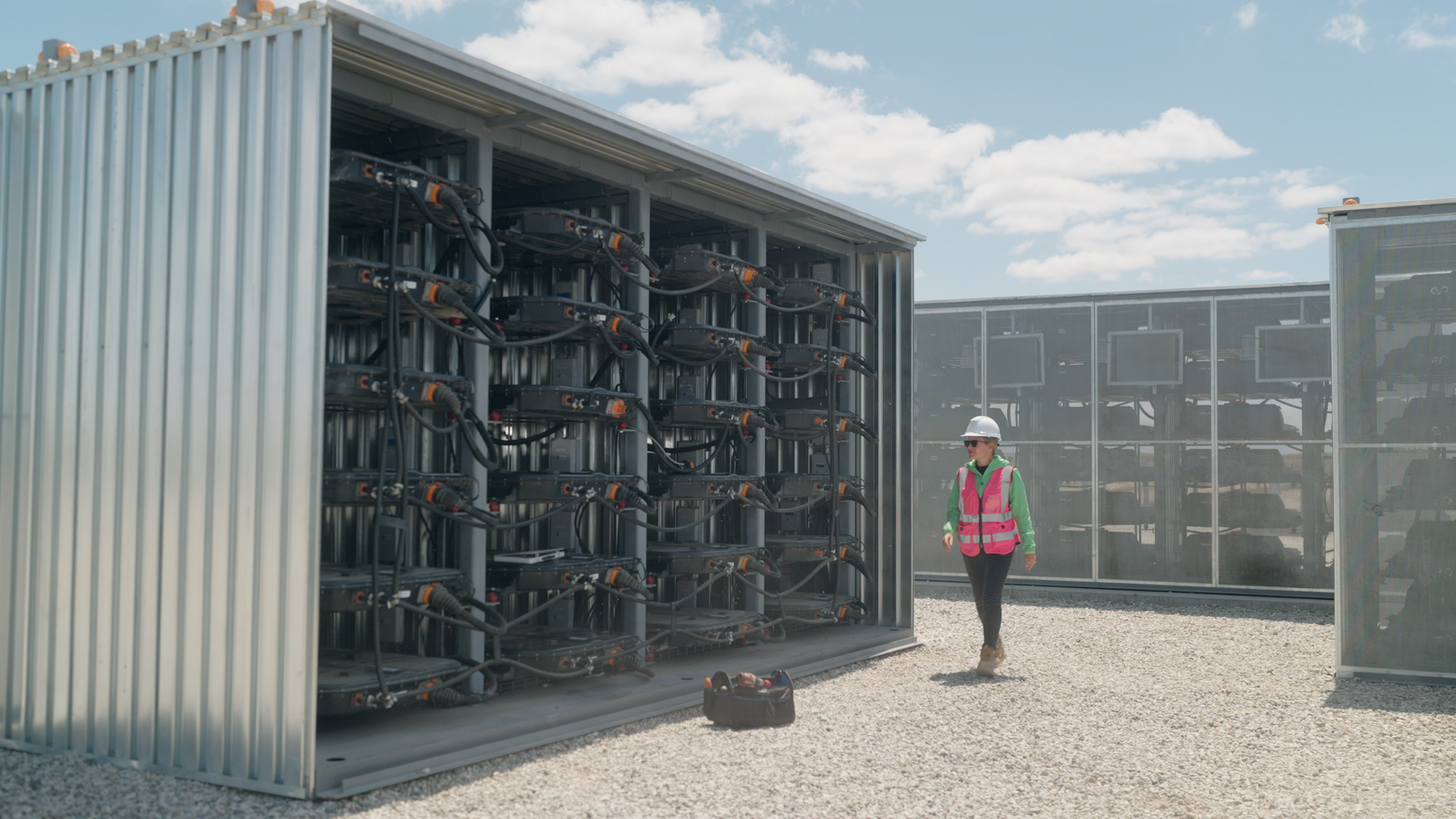

B2U Storage Solutions, a battery energy storage system (BESS) company, has announced a strategic supply agreement with Waymo, known for its autonomous vehicle technology, to repurpose batteries from their retired fleet electric vehicles (EV) for grid services.
The used battery packs will be installed into BESS interconnected to the electric grid, providing grid services in electricity markets from California to Texas. The companies say the initiative will transition thousands of retired vehicles from the road to the power sector. B2U argues that by repurposing EV batteries, it is retaining residual value that would otherwise be lost in direct recycling.
“This agreement marks a significant milestone in B2U’s mission to provide integrated repurposing services to the automotive industry,” said Freeman Hall, CEO of B2U Storage Solutions. “By extending the use of these batteries as grid storage, we are monetizing the full potential of EV batteries, now providing crucial stability to the power grid as energy demand continues to grow.”
The companies claim that the repurposing process extends the functional life of the lithium-ion batteries by several years. Once deployed as stationary storage, the systems will capture excess renewable energy during periods of low demand and dispatch it during peak usage times.
“Our shared fleet of EVs provide a massive opportunity to support the growth of clean energy on the electricity grid while expanding the circular economy,” said Adam Lenz, Head of Sustainability & Environment at Waymo. “Through this partnership, we can repurpose our batteries for local grid storage and ensure our batteries continue to provide economic and environmental value to the community long after they’ve retired from the road.”
The concept of using upcycled EV batteries as grid assets is gaining some steam.
On May 19, Moment Energy, the burgeoning global leader in repurposed electric vehicle (EV) batteries announced what it called a landmark achievement that removes the final technical barrier to mass-market adoption of second-life battery storage, becoming the first-ever company to achieve UL 60730-1 functional safety certification for a battery management system designed specifically for repurposed EV batteries.
Less than a week earlier, Moment Energy shared that it was building the world’s largest battery-repurposing facility in Vancouver, British Columbia. The new facility, expected to be complete and fully operational by the end of June, will be a fully vertically integrated system, managing the entire lifecycle from battery intake and testing through to integration and deployment. Its capacity could reach 1 gigawatt-hour (GWh) by 2030.
Both milestones came on the heels of Moment Energy’s $40 million Series B funding round, pushing its total capital haul past the $100 million mark.
Factor This recently had the opportunity to connect with Edward Chiang, one of the co-founders of Moment Energy, to learn more about his company’s technology, its growth, and the larger use case for EV batteries as grid assets.