
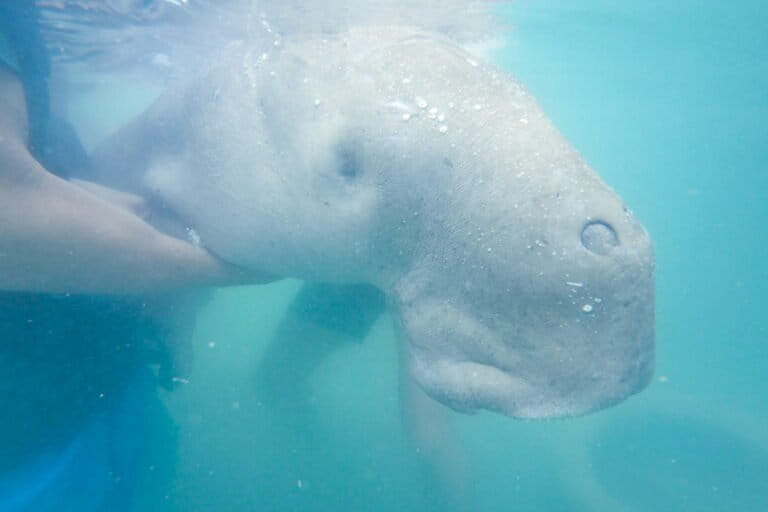
Once a lush field of green, the seagrass meadows surrounding Thailand’s Koh Libong are now largely barren stretches of sand, devastating the island’s iconic dugong population, reports Mongabay’s Carolyn Cowan. Koh Libong’s seagrass meadows were once Thailand’s largest, and a critical coastal habitat that is protected nationally. Yet, between 2020 and 2024, seagrass cover in these protected waters shrank by up to 50%. Thailand’s Department of Marine and Coastal Resources (DMCR) attributes this decline to a range of factors, from marine heat waves to river-mouth dredging. The dugong (Dugong dugon) feeds on fish, crabs and mollusks in seagrass meadows. Until recently, Koh Libong’s waters had one of Southeast Asia’s largest dugong populations. As the meadows have died off, dugong numbers have dramatically declined. Autopsies of emaciated dugongs that washed ashore suggest many deaths were due to starvation. The ecological decline in Koh Libong has also jeopardized the livelihoods of the island’s 3,000 residents, who depend on healthy nearshore ecosystems for fishing and dugong tourism. Local fisher Torfar Jongarap once harvested food by walking the shoreline. Now, to chase unpredictable catches farther out at sea, his fuel costs have tripled. “The food chain is degraded,” Torfar told Mongabay. “Before, everyone could go looking for food near to the shore. But now we all need boats.” Tipusa Sangsawang, coordinator of the Dugong Guardians, a volunteer network spanning the island’s eight villages, leads community efforts to monitor the local dugong population and manage its marine habitats. The group also collaborates with researchers from…This article was originally published on Mongabay