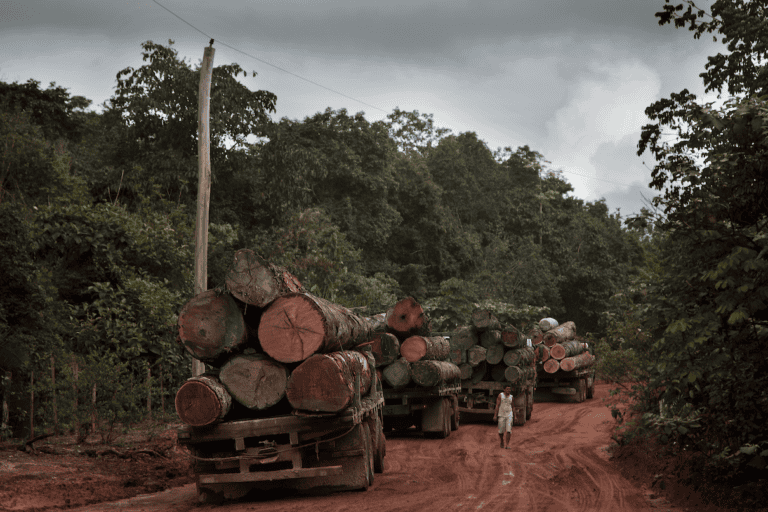

The construction of an access road for a potash mining project in Autazes, in Brazil’s Amazonas state, has caused at least two sacred springs to dry up, according to the Indigenous Mura people. It is the latest in a series of controversies spanning a decade that has plagued the Potássio Autazes project. “There is a profound sense of loss,” Filipe Mura, chief of the affected Lago do Soares village, told Mongabay via WhatsApp. “We realize we may be losing what belongs to us — our territory, our culture, and, above all, the very life that exists in this place.” In Mura traditional cosmology, all springs, rivers, lakes and forests have a guardian, or owner, who must be treated with respect, residents tell Mongabay. “If a spring dries up, it means its keeper has departed — and when the keeper leaves, they take with them the animals, the fertility of the soil, and all the blessings of that region,” Willian Rodrigues Filgueira, a professor from the Mura Baixo Madeira Indigenous territory, which neighbors the affected Lago do Soares/Urucurituba territory, and member of the Organization of Mura Indigenous Leaders of Careiro da Várzea (OLIMCV), told Mongabay via WhatsApp. The loss of a spring, therefore, disrupts the spiritual balance that sustains life in the territory. Residents also said that the company behind the project has begun to clear-cut the area — the process of cutting down all trees in a section of forest at the same time — where it intends to build…This article was originally published on Mongabay