
As AI data centers strain the copper supply, manufacturers are learning that materials, not chips, may set the real pace of growth.
By Gregory J. Smith, CEO, Pantheon Electric
Ask most manufacturing executives what could slow down the AI data center boom, and the answer is usually chips, power or permitting delays, rarely copper. But the physical conductive material that carries electricity from the grid to every server rack, motor and piece of electrical equipment in this economy is becoming one of the tightest commodities in the industrial world, and most companies haven’t caught up to what that means for them.
A projected global shortfall of 10 million metric tons of copper is being driven in large part by AI data centers and the broader electrification of the economy. AI and data centers alone are expected to add roughly 2 million metric tons of new demand by 2040. That’s on top of grid modernization, electric vehicles, defense spending and a wave of reshored manufacturing, all of which run on the same wire, busbars and engineered copper components that have become the connective tissue of the electrified economy.
Demand for copper has been climbing for years, but the pace of that climb has outpaced supply. Ore grades are declining at existing mines, new mine permitting can take a decade or more, and raw materials are among the commodities putting manufacturers’ sales plans at risk.
Copper scarcity is a structural risk that affects any manufacturer building anything that carries power, and those who treat that exposure as a strategic question now, and make strategic copper sourcing decisions, will have a resilient supply chain and far more control over their own production when the shortfall happens.
It’s tempting to read all of this as someone else’s problem, a hyperscaler’s headache rather than a manufacturer’s, but any company that builds equipment with electric motors, wiring harnesses, transformers or busbars is drawing from the same shrinking pool of copper as the data center industry. A manufacturer sourcing copper components today is effectively competing with AI infrastructure buildouts for the same material, often without realizing it until a purchase order comes back with a longer lead time or a higher price than expected.
This is already showing up in procurement conversations across the industrial base, where companies that have never had to think hard about where their copper comes from are starting to ask questions that used to be reserved for rare earths or semiconductors: who is our supplier, how much of our exposure is domestic versus imported, and what happens to our production schedule if that supply tightens further.
Lead times for certain copper products have already stretched over the past two years, and many procurement teams outside the data center world weren’t planning for it. That kind of change tends to surface only after it has already disrupted a production schedule, not before.
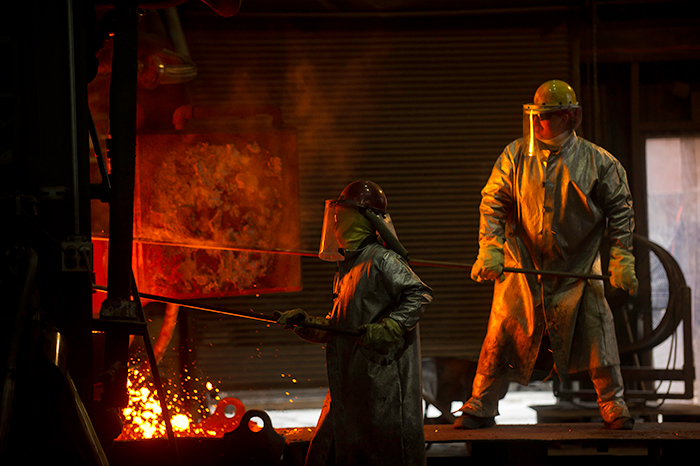
There’s no single fix for a structural supply gap this size, but manufacturers do have leverage in one place: which supplier they choose to rely on. Not every copper partner is the same, and what sets them apart matters more as the market tightens. Some run a single plant and have sourced from the same small group of suppliers for years, making them prime for a single point of failure. Others have built the scale, the manufacturing footprint, and the diversified sourcing, including recycled feedstock alongside long-term supply agreements, to keep producing even when the broader market is fluctuating.
In practice, copper supply chain resilience comes down to operational strategy. A supplier might run multiple manufacturing sites across different regions, so production can shift if one facility is disrupted, while vertically integrated operations are better positioned to reduce exposure to raw material volatility and fluctuations in copper supply. Long-standing relationships across its own supply base give it more room to absorb a shock before it reaches the manufacturers it serves. Those topics won’t show up on a spec sheet, but it shows up in whether an order ships on time.
Materials sourcing is following the same path energy strategy already took, evolving from a facilities-level purchasing decision into a board-level strategic priority at most industrial companies, and the suppliers built for that reality look very different from the ones that aren’t. As a result, a manufacturer evaluating copper suppliers today should be asking less about price per pound and more about whether that supplier’s footprint, scale, sourcing mix, and sourcing strategy can actually hold up if the shortfall arrives.
Today, manufacturers need to understand the copper partners they rely on to secure it. It’s no longer enough to know how much copper flows through their supply chain. Manufacturers should evaluate how dependent their sourcing strategy is on vulnerable sources, and how well it can withstand global shortages, geopolitical uncertainty, and supply chain disruptions. Those are the key considerations to ensure a copper components supplier can remain steady as the market tightens. A copper shortfall can stall a production line as effectively as a labor shortage or a spike in energy costs, and manufacturers are starting to treat it with the same seriousness.
Manufacturers evaluating a supplier relationship right now should ask how many manufacturing sites that supplier operates and how diversified its sourcing is, and whether it balances recycled copper with newly mined raw materials rather than relying on a concentrated supply base or a single region. They should also ask whether its production sits in North America and other markets or somewhere more exposed to geopolitical disruption, and whether it has locked in the agreements that protect against short-term shocks. The answers reveal more about how a supplier will perform under pressure than anything on a spec sheet.
The AI boom has made copper’s importance visible in a way it hasn’t been in decades. But the material itself, and the risk of not having enough of it, doesn’t only belong to the companies building data centers. It belongs to anyone building anything that needs to carry power.

About the Author:
Gregory J. Smith is CEO of Pantheon Electric, an integrated electrical infrastructure platform and the largest independent U.S. manufacturer of copper conductors and busbars, operating 21 manufacturing facilities across North America and Europe.