
Contributed by Alkiviadis Tromaras, PhD | Research Associate, Centre for Research and Technology, Hellas (CERTH); Vasa Radonic, PhD | Principal Research Fellow and Assistant Director of Science, Biosense Institute; Miguel Placer Lorenzo | Senior R&D Researcher, AIMEN Technology Centre; and Nikolaos Aggelopoulos | Research Associate, Hellenic Institute of Transport (HIT) at CERTH
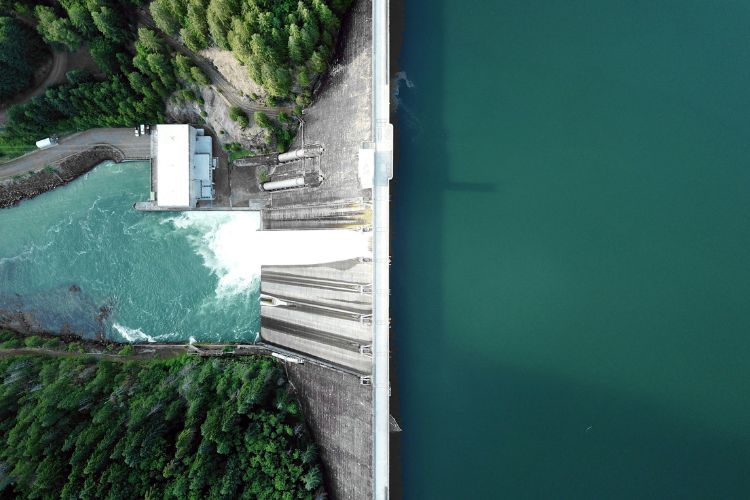
Di-Hydro is an EU-funded research project that addresses the need to modernize and digitalize the hydropower sector. The average age of hydropower plants varies depending on the continent; for Europe, it is 42-46 years, about 64 for the US, and an estimated 20 years in China. The hydropower sector will require modernization to keep up with current and future demand.
To fully harness this potential and bolster renewable energy production for a climate-neutral economy, Di-Hydro aims to digitize hydropower plants (HPPs) by developing smart devices and data acquisition techniques to predict and control operations and maintenance. Furthermore, digital twins (DTs) have been developed to facilitate data exchange, alongside an intelligent decision-making tool for optimal coordination of power generation considering societal, weather, water flow, environmental, and biodiversity data.
Within the spectrum of digitalization of HPP operations, the Di-Hydro project has developed sensors for two different applications. The first set of sensors is destined for structural health monitoring (SHM) of machinery or infrastructure, while the second is for monitoring environmental and biodiversity parameters.
The purpose of the SHM sensor node that has been developed by CERTH is to provide a low-cost, low-power solution that can be retrofitted easily without considerable invasiveness, capable of providing real-time and continuous monitoring of defects and damages that may occur on rotating machinery or infrastructure at a hydropower plant. The SHM sensor consists of an acoustic emission (AE) sensor system paired with a multisensor unit that carries a triaxial accelerometer unit, gyroscope, magnetometer, barometer, and temperature and humidity sensor.

The AE system is based on the Qawrums RAEM-2 system architecture and is used for detecting elastic transient waves that are generated from a material under load when cracking, deformation, or other permanent changes occur. Other sources that generate AE signals related to flaws are defective gears and faulty bearings from rotating parts and industrial drive train assemblies. The AE data are automatically uploaded to an online cloud server, which also plots and displays the evolution history of amplitude, RMS, power, and ASL values (Figure 2). The multisensory unit is based on the Sense HAT (B) board and is connected to a Rasbery Pi microcomputer.

This sensor node has been installed at the Ilarionas HPP in Greece to detect potential failures in the plant’s drainage pumps and penstock. These two locations did not previously have this kind of sensor and were indicated as areas of interest that required monitoring.

The other main application area of deployed sensors in the DI-HYDRO project includes water quality and biodiversity monitoring sensors. HPPs can significantly affect water quality and environmental conditions in water reservoirs and river basins.
The key issue is water stagnation, which can lead to stratification, layers of water with different temperatures and oxygen levels. This reduces oxygen mixing and creates conditions for microbiological and chemical imbalances, which limits oxygen mixing and creates conditions for microbiological and chemical imbalances. For example, nitrification processes may intensify in low-oxygen zones, altering nutrient cycles and potentially leading to the accumulation of harmful nitrogen compounds.
Another common problem is the formation of algal blooms, often called “green soup”. These occur when excess nutrients, such as nitrogen and phosphorus, and warm, stagnant conditions promote rapid algal growth. Some of these blooms can produce toxins, reduce oxygen levels during decomposition, and harm aquatic life and human health. They can also cause clogging in HPP piping systems, reducing or even completely halting power generation.
Monitoring these issues is critical for both HPP operations and broader societal needs, as reservoirs frequently serve as sources of drinking water, irrigation, and recreation. Poor water quality can increase treatment costs, damage ecosystems, and pose health risks.

A new electrochemical sensor for ammonia detection, fluorescence-based algae sensors, and an E.coli biosensor were delivered by INOSENS and integrated into a sensor system for measuring temperature, turbidity, pH, conductivity, and dissolved oxygen (Figure 4) to improve understanding of water parameters and conditions. By collecting real-time data in combination with manual measurement of total coliform and E. coli, these sensors enable early detection of problems, support decision-making (e.g., controlled water releases or aeration), and help mitigate impacts before they become severe.
Furthermore, AIMEN has deployed a portable multiparametric platform that allows remote water sampling at any point in the reservoir. This multiparametric platform is a portable, rough suitcase equipped with a tryptophan-like fluorescence sensor that can estimate the pathogenic contamination of water samples within a few seconds, using E. coli natural fluorescence as the main indicator. The suitcase is also equipped with a portable version of a Digital Holographic Microscope (DHM) that, through laser interferometry combined with microscopy objectives and a digital camera, can produce holograms of water samples. Image processing is applied to obtain 3D images of present microorganisms, allowing the assessment and estimation of the population of key microorganism species like cyanobacteria, green algae, etc. This helps to monitor the evolution of the reservoir microscopic biodiversity.

A decision-making system model that has been developed integrates data from multiple sources, including historical water quality reports, sensor data from measurements, and HPP operational parameters obtained from the SCADA system (Figure 5). These datasets, with significantly different temporal resolutions, ranging from a few measurements per year to minute-level sensor observations, were combined to develop two interconnected AI/ML models. The first model assesses and predicts biological activity in the reservoir using sensor data and automated analysis of DHM images. The second model integrates the outputs of the first model with hydropower plant operational and historical data to correlate environmental and biodiversity changes with hydropower plant performance, improve predictive maintenance, environmental compliance, and operational efficiency.

The Di-Hydro project has received funding from the European Union’s Horizon Europe Research and Innovation Programme under grant agreement N° 101122311.


Alkiviadis Tromaras, PhD, is a Research Associate and head of the lab for air transport systems and services at the Centre for Research and Technology, Hellas (CERTH). He has a PhD in Manufacturing Engineering. He is currently the coordinator of the Di-Hydro project and is actively engaged in non-destructive testing of transport or energy infrastructure and means.

Vasa Radonic, PhD, is a Principal Research Fellow and Assistant Director of Science at the Biosense Institute. He received a PhD in electronics in 2010 from the University of Novi Sad. He has authored and co-authored two book chapters, 30 journal papers, more than 60 conference papers, and 10 technical solutions. He was a steering committee member and the vice president of the Scientific Council at the BioSense Institute from 2015-2020.

Miguel Placer Lorenzo is a Senior R&D Researcher at the AIMEN Technology Centre. He has 10 years of experience in photonic technologies, covering the design, simulation, development, and validation of photonic and biophotonic sensors for environmental monitoring, water treatment digitalization, and bioprocess control. Miguel has been involved in EU projects on digital water, bioprocess monitoring, circular economy, and energy, developing photonic sensors combined with AI for process optimization, risk prevention, environmental safety, and predictive maintenance.

Nikolaos Aggelopoulos is a Research Associate at the Hellenic Institute of Transport (HIT) of the Centre for Research and Technology Hellas (CERTH). His doctoral research thesis is focused on damage detection and damage evolution monitoring in Fibre-Reinforced Materials using the Acoustic Emission technique. He is a member of the Technical Chamber of Greece and has worked as a Project Engineer in the industrial sector. His research interests include Structural Integrity Monitoring, Failure Detection, Signal Processing, Metallurgy, and Fiber-Reinforced Composite Materials.