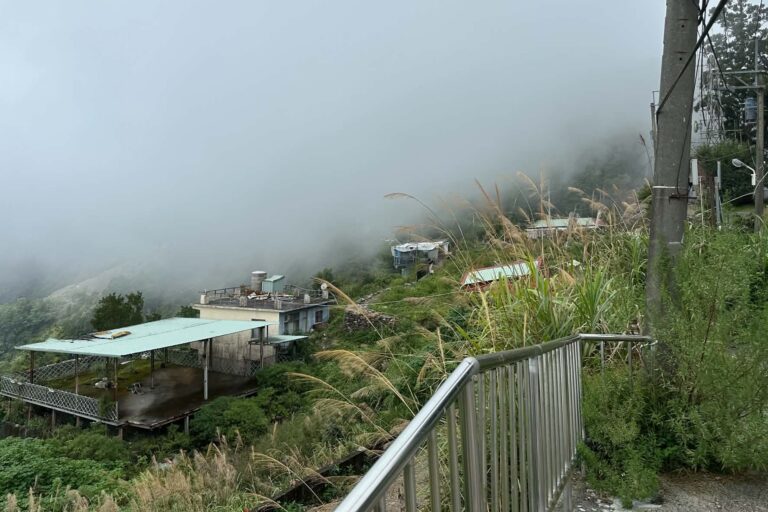
Wild grass now grows around the abandoned wooden houses of Tengjhih, a high-mountain hamlet in southern Taiwan, once a key settlement of the Bunun Indigenous people. Now, little remains except for the memories it holds. Around 150 Bunun Indigenous residents of Tengjhih were permanently resettled in lowland areas after the deadly Typhoon Morakot in 2009 destroyed the only access road to their village, contributor Aylin Ho reports for Mongabay. Typhoon Morakot killed 755 people across Taiwan, triggering catastrophic floods and landslides. While Indigenous peoples represented just 2.1% of Taiwan’s population at the time, approximately 70% of the land declared unsafe by authorities was located within Indigenous territories. Efforts to rebuild the road to Tengjhih in 2012, 2021 and 2023 faced setbacks due to climate change-amplified rainfall and landslides. More recently, a typhoon in 2025 also devastated one section of the mountain, Ho reports. The indefinite closure of the surrounding Tengjhih National Forest Recreation Area has wiped out the local ecotourism and agricultural economy. “When a major typhoon hits us, I have no income for the entire year,” said Bi’ Ismahasan, 70, a tea and coffee farmer who now relies on government assistance. “In 2026, I lost my entire harvest. Every year is worse than the previous one.” Displacement has severed connections to ancestral land, threatening the transmission of cultural practices and language to younger generations. “Today, when [young people] come back, there is no village and no work,” said Saminat Maliklan, 55, a Bunun cultural guide and one of five…This article was originally published on Mongabay