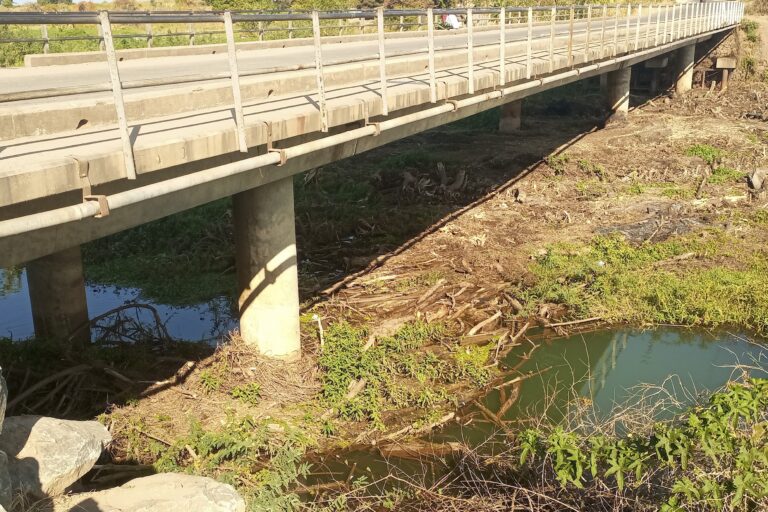
A mass of floating weeds at Chia Lagoon, Malawi’s largest, is choking out waterways and livelihoods as farmers and fishers struggle to access fields and fishing areas. Seven months after the rainy season ended in Malawi, fields that once absorbed seasonal water at the lagoon are submerged, frustrating irrigated maize and rice production, according to farmers. Fishers also said it’s now hard to access fishing grounds as the weeds are blocking boat routes. “We have never seen anything like this,” said Ali Maulidi, who leads an association of more than 1,000 fishers in Nkhotakota district in central Malawi where the lagoon is located. “Due to waterlogged soils, matured cassava has rotted in some fields,” Maulidi told Mongabay in a phone interview. The lagoon, on the western shoreline of Lake Malawi, drains into the lake through a narrow channel. Communities said weeds and debris started collecting where the outlet begins in February, pushing the water back into the lagoon and flooding agricultural fields. Chia Lagoon covers 1,700 hectares (4,200 acres) and directly supports more than 7,800 households through rice, cassava and maize farming as well as fishing and bird hunting. The larger river network supports more than 55,000 agriculturalists. In December 2025, the lagoon was recognized as a Key Biodiversity Area because of its abundant bird, fish, plant, reptile and amphibian species. “We don’t understand what is happening here; but we’re worried because it’s greatly affecting us,” Maulidi said. Scientists too don’t fully understand why the weeds are accumulating now, but…This article was originally published on Mongabay