
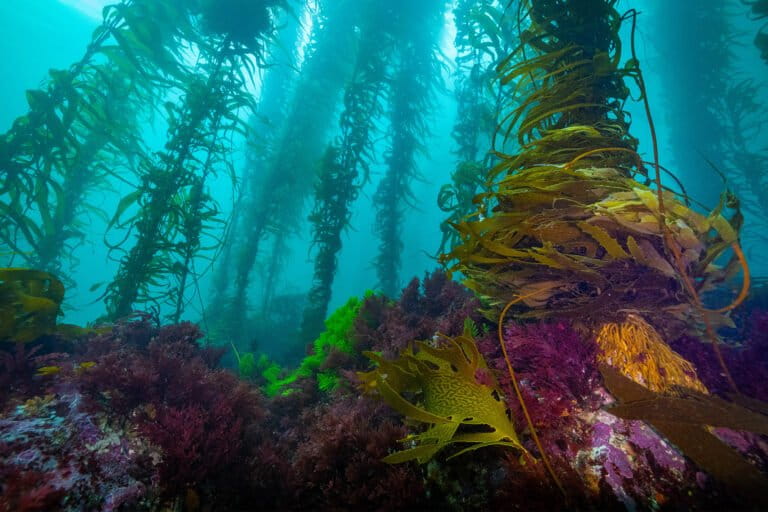
For nearly a decade, divers off Tasmania’s east coast have been getting a boost from the government to harvest the invasive sea urchins killing off kelp forests that fringe the Australian island state. A state program offers financial incentives to support a commercial fishery for the highly valuable roe of the long-spined sea urchin (Centrostephanus rodgersii), also known as Centro. The aim is to reduce urchin numbers in targeted areas so the kelp can rebound. Researchers say the program has been effective in helping the recovery of some of the state’s kelp forests. Now, however, they warn that progress is threatened by a shift to short-term funding cycles that undermine stability for harvesters and put kelp recovery on wobbly ground. John Keane, senior research fellow and wild fisheries program leader at the University of Tasmania’s Institute for Marine and Antarctic Studies (IMAS) in Hobart, has been studying Centro for more than 15 years and diving off Tasmania’s coast for 26 years. He told Mongabay he’s watched the kelp forests decline over the years. “The rise of the fishery has put a halt on that in some areas,” he said. “We have seen some localized successes where we’ve seen kelp come back.” Long-spined sea urchin (Centrostephanus rodgersii), also known as Centro, photographed in Tasmania. Image © Oliver Orr via iNaturalist (CC BY-NC 4.0). Australia’s other great reef The Great Southern Reef is a temperate network of rocky reefs dominated by kelp forests that stretches across 8,000 kilometers (about 5,000 miles) of…This article was originally published on Mongabay