
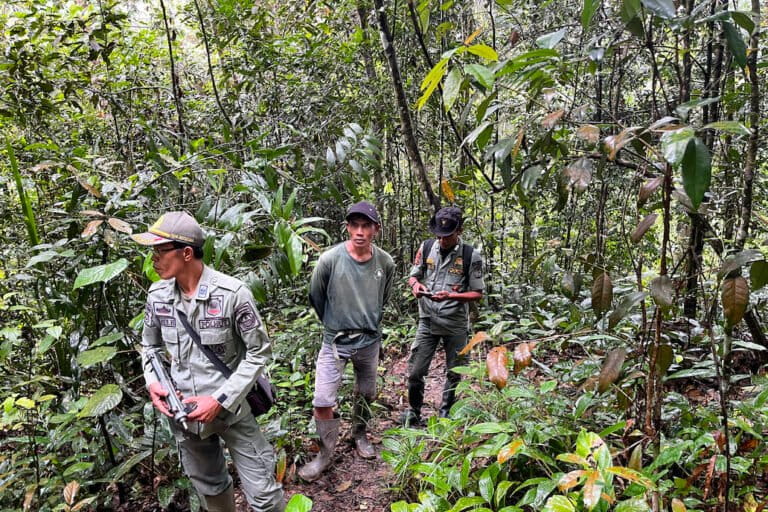
TANGGAMUS, Indonesia — For more than a decade and a half, forest ranger Wandi Harmoko has walked the ridges and valleys of Batutegi, a landscape in southern Sumatra. He is one of only a handful of officers tasked with patrolling almost 60,000-hectares (148,300 acres) of forest that is not only ecologically significant but also economically vital to Lampung province. The forest Wandi protects today has been shaped by decades of disturbance. Since the turn of the century, waves of encroachment cleared large areas of forest to accelerate conversion to coffee plantations. Nevertheless, the forests here still harbors endangered wildlife, including Sumatran tigers (Panthera tigris sumatrae), siamang (Symphalangus syndactylus), pangolins (Manis javanica), Sumatran slow lorises (Nycticebus coucang) and sun bears (Helarctos malayanus). The survival and recovery of what remains in Batutegi depend on a fragile collaboration between a limited number of rangers, technology-driven monitoring systems, and social forestry farmers whose livelihoods are tied to the landscape. “What affects me most are the moments when we still encounter forest encroachment,” Wandi told Mongabay after joining his team for a day patrol inside Batutegi’s core zone. “It creates an inner conflict, because sometimes we have to arrest people and see them go to prison, even though we understand their situation.” Wandi Harmoko has patrolled the forest of Batutegi for over a decade. Image by Basten Gokkon. The Batutegi landscape, including a reservoir with the same name, stretches across 81,741 hectares (202,000 acres) jointly overseen by two forest management units (KPH), namely KPH Batutegi…This article was originally published on Mongabay