
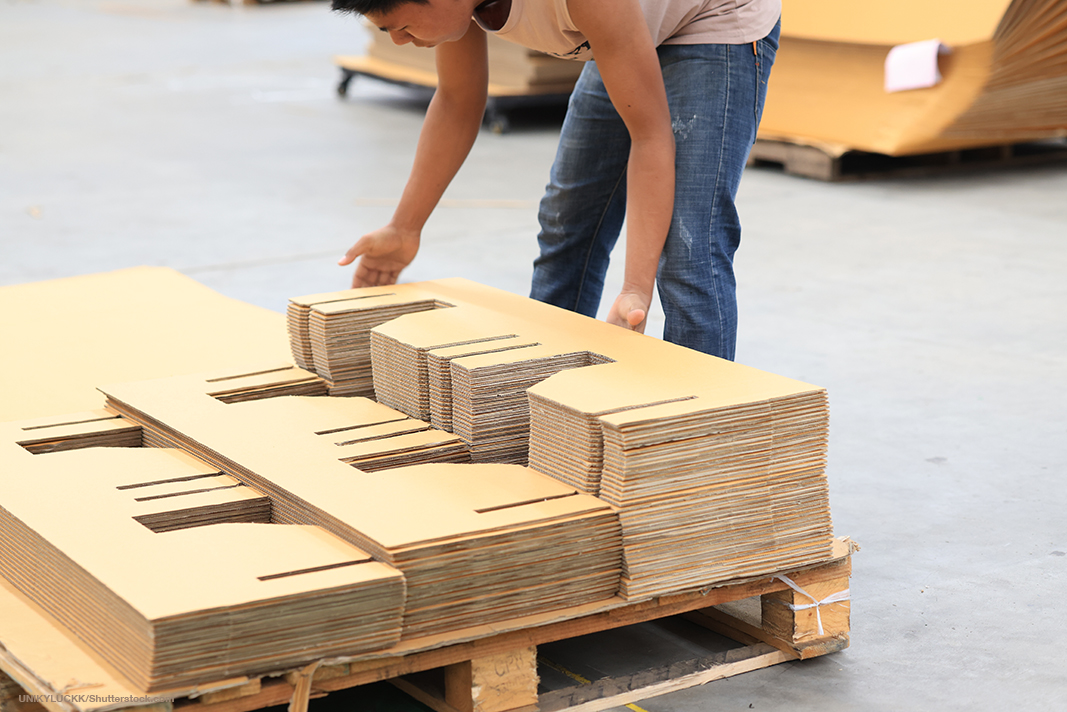
Packaging is becoming a strategic advantage as sustainability, freight costs, and buyer expectations reshape manufacturing.
Packaging decisions used to sit fairly low on the list of strategic priorities for most manufacturers and distributors, treated as a cost line to minimize rather than a variable worth optimizing. That’s changed. Between tightening sustainability regulation, rising freight costs that make every cubic foot of a container matter, and buyers who increasingly factor packaging waste into purchasing decisions, 2026 is shaping up as a year where packaging strategy touches procurement, logistics, compliance, and brand positioning all at once.
Industrial and agricultural shippers moving dry, flowable materials, powders, grains, chemicals, and construction aggregates among them, have relied on Flexible Intermediate Bulk Containers for decades because they solve a straightforward problem: getting a large volume of material from producer to buyer without the cost and handling complexity of rigid containers or pallets. What’s changing in 2026 isn’t the basic case for FIBCs, it’s what they’re made from and how safely they’re specified for hazardous environments.
Recycled content is moving from a niche option to a mainstream specification. Manufacturers like Codefine now produce FIBC bulk bags made from recycled PET, turning plastic bottles that would otherwise enter the waste stream into industrial-grade bags rated for loads up to 2,500 kilograms. For a buyer weighing packaging decisions against sustainability commitments, that shift matters more than it might have five years ago, when recycled content in industrial packaging was harder to source at scale and often came with a performance tradeoff. It also matters for safety classification, since FIBCs handling combustible powders or operating around flammable gases need to meet specific static-dissipative standards, Type C bags rely on grounding through conductive yarns, while Type D bags achieve the same protection through antistatic fabric without needing a ground connection at all. Getting that classification wrong isn’t just a compliance footnote. It’s the difference between safe handling and a genuine ignition risk on a production floor or in a warehouse.
Expect more buyers in 2026 to treat FIBC specification as a two-part decision: matching the bag’s safety rating to the material being transported, and matching its material composition to a sustainability target that’s increasingly tracked at the procurement level rather than left to whichever supplier offers the lowest unit price.
Flexible plastic packaging, the pouches, wraps, and sachets used across food, fashion, and consumer goods, has a recycling problem that rigid plastic doesn’t share. Multi-material construction, food contamination, and lightweight film make most flexible packaging unsuitable for conventional recycling streams, and industry estimates put actual recycling rates for this category in the low single digits. That gap has pushed compostable alternatives from experimental packaging lines into mainstream commercial use over the past several years, and 2026 looks like the point where that shift becomes harder for brand owners to ignore.
TIPA is one of the companies furthest along this path, having spent over a decade developing films and laminates that behave like conventional plastic on existing packaging machinery but break down in compost conditions within roughly six months, the same timeframe as food waste rather than the decades a standard plastic film would take. The company has expanded its portfolio to include high-barrier laminates that extend shelf life without sacrificing compostability, addressing one of the longer-standing objections to sustainable packaging: that shelf-stable and eco-friendly used to be treated as competing goals. Manufacturing footprints across Europe, North America, and Australia have also made this kind of packaging more viable for brands that need regional supply rather than a single overseas source feeding a global product line.
The businesses adopting compostable flexible packaging fastest tend to share one trait: direct consumer visibility. Food brands, fresh produce packers, and fashion retailers face customers who see and handle the packaging directly, making sustainability claims tied to it far more visible than, say, a compostable bulk shipping material buried inside a supply chain. That visibility is likely to keep pulling more consumer-facing categories toward compostable films through 2026, even as industrial and B2B packaging continues to prioritize durability and cost over end-of-life biodegradability.
A theme running through both bulk and consumer packaging trends this year is that packaging choices are increasingly evaluated for their effect on freight costs and handling efficiency, not just their ability to contain a product safely. FIBCs that stack efficiently and reduce reliance on pallets cut freight costs directly, since more product moves per container or per truckload. Lightweight compostable films reduce shipping weight compared to some legacy multi-layer laminates, a small difference per unit that compounds meaningfully across a full production run.
That framing, packaging as a logistics variable rather than a fixed cost, is likely to become more common as freight rates remain volatile and companies look for savings anywhere they can find them without cutting into product quality or safety margins.
Extended producer responsibility laws, expanding compostability certification standards, and stricter rules on what can legally be labeled “biodegradable” or “recyclable” are converging on packaging decisions from multiple directions at once. A packaging choice that was purely a cost and performance calculation two or three years ago increasingly has a compliance dimension attached to it, particularly for companies selling into the EU or into US states that have passed their own extended producer responsibility legislation.
For manufacturers and brand owners, that means packaging specifications decided in 2026 need to account for where regulation is heading over the following two to three years, not just where it stands today. Locking into a packaging format that a supplier can no longer legally market as compostable, or that falls outside an updated recycled-content threshold, creates a rework cost that’s far more expensive than building in that margin from the start.
Packaging in 2026 sits at the intersection of cost control, regulatory compliance, and brand credibility in a way it hasn’t in previous years. Bulk shippers are re-evaluating FIBC specifications against both safety ratings and recycled content, consumer brands are moving compostable flexible packaging out of pilot programs and into standard product lines, and companies across categories are starting to treat packaging weight and efficiency as a genuine lever on freight spend rather than a fixed cost to be minimized elsewhere. None of these shifts are dramatic on their own, but together they mark packaging’s move from an operational afterthought to a decision that touches procurement, sustainability reporting, and logistics planning all at once.