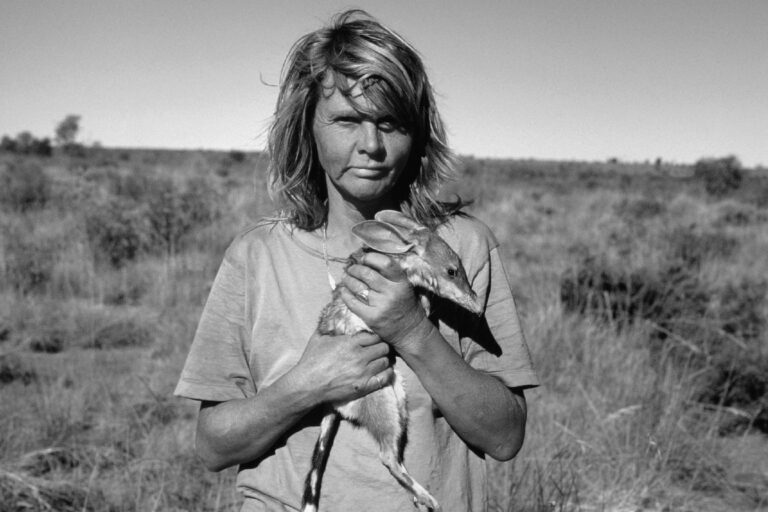
The termites had built their towers long before roads crossed the Kimberley or companies proposed industrial projects along its rivers and coasts. Their colonies worked beneath the red earth, altering the soil and supporting other forms of life. Pat Lowe studied them closely. She asked Aboriginal knowledge-holders what they knew, spoke with scientists, read widely, and eventually wrote a book about them. She was drawn to subjects that were common and easily overlooked. The same attention led her to boabs, mammals, desert plants, and the pindan woodlands around Broome, where red soil lies beneath pale grasses and scattered trees. Her interest in conservation grew from long observation of how these landscapes worked. Pat Lowe, who died on July 2nd, 2026, aged 84, spent much of her life studying the Kimberley and helping others understand it. She was a psychologist, writer, editor, naturalist, and environmental campaigner. Her path to northern Western Australia began far away. Born in England in 1942, she trained as a teacher, worked in East Africa, and later moved to Australia, where she became a psychologist in the prison system. At Fremantle Prison, she met Jimmy Pike, a Walmajarri man who had grown up in the Great Sandy Desert and became one of Australia’s best-known Indigenous artists. After Pike’s release, they lived for three years at Kurlku, a remote desert camp. Water, weather, distance, and food governed daily life. Pike taught her about his Country: its routes, seasons, foods, history, and obligations. She learned Walmajarri words, listened…This article was originally published on Mongabay