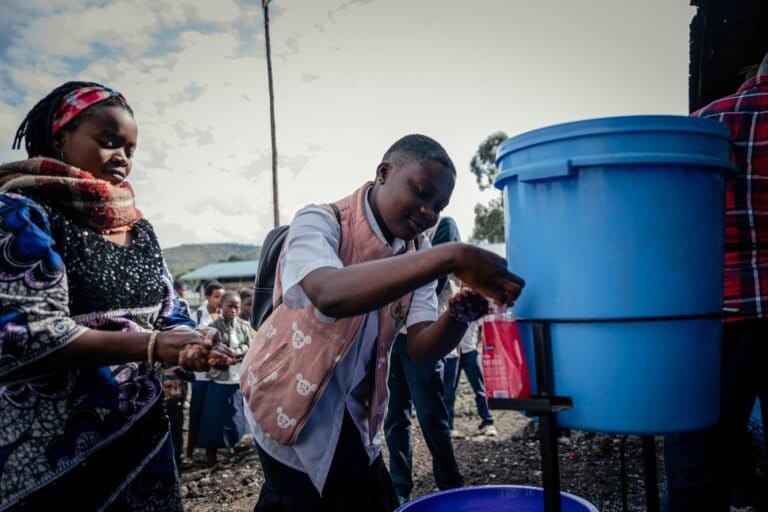
In Ndrele, a commercial center in Ituri with nearly 40,000 inhabitants, there is virtually no access to safe drinking water. Children leave home at 5:30 a.m. to fetch water for their families and often spend hours doing this activity. They usually don’t return before 11 a.m. or noon. “It’s a serious problem, and it’s the same everywhere,” Jacques Pithua, deputy coordinator of civil society group “Forces vives des Djukoth,” told Mongabay by phone. Pithua lives near Ndrele, in Mahagi, in Ituri province bordering Lake Albert in eastern Democratic Republic of the Congo (DRC). In May 2026, the DRC declared its 17th Ebola outbreak in the province. To prevent Ebola transmission, health authorities recommend frequent handwashing, among other measures, but in many parts of Ituri, clean water remains scarce. The current Ebola outbreak is the largest in terms of case numbers for the DRC, and it is also the fastest spreading. The rising number of cases, over 5,000 recorded as of Aug 17 and more than 2,400 deaths in three months, has prompted health agencies including the Africa CDC to adapt its strategy. A joint response plan also calls for an assessment and strengthening of water, sanitation and hygiene services in health facilities within communities and provides training. Oxfam, a confederation of NGOs, which is also involved in the response to the outbreak, warned in a statement that “most health facilities in the areas hardest hit by Ebola still lack access to safe water and adequate sanitation facilities.” Ebola is not…This article was originally published on Mongabay