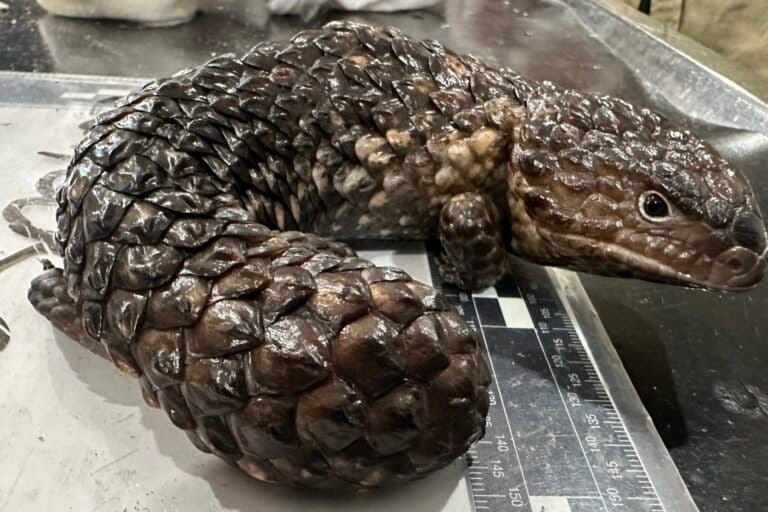
In Australia in May 2026, Yang Zeng, a 28-year-old Chinese national who was unlawfully in the country, was sentenced to two and a half years in prison. Zeng was convicted on nine charges related to the illegal export of native wildlife to Hong Kong, according to Australia’s Department of Climate Change, Energy, the Environment and Water (DCCEEW), the government agency in charge of wildlife. The animals targeted included saw-shelled turtles (Myuchelys latisternum), Cooper Creek turtles (Emydura macquarii emmotti), blue-tongued lizards and magnificent tree frogs (Pelodryas splendida). Investigators found that the man used a fake animal keeper license to obtain the reptiles. Between September 2024 and May 2025, Zeng used couriers and international companies to handle international shipping and customs, according to DCCEEW. The animals were stuffed into socks and hosiery, wrapped in foil and hidden inside parcels alongside items including bags of dog food. Environmental crime investigators also seized five native turtles — three saw-shelled turtles and two long-necked turtles (Chelodina longicollis) — that were found swimming in a bathtub during a search of a property in a suburb of Sydney. Under Australian law, exporting native wildlife, including eggs, without a permit is illegal. A joint federal and state operation in Australia uncovered alleged Sydney wildlife trafficking ring and confiscated reptiles, cash, and silver and gold bullion worth around $300,000. Image courtesy of the National Environmental Protection Agency. The case offers a glimpse into an illegal trade that often remains hidden until animals are intercepted at the border, at airports…This article was originally published on Mongabay