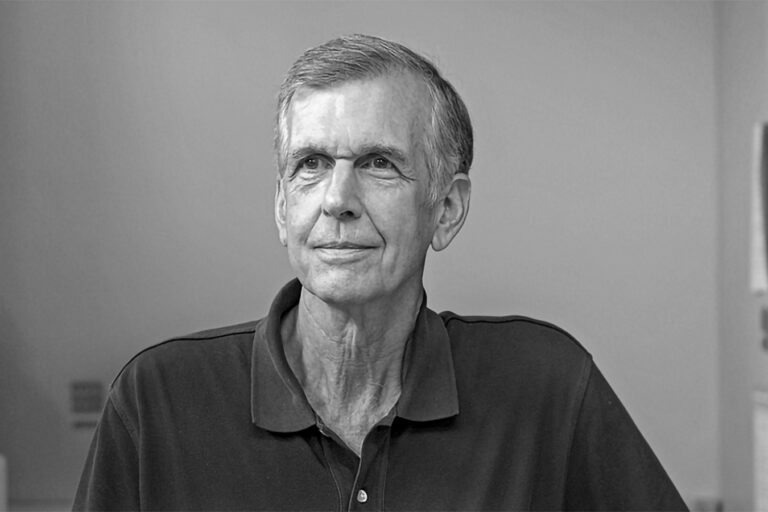
At the mouth of the Carmel River, a teacher set up a spotting scope and let a boy look through it. The birds were the first thing he saw. The habit of looking came next. He saw that the world could be understood, though not quickly, and that its order did not reveal itself to those in a hurry. Later he would say he never recovered from that experience. The remark was light, but also true. A childhood near Monterey, with woods behind the house and the Pacific within walking distance, gave him the subject of his life. Robert “Bob” Ricklefs, who died on June 7th, a day after his 83rd birthday, spent that life asking how living things came to be where they are, and why they lived as they did. He became one of the most influential ecologists of his generation: an ornithologist, biogeographer, theorist, teacher, author and member of the National Academy of Sciences. His textbooks, Ecology and The Economy of Nature, shaped how thousands of students first encountered the field. Their authority came from clarity. He could take a tangled subject and find a usable path through it. Birds were his beginning. As a boy he joined weekend outings with the local Audubon Society and gained the status, modest but real, of a child with a serious interest. At Stanford he briefly followed the spirit of the space age into engineering, then returned to biology. At the University of Pennsylvania he entered the circle of Robert…This article was originally published on Mongabay