
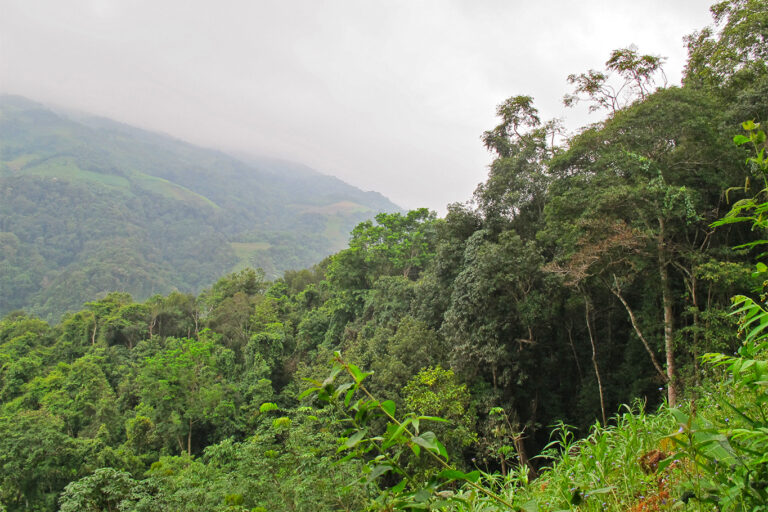
Many of Southeast Asia’s native oak species are under high stress from human pressures and lack protection, according to a recent report, reports contributor Sean Mowbray for Mongabay. Of the 430 known oak species in the world, 172 are native to Southeast and East Asia. The report, produced by the Morton Arboretum, a nonprofit that studies plants globally, evaluated 54 oak species across Southeast and East Asia listed as threatened or data-deficient by the IUCN. The analysis found that 46 species experienced “very high” or “high” human pressure across more than half of their native ranges in 2024. “While it may not be the region that first comes to mind when we think of oaks, it’s a really important region for oak biodiversity and as a result, oak conservation,” study author Kate Good, a research manager at the Morton Arboretum, told Mongabay in an interview. “Many of these species are under dire threat,” added Good. The researchers found that agricultural expansion, specifically rubber, oil palm, and wood and pulp plantations, were the major threats to two-thirds of the analyzed species. The report identified Vietnam as the center of Southeast Asian oak biodiversity, hosting 33 threatened or data deficient species, 15 of which are found nowhere else. Furthermore, three of Southeast Asia’s four designated oak biodiversity hotspots lie within the Annamite mountain range, which spans Vietnam, Laos and Cambodia, while the fourth is located in Doi Inthanon National Park in Thailand. “Vietnam is an important country for the conservation of Asian…This article was originally published on Mongabay