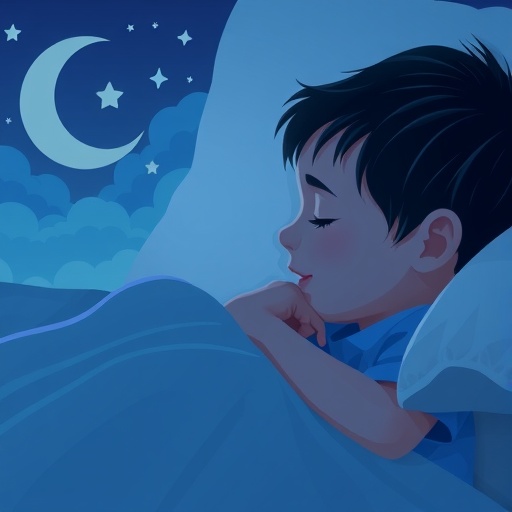
A large study of children using melatonin has found that the supplement was associated with a small reduction in the proportion of rapid eye movement, or REM, sleep—but not with broad disruption of sleep architecture. The findings, published in JAMA Network Open, add nuance to a debate that has intensified as melatonin use has become increasingly common among children and adolescents. Although melatonin is widely regarded as a relatively gentle sleep aid, researchers say the new results do not establish that the supplement directly causes changes in children’s sleep cycles.
The investigation analyzed data from 684 children who were matched using propensity-score methods, a statistical technique designed to make groups more comparable when participants have not been randomly assigned to a treatment. The children who used melatonin were compared with similar children who did not, based on available clinical and demographic characteristics. Researchers examined overnight sleep-study data, including total sleep time, the percentage of sleep spent in different stages, breathing measures, arousals, and periodic limb movements.
The most notable difference involved REM sleep, the stage associated with vivid dreaming, emotional processing, memory consolidation, and changes in brain activity that resemble wakefulness. Children using melatonin spent a slightly smaller percentage of the night in REM sleep than matched nonusers. The effect was modest, however, and the study did not show that melatonin reduced the total amount of sleep children obtained. It also found no meaningful differences in non-REM sleep stages, respiratory parameters, the pattern of brief awakenings, or periodic limb movements during sleep.
Sleep architecture is not simply a measure of how long someone sleeps. It describes the organization of sleep across the night, including transitions among light non-REM sleep, deeper slow-wave sleep, and REM sleep. A change in the percentage of one stage can reflect a shift in the balance of the entire sleep cycle without necessarily indicating worse sleep. In this study, the observed REM difference was small, and the researchers did not report evidence that melatonin users experienced a generalized breakdown of normal sleep organization.
Melatonin is a hormone produced naturally by the pineal gland in response to darkness. It helps regulate the body’s circadian timing system by signaling that biological night has begun. Commercial melatonin supplements may therefore influence sleep timing, particularly in people whose internal clocks are delayed or whose routines make it difficult to fall asleep at a desired hour. But supplement formulations vary widely, and the amount listed on a label may not always correspond precisely to the amount delivered. Timing, dose, formulation, and adherence can all affect the hormone’s impact on sleep.
The study’s statistical analysis also highlights how difficult it is to separate the effects of melatonin from the reasons children take it. When psychiatric diagnoses were added to the propensity model, the association between melatonin use and reduced REM sleep became weaker. This attenuation suggests that underlying conditions—including disorders associated with sleep difficulties—or other factors linked to psychiatric care may have contributed to the original finding. Children who use melatonin may differ from nonusers in ways that are not fully captured in medical records, including bedtime routines, screen exposure, anxiety, developmental characteristics, or the severity and duration of their sleep problems.
Because the research was cross-sectional, it provides a snapshot rather than a timeline. The investigators could identify an association between outpatient melatonin use and sleep-study measurements, but they could not determine whether melatonin preceded the REM difference, whether children with altered sleep patterns were more likely to receive melatonin, or whether another factor influenced both. The study also lacked sufficiently detailed information about the precise dose, timing of administration, duration of use, product formulation, and adherence. These limitations are particularly important for a hormone-based supplement whose effects depend heavily on when it is taken.
The findings therefore should not be interpreted as evidence that melatonin is broadly harmful to children, nor as proof that it is risk-free. They do suggest that the supplement’s effects may be more specific and complicated than a simple distinction between “sleeping better” and “sleeping worse.” A small change in REM percentage may have little clinical importance for many children, but its significance cannot be judged fully without knowing whether it persists over time, varies with dose or timing, or is associated with daytime functioning, learning, mood, or behavior.
Prospective studies are now needed to follow children before and after carefully documented melatonin treatment. Ideally, such research would use standardized products, verified dosing, objective measures of adherence, repeated overnight sleep studies, and detailed assessments of psychiatric diagnoses and sleep-related behavior. Randomized trials would provide the strongest evidence about causality, although ethical and practical considerations may limit their duration. Until those data are available, clinicians and families will need to weigh potential benefits for sleep timing against uncertainty about long-term use, while addressing behavioral and environmental contributors to childhood sleep problems whenever possible.
Subject of Research: The association between outpatient melatonin use and sleep architecture in children, including REM sleep, non-REM sleep, total sleep time, respiratory parameters, arousals, and periodic limb movements.
Web References: https://doi.org/10.1001/jamanetworkopen.2026.26983
References: JAMA Network Open, Original Investigation, DOI: 10.1001/jamanetworkopen.2026.26983
Keywords
Melatonin, children, pediatric sleep, REM sleep, sleep architecture, sleep studies, non-REM sleep, psychiatric diagnoses, circadian rhythm, sleep medicine, respiratory parameters, periodic limb movements, propensity-score matching, pediatric health.
Tags: Children’s sleep architectureclinical implications of melatonin on child sleep patternseffects of sleep aids on children’s REM sleepimpact of melatonin on sleep stages in pediatric populationsmelatonin effects on REM sleep in childrenresearch on sleep fragmentation and limbsafety and sleep quality in children taking melatoninsleep cycle changes associated with melatonin supplementationsleep disturbances and melatoninsleep health and supplement use in adolescentssleep study analysis of melatonin use in childrenstatistical methods in pediatric sleep research