Speed vs. control in CNC machining and rapid production.
On-demand manufacturing combines CNC machining, 3D printing and other rapid processes to quickly turn designs into physical parts. Providers like Protolabs emphasize speed and automation, offering instant quotes and ultra-fast turnaround, whereas shops like WayKen manufacturing focus on engineering control and flexibility, tailoring each project to complex requirements. In this comparison we explore how these two approaches differ: Protolabs as a speed‐driven service with standardized, automated workflows, and WayKen as a control‐oriented manufacturer with hands-on design support.
Protolabs built its reputation on rapid quotes and next‑day prototypes. Once designers upload CAD models, they immediately receive quotes and lead times. Every quote comes with an automated DFM analysis that flags issues like thin walls or hard‐to‐machine features. This integration of quoting and design feedback means designers iterate quickly and live engineering support is available for complex situations.
In practice, Protolabs’ in-house CNC factories follow highly standardized workflows: jobs are scheduled automatically, CAD files are parsed by software, and machines run continuously. This is ideal for urgent prototyping and low-volume runs but is generally best suited to “standardized, simpler geometries”. Designs requiring unusual 5-axis moves or custom fixtures are often outside its core scope.
In the Protolabs business model, the company achieves both speed and quality of its manufactured parts through two separate channels. First, Protolabs uses its own in-house CNC factories located throughout the U.S. and Europe to produce parts using standard and common materials and part dimensions. As the volume of the parts increases, Protolabs utilizes its network of vetted suppliers, referred to as the Protolabs Network. This network enables them to extend its capabilities and improve upon the tolerance levels of parts produced in its own factories. One potential drawback associated with utilizing this setup is reduced transparency. When an order is sent out of house, customers do not interact with each supplier directly and therefore rely on Protolabs’ established protocols to ensure quality at those locations.
WayKen model employs an engineer-centric approach that allows for flexibility. Once a client submits an order, WayKen’s technical sales manager along with the lead project engineer assigned to that job remain involved until it is complete. Rather than relying solely on automated algorithms, the team manually evaluates each design to ensure it is optimized for custom CNC machining, identifying potential manufacturability issues early and refining the approach accordingly.
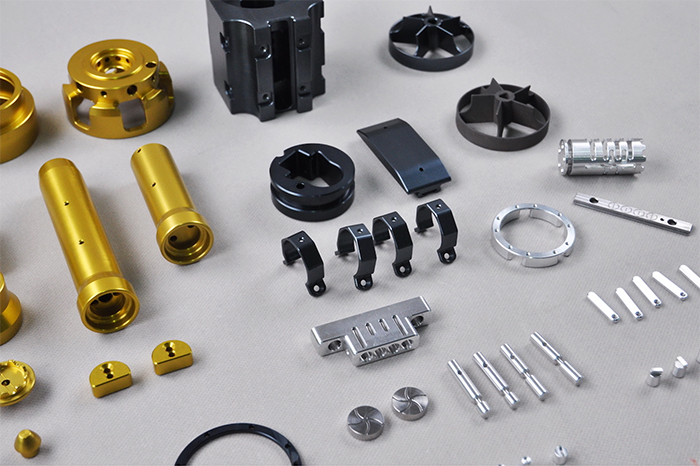
In cases where a design may contain aspects (e.g., undercut or thin-walled areas) that make manufacturing difficult, the engineers communicate with the designers to suggest alternative methods including using different tool paths, developing custom clamping systems, or reworking specific design features. For example, should there be a need to rotate a 5-axis tool or rework a slot (aspects that would have been impossible without direct communication), this would occur due to the creative input of the human being communicating versus an automated process.
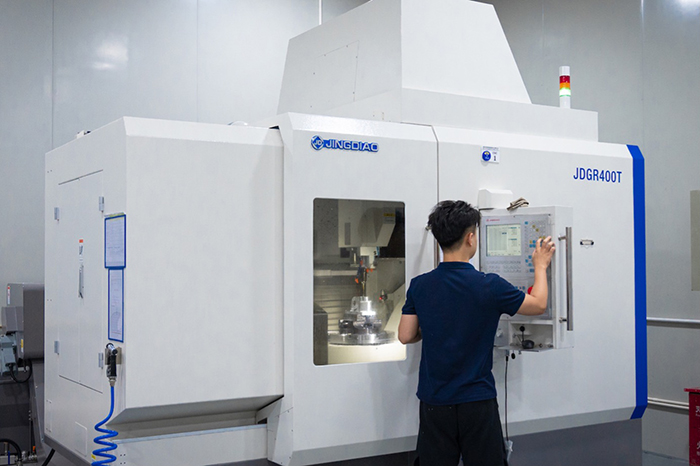
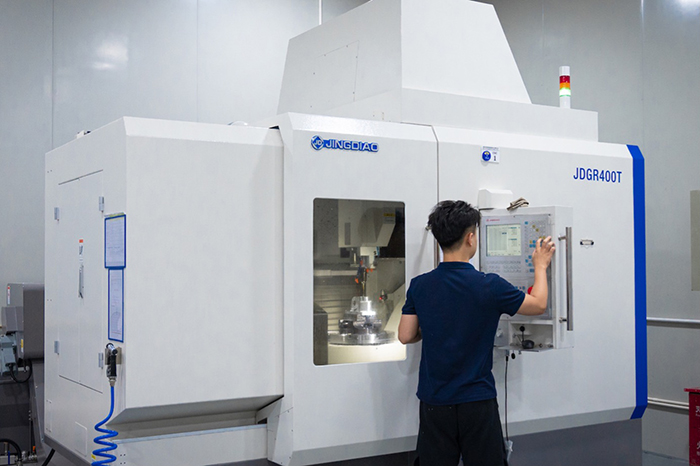
WayKen runs a direct-manufacturing model from its own factory in Shenzhen, China. Over more than 20 years in business, they have built roughly 5,000 m² of shop space packed with dozens of CNC machines (3-, 4-, and 5-axis mills), CNC lathes, wire-cutters, EDM machines, and grinders. Notable equipment includes high-speed 5-axis centers like the Jingdiao JDGR400T (20,000 rpm spindle) and Haas VF-4SS vertical mill (12,000 rpm). These advanced machines provide the raw capability to tackle complex components.
Critically, WayKen’s skilled engineers write CAM code by hand for tricky jobs and carefully plan fixtures and sequences. They monitor every setup and fine-tune parameters based on experience. This hands-on approach pays off; WayKen’s shop routinely handles parts and assemblies that most fast-turn services would refuse such as aerospace structural pieces, precision steel structural components for space instruments, multi-surface drone parts, medical device modules, optical instrument modules, and other high-precision work.
WayKen’s emphasis on control is evident in their case studies. For instance, their work on titanium drone camera housing with dozens of curved, thin-walled surfaces, demonstrates their in-depth approach. The team performs multiple flips and custom clamping operations to maintain positional accuracy. Specialized T-shaped cutters are used inside cavities and cutting speeds are reduced to meet tight tolerances. These types of solutions require elaborate fixture schematics, customized tooling as well as testing processes that may take longer to set up than standard options; however, they do enable WayKen to deliver products that meet exacting specifications.
Both companies have the same capabilities concerning basic precision; however, Protolabs’ in-house CNC machining has a tolerance of about ±0.005″ (0.130mm), as does WayKen’s standard CNC parts which also average about ±0.005″(0.125mm).
The two providers differ at the extreme end; WayKen has the ability to produce extremely accurate results (i.e., very tight tolerances) when it comes to critical dimensions. This is due to the combination of 5-Axis and High-Speed machining centers with climate-controlled machining. As such, claims to be able to obtain precision equal to that of fine milling shops when it comes to critical features. In practice, WayKen reports critical features to exceptionally tight tolerances down to ±0.005 mm and, in certain cases, even ±0.002 mm on complex parts.
Protolabs’ factories and the network operate under both ISO 9001:2015 and AS9100D quality systems and each product is inspected according to Protolabs’ quality guidelines. WayKen operates under ISO 9001:2015 and IATF 16949 (Automotive). In addition, WayKen conducts an extensive inspection procedure on each part produced, and compares those measurements to the specific GD&T call outs contained in the design specifications utilizing Zeiss CMMs and Optical Comparators. If there are any deviation from these measurement calls out, it will be corrected on site. In essence, WayKen’s manual inspection and adjustment loop in conjunction with environmental control and skilled personnel provides greater assurance of precision than Protolabs when producing the most complex products. Therefore, while both providers deliver acceptable quality on simple runs, WayKen offers better quality when producing parts that require the highest level of precision and/or specialized quality oversight.
The choice between Protolabs and WayKen ultimately comes down to priorities. If speed and ease are paramount; for example, you need quick prototype iterations or a guaranteed fast quote online, Protolabs is likely the better fit. Its instant quoting platform and highly automated workflow minimize delays. Protolabs is also a strong pick if you want maximum consistency on standard materials and features, or if you need rapid turnkey production with minimal customer involvement. Its hybrid model can even scale up via the Protolabs Network while maintaining a single point of contact.
If you require significant engineering support and have parts that are complex and/or made out of un-standard materials, then WayKen may be the way to go. While their method is significantly more labor-intensive to get started than Protolabs’, they provide an additional layer of support by having trained engineers review every detail of each part before processing.
In addition, WayKen excels at producing parts with multiple axes, special tooling/fixed setups, unusual materials and/or extremely tight geometric tolerances. These types of applications often cannot be produced using standard, off-the-shelf automation. As a result, WayKen has become a cost-effective alternative for mid-volume productions of unique/exotic parts due to their large Chinese factory and supply chain.