Why industrial water problems rarely have an off-the-shelf answer.
Every operations leader who has specified a wastewater treatment system has heard some version of the same pitch. The technology is proven. It handles this exact application. Installation takes weeks rather than months.
Sometimes that holds up. Often it does not, and the gap surfaces later as a violation notice, a surcharge, or a system nobody on second shift knows how to keep in spec.
Water resists standardization in a way most plant utilities do not. Compressed air is compressed air. Water is a moving target shaped by influent chemistry, local permit conditions, production scheduling, and whatever the process engineering group changed last quarter. Mid-sized manufacturers feel this most acutely, because they carry the same regulatory exposure as large multinationals while operating from a different playbook on engineering headcount.
The pattern is familiar. A facility runs within its discharge permit for years. Then a process change lands. A new coating line, a switch in cleaning chemistry, a supplier substitution on a degreaser.
Nothing about the treatment system changed. Yet metals begin to break through. Or effluent turbidity climbs. Or the clarifier stops settling the way it used to.
What changed is the water arriving at the front of the system. Chelating agents in a new cleaner will hold copper and nickel in solution through a hydroxide precipitation step that worked perfectly the week before. Surfactants carried over from a rinse tank will destabilize floc formation. The equipment is doing exactly what it was designed to do against an influent that no longer exists.
Two plants in the same sector, running comparable equipment at comparable volumes, can require entirely different treatment approaches. Three variables drive most of that divergence.
Sector benchmarks describe an average that no individual facility actually produces. Source water hardness differs by region. Process chemistry differs by supplier contract. Housekeeping practices differ by plant culture.
A facility with high background sulfate has different precipitation options than one without it. That distinction does not appear anywhere in a sector-level specification.
Categorical standards apply nationally, but the limits that constrain a given plant are frequently local. A publicly owned treatment works sets local limits based on its own capacity, receiving water conditions, and biosolids disposal pathway.
Two plants in different municipalities can face limits that differ by an order of magnitude for the same parameter. One may need polishing to single-digit parts per billion. The other may not need that stage at all.
A continuous process produces a relatively steady hydraulic and organic load. A batch operation produces slugs.
Slug loading is a design problem, not an operating problem. Equalization volume, chemical feed control, and residence time all have to be sized against peak conditions rather than daily averages. A system specified on average flow will fail predictably during the dump.
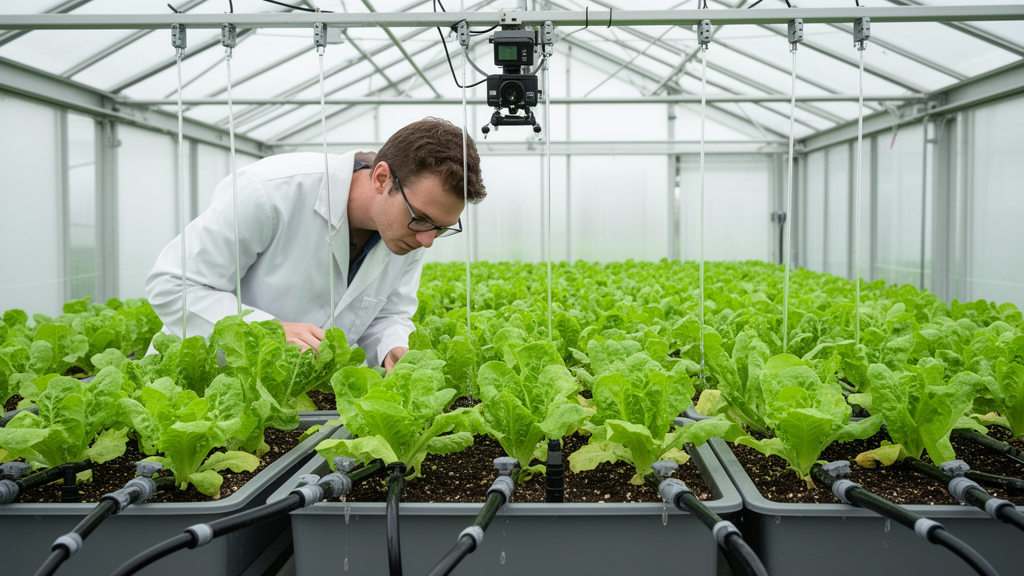
Treatability testing answers questions that a catalog cannot. Bench-scale work characterizes the actual waste stream, screens candidate chemistries against it, and establishes which unit operations are genuinely required.
It also produces information that shapes total cost well beyond the capital line. Sludge volume and dewaterability determine disposal expense for the life of the system. Chemical consumption rates determine the operating budget. Reaction times determine tank sizing.
Testing frequently rules technologies out, which is often the more valuable result. Discovering at the bench that a membrane will foul on a particular stream costs far less than discovering it after commissioning.
That sequence matters more than any single result. As the team at ProChem approaches it, process engineering evaluation and treatability testing precede system design, because laboratory data determines which chemical treatment program and which custom wastewater treatment system will hold under real conditions. Specifying hardware first inverts the order and commits the plant to assumptions nobody verified.
Manufacturing operations change. Product mixes shift, lines get added, chemistries get reformulated. A treatment system designed against a single snapshot of conditions has a short useful life.
Two practices extend it. Mobile pilot systems let a facility run candidate treatment trains on live wastewater at meaningful scale before committing capital. That surfaces operational realities that bench work cannot, including seasonal variation and the effect of upstream upsets.
Staged builds accomplish something similar on the capital side. Sizing tankage and footprint for a future stage while installing only what current conditions require avoids paying for capacity that may never be needed, without stranding the site when it is.
Reuse and zero liquid discharge get discussed more often than they get justified. Both are legitimate, and both are frequently proposed where the economics do not support them.
The cases that pay back tend to share features. Water and sewer costs are high enough that avoided volume matters. Discharge surcharges are significant. Water supply is constrained by drought, allocation, or permit conditions. Or the recovered stream has value, as with metals recovery or reusable process chemistry.
The cases that do not pay back also share features. Cheap water and sewer. Ample permit headroom. A concentrate stream with no economical disposal path, which is the constraint that stalls more zero liquid discharge projects than any other.
Regulatory direction belongs in that calculation. Facilities discharging to a municipal system operate under limits that get revisited as conditions change, and the EPA’s national pretreatment program describes how those local limits are developed and enforced. A project that looks marginal against today’s permit can look different against the one arriving in three years.
A short list separates vendors from partners.
What testing will you perform on our actual wastewater, and what will the report contain? Which technologies did you evaluate and reject, and why? How does the system respond when influent moves outside design conditions?
Who operates and maintains this, and what training comes with it? What are the consumable and sludge disposal costs at design flow? If our process changes in two years, what can be adapted and what has to be replaced?
Vague answers to specific questions are themselves an answer.
Water treatment is a process engineering problem wearing equipment procurement clothing. The equipment matters, but it is downstream of the chemistry, the permit, and the production schedule.
Facilities that treat it as a purchase tend to buy twice. Facilities that treat it as an engineering exercise tend to buy once and keep operating within permit when conditions shift.