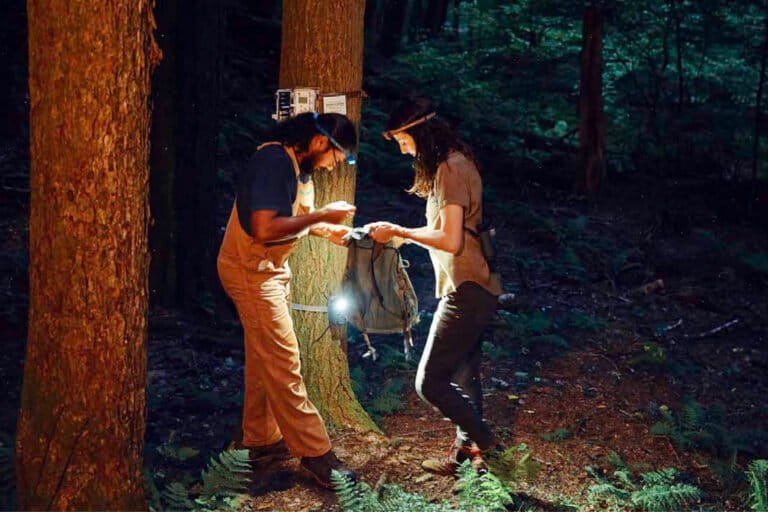
From above, an intact forest can look reassuringly complete. A satellite image may show an unbroken canopy, a block of green still standing amid plantations, roads or logged land. For many conservation programs, that view has become the starting point for measurement. If the canopy remains, the forest is often treated as if much of its ecological value remains as well. The forest itself may tell a more complicated story. Birds, insects, frogs and primates divide the day among them. Some call at dawn, others at night. Some occupy narrow frequency bands; others fill the background with a steady rasp. A forest that looks intact can still lose part of this living structure. The canopy may close after logging. Carbon may remain on a balance sheet. The animal community may not return in the same form. Garnet Pitta. Photo by Hanyrol Hanyzan Ahmad Sah A new paper in Global Change Biology, by Zuzana Buřivalová and colleagues, examines that problem through sound. The study describes the Soundscape Baselines Project, an effort to record the acoustic signatures of some of the world’s remaining intact forests before those reference points become harder to find. The idea is straightforward. To know whether a forest has changed, one needs to know what it sounded like before the change. That baseline is not only a technical convenience. It is a guard against a familiar problem in conservation: each generation tends to accept the nature it first encountered as normal. Daniel Pauly called this shifting baseline syndrome…This article was originally published on Mongabay