
The start of June marked the beginning of the Atlantic Hurricane season, and U.S. utilities are making final preparations before any storms make landfall.
The National Oceanic and Atmospheric Administration (NOAA) has predicted a “below-normal” hurricane season for the Atlantic basin this year, with a 35% chance of a near-normal season, a 10% chance of an above-normal season, and a 55% chance of a below-normal season. The agency forecast a total of 8-14 named storms with winds of 39 mph or higher. Of those, between 3-6 are forecast to become hurricanes (winds of 74 mph or higher), including 1-3 major hurricanes (Category 3, 4, or 5 with winds of 111 mph or higher).
On the other end of the country in the central Pacific basin, NOAA predicts a 70% chance of an above-normal season, a 20% chance of a near-normal season, and a 10% chance of a below-normal season. The agency is forecasting a total of 5-13 tropical cyclones across the central Pacific, which is located north of the equator between 140°W and the International Date Line. A near-normal season has four or five tropical cyclones, which include tropical depressions, tropical storms, and hurricanes.
Tropical Storm Amanda formed last Wednesday in the Pacific Ocean, marking the first tropical cyclone of the season, which began May 15. Amanda was located about 1,505 miles (2,420 kilometers) west-southwest of the southern tip of the Baja California peninsula of Mexico, according to the Miami-based weather center. With the center of the storm at sea, the cyclone posed no immediate threat to land.

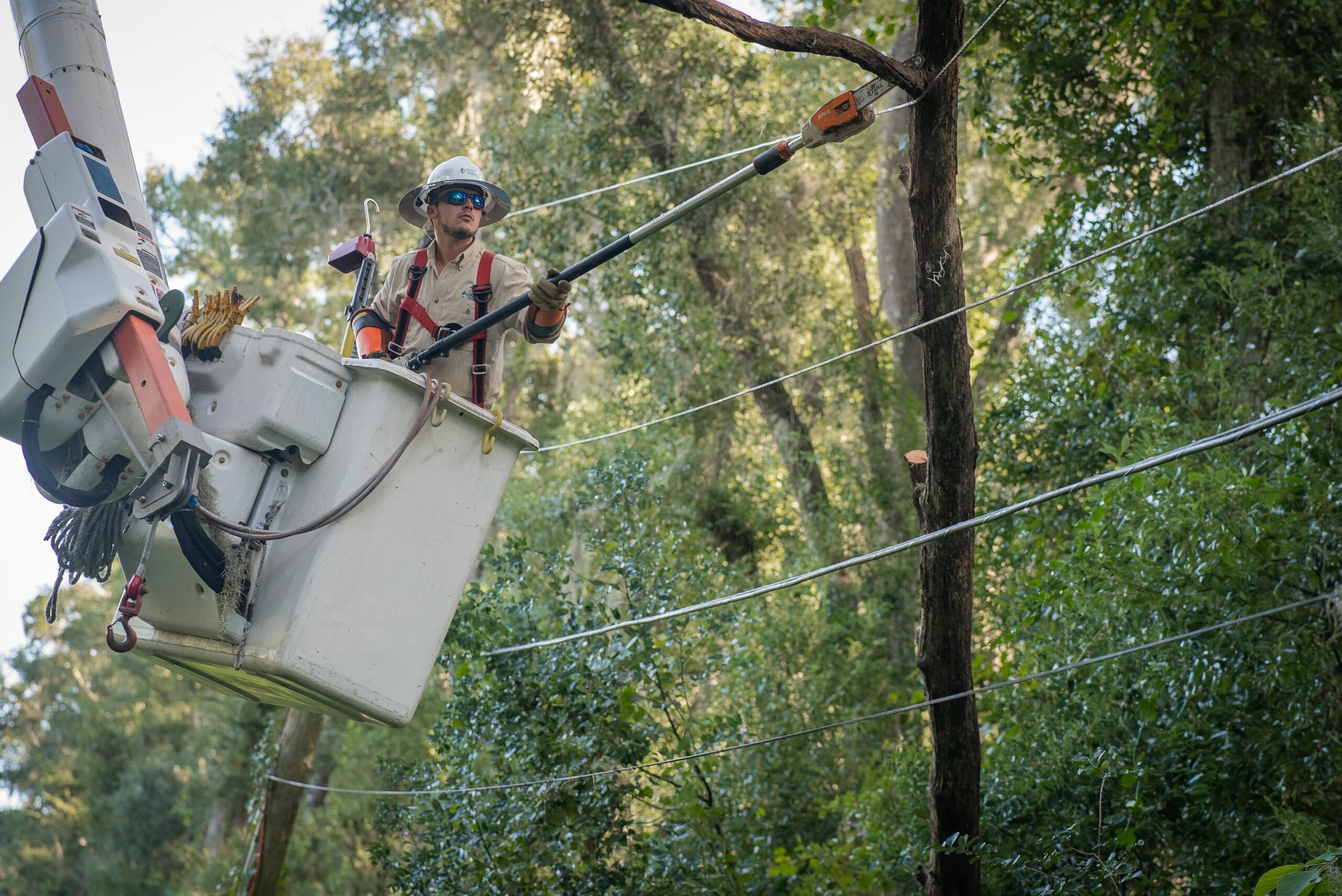
Richmond-headquartered Dominion Energy Virginia is continuing its year-round storm preparation efforts to strengthen the grid, reduce power outages, and shorten restoration times. The company’s storm preparation work includes regularly trimming trees near power lines, burying lines in the most outage-prone areas, and replacing older utility poles to better withstand major storms. Fallen trees and limbs are the leading cause of storm-related power outages, the utility noted.
Through its Strategic Underground Program, Dominion Energy has buried about 2,900 miles of outage-prone power lines in Virginia, including about 300 miles in the last year. The program has reduced the annual outage time for customers served by buried lines from 8 hours to 2 minutes. During major storms, the program has also reduced restoration times by up to 50% for all customers, the utility claims.
Through its Mainfeeder Hardening Program, the company has replaced more than 8,000 older utility poles and hardened over 350 miles of power lines in Virginia. The program has reduced average annual outage time by 44% for customers in these areas, according to Dominion.
“We know how important reliable power is for our customers, especially in the summer heat,” said Ed Baine, Dominion Energy’s executive vice president of utility operations and president of Dominion Energy Virginia. “We prepare year-round to prevent storm damage, reduce outages, and shorten restoration times after major storms. Year-round preparation strengthens the reliability of our service and delivers real benefits for our customers.”
In addition to year-round work to minimize storm damage and outages, Dominion Energy employees conduct regular training and drilling exercises to prepare for hurricane season. This includes joint exercises with other utilities and regular coordination with state and local emergency response agencies.
This hurricane season marks two years since Hurricane Helene in 2024, the most damaging storm in Georgia Power’s history. Throughout the storm’s path, damage to the grid’s infrastructure was so severe that crews were rebuilding rather than simply reconnecting. There were nearly 12,000 power poles broken, over 5,800 transformers damaged, 1,500 miles of downed power lines, and over 345 transmission structures rebuilt or repaired. Advanced smart–grid technology supported remote restoration, enabling crews to restore service to more than 1 million customers within the first five days despite “widespread devastation,” the utility said.
Georgia Power is continuing to strengthen grid reliability through its Grid Investment Program, investing $1.3 billion in system upgrades over the past three years. In 2025, the company completed more than 100 distribution projects and advanced 25 major transmission improvements. These upgrades include smart–grid technology, stronger infrastructure, and undergrounding.
“The work we’ve done to strengthen and modernize our grid is directly improving how we prepare for and respond to hurricanes,” assessed Tami Barron, senior vice president of distribution at Georgia Power. “These investments are reducing outages and helping us restore power faster, even in the most challenging conditions, as we saw during Hurricane Helene. That progress is critical as we enter another active storm season, and it is made possible by our team of highly skilled employees who are among the best in the industry and who train year-round to respond safely, efficiently, and with a strong commitment to our customers when it matters most.”
PSEG Long Island said it is prepared for hurricane season and to meet peak electrical demand during extreme heat in the coming months.
Across Long Island, New York, and the Rockaways, PSEG Long Island has prepared the electric infrastructure by focusing on substation and transmission and distribution improvements, as well as by performing circuit and equipment inspections using helicopters and infrared technology. Since 2014, PSEG Long Island has storm-hardened more than 1,400 miles of distribution circuits with stronger poles, stronger wire, and narrower crossarms that deflect falling tree limbs more easily.

From the first quarter of 2025 through the first quarter of 2026, the sections of circuits that are storm-hardened have seen a 45% reduction in damage-related outages compared to the rest of the distribution system, the utility said.
PSEG Long Island has also utilized FEMA funding to install 8,500 “automatic branch line reclosers” on many of its distribution circuits, bringing the total count of automatic branch line reclosers up to 10,000 units across the electrical system by the end of the year.
The Duke Energy Foundation is awarding $500,000 through the 2026 Helping Emergency Response Organizations (HERO) Grant Program to help South Carolina communities be prepared for the impacts of severe weather. More than 30 organizations are receiving grants of up to $20,000 each. The grants will fund training, “life-saving” equipment, and technology identified as needs following severe weather events – all aimed at aiding weather-related disaster planning and recovery efforts.
“Duke Energy is proud to work alongside first responders when severe weather hits, and a critical part of emergency response is preparation,” shared Tim Pearson, Duke Energy’s South Carolina president. “We strive to help fill the gaps in emergency preparedness our communities have, and hope that these grants can help emergency managers, first responders, and community leaders better prepare to protect and help our communities.”
Past grant recipients were able to help fill the gaps in emergency preparedness.
In Dorchester County, HERO funding supported the launch of a Cut & Toss Team to clear debris and restore emergency access during severe weather. When Winter Storm Fern brought down limbs across key routes, the team cleared priority roadways – reducing delays and easing pressure on fire, rescue, and public works crews.
In Anderson County, Hurricane Helene in 2024 created dozens of hazardous road closures at once, quickly stretching emergency resources. Using a $15,000 HERO grant, the county purchased a fully stocked traffic‑control trailer with cones, barriers, and portable speed bumps. The centralized trailer allows crews to quickly mobilize and secure multiple sites at the same time. The investment proved valuable again during Winter Storm Fern in 2026, when crews quickly blocked unsafe routes and warned motorists as conditions worsened.
In Oconee County, HERO funding supported the addition of a second shelter trailer, allowing officials to operate two warming shelters simultaneously – including one equipped for residents with special medical needs.
This article contains reporting from the Associated Press.