
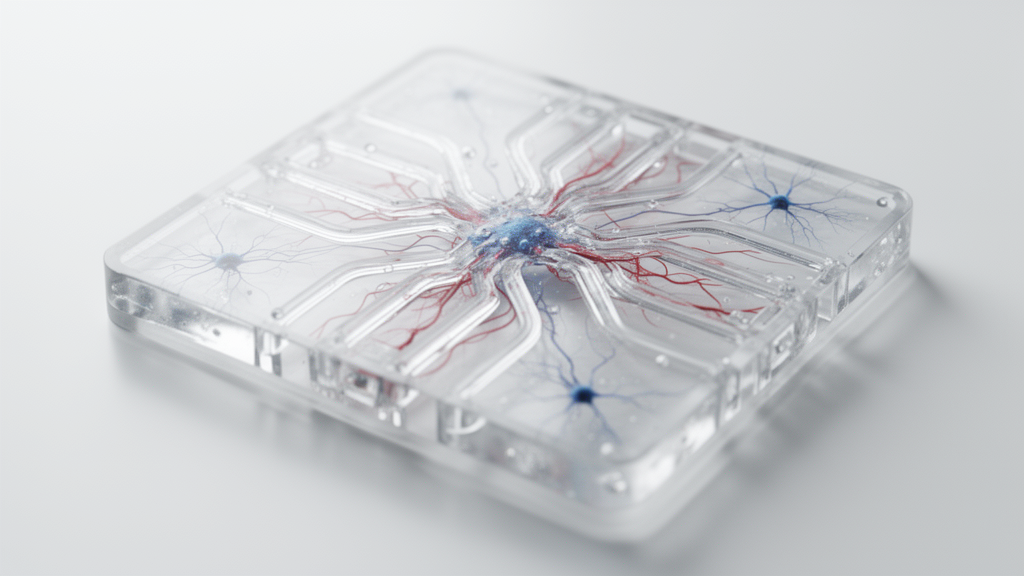
Microfluidic brain-on-chip and neurovascular unit models provide a compartmentalized, human-relevant framework to evaluate the combined impacts of HIV infection and substance use disorders on the central nervous system, according to a recent review published in Fluids and Barriers of the CNS. The authors synthesize recent advances in organ-on-chip technology, emphasizing how these platforms address critical methodological bottlenecks in examining blood-brain barrier dysfunction, viral dissemination, and sustained neuroinflammation.
NeuroHIV remains a substantial driver of chronic neuroinflammation and neurocognitive impairment among individuals living with HIV. Substance use disorders frequently exacerbate these clinical outcomes by modifying immune activation patterns, neurovascular function, and therapeutic drug exposure within brain tissue. Investigating these complex interactions has historically been constrained by the limitations of traditional laboratory models, which struggle to replicate the nuanced dynamics of the human neurovascular unit.
Existing experimental methodologies present distinct advantages alongside notable technical boundaries across infection biology research. Brain organoids, while enabling cellular resolution of human viral-host interactions, are typically avascular. Consequently, organoids lack essential physiological characteristics, such as functional blood-brain barrier dynamics, fluid shear stress, and strict compartmentalization between circulating blood and neural tissue, which are critical for measuring viral entry and central nervous system drug penetration.
In contrast, microfluidic blood-brain barrier and neurovascular unit platforms integrate measurements of endothelial activation, leukocyte transmigration, barrier integrity, glial responses, and neuronal injury within a single controlled system. These microengineered environments permit researchers to mimic dynamic fluid flow, reproduce physiological concentration gradients, and examine leukocyte trafficking across cellular interfaces with high experimental control.
The review details how brain-on-chip architectures align directly with pressing questions in NeuroHIV infection biology.
Furthermore, incorporating substance use exposures into microfluidic platforms establishes a translational mechanism to probe viral protein interactions with drugs of abuse. These controlled settings allow investigators to directly observe altered blood-brain barrier transport, evaluate CNS pharmacologic exposure for antiretroviral therapies, and test candidate adjunctive interventions designed to mitigate barrier damage and neurocognitive decline.
Looking toward future technical integration, the authors highlight the convergence of vascularized neural tissues and brain organoid components within microfluidic systems. However, they emphasize that transitioning these models from experimental proof-of-concept demonstrations into standardized, dependable research tools will require establishing reproducible, biologically meaningful readouts tailored specifically to neurovascular integrity and viral neuropathogenesis.
In comparing laboratory systems, the review notes that animal models, Transwell systems, brain organoids, and microfluidic neurovascular platforms provide complementary strengths. However, these distinct platforms differ considerably in their capacity to capture human cellular complexity, fluid perfusion, barrier function, immune cell trafficking, and controlled concentration gradients.
The authors emphasize that NeuroHIV and substance use disorders act synergistically to promote blood-brain barrier dysfunction, immune trafficking, and chronic neuroinflammation. Capturing this combined pathology requires platforms capable of monitoring central nervous system immune-glial crosstalk alongside viral or viral-protein exposure. By incorporating these intersecting variables, researchers can better investigate the mechanisms driving HIV-associated neurocognitive disorders and determine how substance exposures exacerbate ongoing neurovascular impairment.
Ultimately, the researchers stress that NeuroHIV-focused studies must advance beyond technical proof-of-concept demonstrations. Establishing standardized, biologically meaningful readouts is essential to transform brain-on-chip and neurovascular platforms into robust experimental tools. Such validated readouts must directly address central nervous system viral persistence, cellular reservoir biology, and antiretroviral drug exposure, thereby creating a reliable framework to evaluate novel therapeutic candidates and adjunctive treatment strategies across varied experimental conditions.
Subject of Research: 3D microfluidic models of the neurovasculature in NeuroHIV and substance use research
Article Title: 3D microfluidic models of the central nervous system and neurovasculature: relevance and future directions for NeuroHIV and substance use research
Article References: Sisto, I., Zhang, D., Baloch, A. R., Jaijyan, D., & Hu, W. (2026). 3D microfluidic models of the central nervous system and neurovasculature: relevance and future directions for NeuroHIV and substance use research. Fluids and Barriers of the CNS. https://doi.org/10.1186/s12987-026-00908-0
Image Credits: AI Generated
DOI: 10.1186/s12987-026-00908-0
Keywords: NeuroHIV, blood-brain barrier, neurovascular unit, brain-on-chip, substance use disorders, microfluidics, neuroinflammation, leukocyte transmigration, endothelial activation, viral persistence, viral reservoirs, antiretroviral therapy, brain organoids, fluid shear stress, neurocognitive impairment, translational models
Tags: antiretroviral therapyBlood-brain barrierbrain organoidsbrain-on-chipEndothelial activationFluid Shear Stressleukocyte transmigrationmicrofluidicsneurocognitive impairmentneuroHIVNeuroinflammationNeurovascular unitsubstance use disorderstranslational modelsviral persistenceviral reservoirs