
In the latest twist in a tale that surely had GeoGuessr enthusiasts on edge, Canadian utility BC Hydro has relocated the mysterious new island spotted on the Williston Reservoir that “vanished” shortly after it was first reported. The story attracted national media attention from CBC and Newsweek, as well as the curiosity of power industry publications like this one.
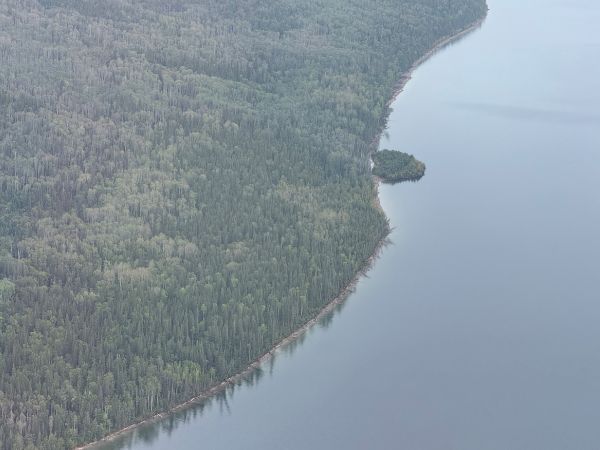
BC Hydro was first made aware of the landmass on August 13, 2026, after it was spotted by boaters on or around July 21 west of Finlay Bay, about 100 kilometers (about 62 miles) from the W.A.C. Bennett Dam in British Columbia, Ontario. Spanning roughly two football fields and sporting mature-looking vegetation, the island, which had never appeared in the utility’s satellite imagery prior to this, caught the attention of not just local anglers and recreationists, but anyone conscious of the chaos such marshy masses could cause if they got too close to critical hydropower infrastructure, like BC Hydro spokesperson Bob Gammer.
Initially incredulous, Gammer and his team confirmed the island’s existence via satellite just in time for the thing to disappear once more. It was not observed again until it was identified in its current location in a remote part of the reservoir on Monday, August 31, in an image dated about two weeks prior.

“The island appears to be intact from when it was first spotted,” Gammer told Factor This, noting the floating fascination has also been eyeballed by small aircraft and other third parties on the water. “[It] has come to rest against the shoreline on the Ospika Arm of the reservoir, about 30 kilometers northwest of the location where it was first discovered near Finlay Bay.”
Thankfully, its new location is farther away from the W.A.C. Bennett Dam, a massive earth-fill dam on the Peace River. Its Gordon M. Shrum Generating Station has the capacity to generate more than 13,000 gigawatt-hours (GWh) annually, capable of supplying more than a third of British Columbia’s electricity demand. The island is now approximately 280 kilometers north of Prince George, B.C.

According to Gammer, vegetated islands of this size are rare, but they can occur in large reservoirs like Williston, particularly when water levels are higher than they have been for some time. BC Hydro opened the W.A.C. Bennett Dam’s spillways in June and July to release excess water from high winter snowpacks and saturating summer rainfall.
“Higher reservoir levels can lift material that may have been lodged along the shoreline or in a sheltered bay, allowing it to float free,” the utility spokesperson cautioned. “While its origin is unknown, one possible explanation is that it formed from logs and woody debris that accumulated over many years in a sheltered shoreline area. As that material gradually decomposed, vegetation may have taken root, creating a stable mass of interconnected debris and plant growth.”
BC Hydro says it’s fine for the public to approach the island by boat or drone and take photos, but climbing aboard the landmass is not advisable for safety reasons.

If the island remains intact, and that’s not a guarantee, its movement is likely influenced more by wind than by reservoir currents.
Based on the information available to BC Hydro, the utility does not expect any operational impacts given the island’s increasing distance from the dam.
“We appreciate the considerable interest this story has generated across Canada and internationally. While the appearance of a floating vegetated island of this size is unusual, our focus is on monitoring the situation and ensuring public safety,” Gammer concluded.
That said, as a general public service announcement, if you spot any new islands in a hydropower utility’s waterways, they’d appreciate a heads-up.