Dental implants have become one of the most predictable interventions in modern dentistry, yet the decision to load a fresh implant with a functional crown within days of placement remains one of its riskiest gambits. A new experimental study published in Heliyon by Sérgio Alexandre Gehrke and colleagues tackles that gamble with unusual statistical rigor, asking a deceptively simple question: when an implant is loaded immediately, does the number on the torque wrench or the resonance-frequency meter actually tell the clinician whether the implant will hold still enough to integrate? The answer, distilled from forty titanium implants driven into standardized synthetic bone of four different densities, is a cautionary one. Both measurements rise with bone density and correlate strongly with each other, but neither fully captures the mechanical behavior of the bone–implant system once real forces are applied. Bone density itself, the authors conclude, is the decisive variable.
The biological stakes are well established. Primary stability, the mechanical engagement between an implant’s threads and the surrounding bone at the moment of placement, is the foundation on which osseointegration is built. If the interface moves more than roughly 50 to 150 micrometers during the first days of healing, the body tends to respond not by knitting mineralized bone to the titanium surface but by laying down fibrous tissue instead, a soft interlayer that dooms the implant to loosening and eventual failure. Immediate loading protocols, in which a provisional crown is attached almost as soon as the implant is screwed in, compress the treatment timeline and delight patients, but they expose this fragile interface to functional forces before any biological anchoring exists. The question is therefore not whether micromovement occurs, since it always does, but whether its magnitude stays below the threshold that biology can tolerate.
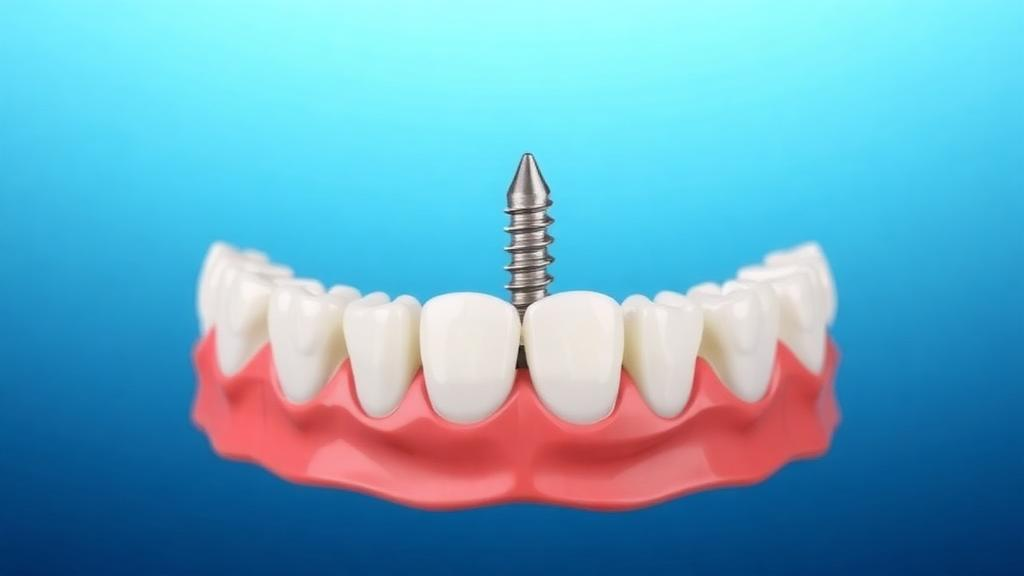
To answer that question under controlled conditions, the team turned to rigid polyurethane blocks certified by ASTM as standard materials for testing orthopedic devices. Four density configurations were used, spanning the range described by the classic Lekholm and Zarb classification: a block with a thin one-millimeter cortical shell over very low-density medullary foam simulating Type IV bone, two intermediate configurations with thicker cortices and denser cores approximating Types III and II, and a fully cortical block representing Type I. Into each block the researchers placed ten identical conical titanium implants, 4.0 millimeters in diameter and 13 millimeters long, with progressive thread depth and a self-tapping apical tip. Every implant was inserted with a computerized torque meter at a fixed speed of 25 revolutions per minute, a quasi-static protocol chosen to minimize frictional heating and dynamic artifacts, ensuring that any differences between groups reflected the substrate rather than the surgical technique.
The results followed a clear gradient. Insertion torque climbed from an average of 40.5 newton-centimeters in the softest blocks to 66.7 newton-centimeters in the fully cortical ones, with statistically significant differences between nearly all density groups. Initial stability quotients, measured with the Osstell resonance-frequency device in two perpendicular directions, rose from about 64 in the two softest groups to 75 and 78 in the denser ones. Notably, the two softest groups were statistically indistinguishable from each other in both torque and ISQ, a detail that would prove consequential. These numbers confirm what clinicians intuitively know: denser bone grips an implant harder and vibrates stiffer. But the study’s real contribution lies in what happened next, when the implants were actually loaded.
Each implant received a straight solid abutment topped with a semi-circular metal cap simulating a crown, and the blocks were fixed at an eleven-degree angle to a universal testing machine. Non-axial loads of 100, 150, and 200 newtons were then applied, each held static for five minutes, while the machine recorded displacement with a resolution of one thousandth of a millimeter. The contrast between density groups was dramatic. In the softest configuration, implants shifted an average of 235 micrometers at just 100 newtons, rising to nearly 360 micrometers at 200 newtons, well beyond the critical range associated with fibrous encapsulation. The second group fared better but still drifted past 150 micrometers at the highest load. In the two densest configurations, displacement remained astonishingly low, between roughly 5 and 46 micrometers across the entire loading range, comfortably within the biologically safe zone.
The statistical machinery brought to bear on these data is where the study earns the word advanced in its title. Pearson correlation revealed a strong positive association between insertion torque and ISQ, with a coefficient of 0.88, and simple linear regression showed that torque explained about 78 percent of the variance in ISQ values. Yet Bland–Altman analysis exposed a systematic bias of roughly 20 units between the two scales, and the authors are explicit that the intraclass correlation coefficient of 0.86 should be read only as a descriptive index of numerical consistency, not as evidence that torque and ISQ are interchangeable measures. They represent distinct biomechanical constructs: one captures the friction and cutting resistance of insertion, the other the vibrational stiffness of the assembled implant.
Perhaps the most clinically actionable result comes from the receiver operating characteristic analysis, which tested how well insertion torque predicts an ISQ of at least 70, a value often cited as favorable for immediate loading. The discriminative performance was excellent, with an area under the curve of 0.93, and the optimal cutoff landed at approximately 52 newton-centimeters, delivering 89 percent sensitivity and 85 percent specificity. But here the study delivers its sharpest warning. In the low-density groups, implants that exceeded 50 newton-centimeters of torque were not consistently associated with low displacement under load. A soft-bone implant can post respectable torque and ISQ numbers at placement and still move far more than biology permits once chewing forces arrive. Torque and ISQ, in other words, can overestimate primary stability precisely where clinicians most need honest numbers.
The team also quantified the relationship between movement and vibration directly. Post-load ISQ values fell as applied force increased, with the steepest declines in the low-density groups, and correlation analysis across all conditions revealed a very strong negative relationship between displacement and ISQ, with a coefficient of −0.93. An inverse linear regression model, ISQ equal to 78.5 minus 0.047 times displacement in micrometers, explained 86 percent of the variance, implying that every additional 20 micrometers of movement costs roughly one ISQ unit. The authors candidly note that because the data pool observations from groups with very different densities, this strong correlation may be partly inflated by between-group differences, and should be read as describing the overall trend across bone configurations rather than a homogeneous law within each density.
The limitations are acknowledged with unusual transparency. Synthetic polyurethane, however well standardized, cannot reproduce the anisotropic, heterogeneous, and biologically dynamic character of living jawbone; it knows nothing of remodeling, vascularization, or healing. Only one implant macrogeometry and surface treatment were tested, the loading was quasi-static rather than the cyclic, multidirectional chaos of mastication, and the consecutive application of increasing loads to the same specimens introduces a possible carryover effect. The measured displacement also reflects the whole experimental system, including deformation of the substrate and compliance of the apparatus, not purely the micromotion at the implant–bone interface. Within those constraints, the clinical message survives intact: bone density and substrate configuration dominate the mechanical response of immediately loaded implants, and insertion torque and ISQ should be treated as complementary indicators rather than isolated predictors. Future work, the authors suggest, should add cyclic and oblique loading, varied implant designs, finite element modeling, and eventually clinical trials to test whether the 52 newton-centimeter threshold holds in living bone.
Subject of Research: Biomechanical evaluation of dental implant primary stability and micromovement under immediate loading in synthetic bone of varying densities
Article Title: Advanced statistical evaluation of dental implant stability under immediate loading in synthetic bones of different densities: Correlation, regression, and predictive performance analyses
Article References: Gehrke, S. A., Lijnev, A., Skiba, T. H. I., Coura, G., Mello, B. F., Formiga, M. D. C., Scarano, A., & de Val, J. E. M. S. (2026). Advanced statistical evaluation of dental implant stability under immediate loading in synthetic bones of different densities: Correlation, regression, and predictive performance analyses. Heliyon, 12(15), Article e45553. https://doi.org/10.1016/j.heliyon.2026.e45553
Image Credits: AI Generated
DOI: Not provided
Keywords: dental implants, immediate loading, osseointegration, insertion torque, implant stability quotient, bone density, micromovement, synthetic bone, ROC analysis, biomechanics, polyurethane bone models, primary stability
Tags: BiomechanicsBone Densitydental implantsimmediate loadingimplant stability quotientinsertion torquemicromovementosseointegrationpolyurethane bone modelsprimary stabilityROC analysissynthetic bone