
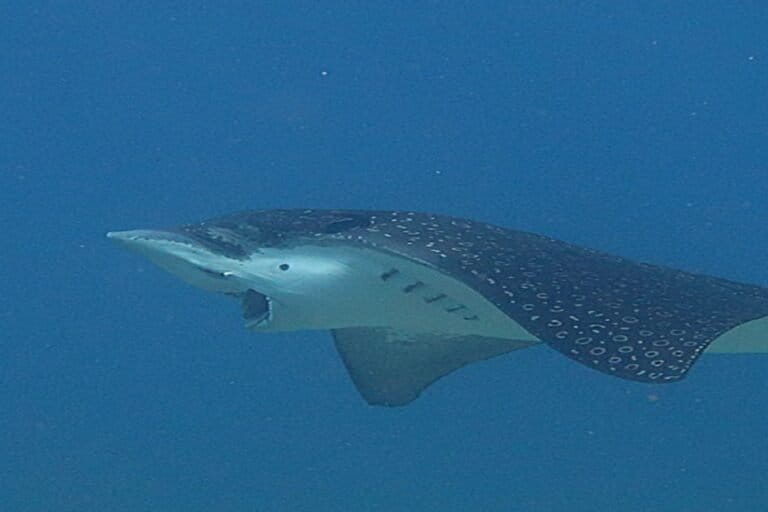
What does an eagle ray’s menu look like? An artificial intelligence model can now answer that question by listening to sounds of the animal chewing on food. Scientists developed the machine learning algorithm to detect the sound of shells being crushed by predators when they feed on mollusks. According to a study published in the journal Ecological Informatics, the model can also identify the prey based on the sounds. “A lot of animals out there, particularly marine animals, have the unique ability to crush shells open,” Matt Ajemian, assistant research professor at the Harbor Branch Oceanographic Institute at Florida Atlantic University in the U.S. who was part of the research, told Mongabay in a video interview. “But we don’t know how much they eat and what they feed on. So we wanted to see if we could remotely detect an animal feeding on a clam versus a gastropod.” Keeping track of predator-prey interactions is crucial, especially in the face of rapidly changing marine habitats. Monitoring what and how much larger predators are eating is important to understand the resources they depend on and subsequently plan effective conservation action. Conversely, it’s also critical to have data on how much pressure there is on shellfish populations that serve as prey. “For example, in a clam bed or seagrass bed, we want to know how much prey is removed by a predator over the course of a year,” Ajemian said. However, gathering this data is not an easy task. Tracking predators underwater is…This article was originally published on Mongabay