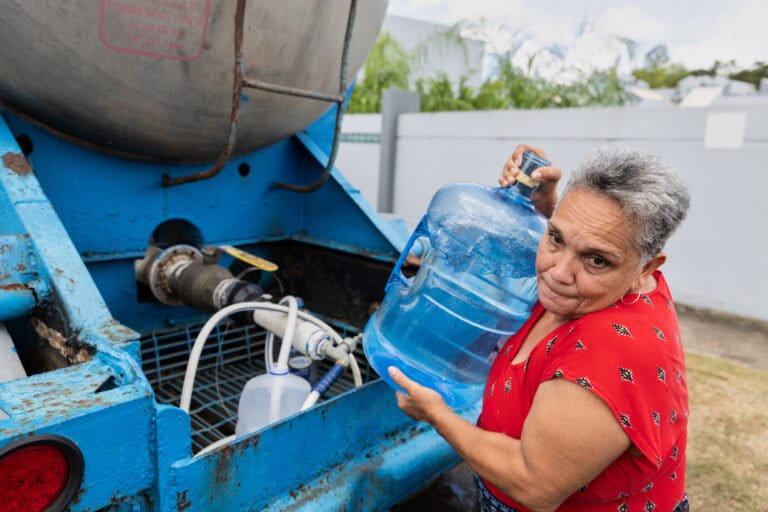
A severe drought that has parched the Caribbean since May 2026 was fueled by human-induced climate change, according to a recent study. The rapid analysis was released by World Weather Attribution (WWA), a global network of researchers who analyze the influence of climate change in extreme weather events. In the Caribbean, the wet season runs from May-June to November-December. The researchers found that rising global temperatures due to human-induced climate change reduced rainfall during the early wet season, between May and July, by approximately 6% in Jamaica and 9% in Puerto Rico. They estimated this drop in rainfall has made extreme dry spells 40% more likely in Jamaica and 30% more likely in Puerto Rico, compared to the pre-industrial climate that was 1.4°C (2.5°F) cooler. “This three-month rainfall event was, in today’s climate, approximately a 1-in-50-year event in Puerto Rico, and a 1-in-30-year event in Jamaica,” Theodore Keeping, a climate researcher at Imperial College London and coauthor of the scientific report, said during a virtual WWA press briefing. The impacts of the drought have accumulated across the region. San Juan International Airport in Puerto Rico registered its driest April-to-August period in 70 years, with precipitation 64% below average , according to Paul Miller, an atmospheric scientist at the University of Georgia, U.S., during the WWA briefing. The study added that critically depleted reservoirs forced Puerto Rican authorities to implement 48-hour rotating water rationing, affecting 180,000 water service customers in the capital region. Meanwhile, Jamaica placed seven parishes under strict water prohibition…This article was originally published on Mongabay