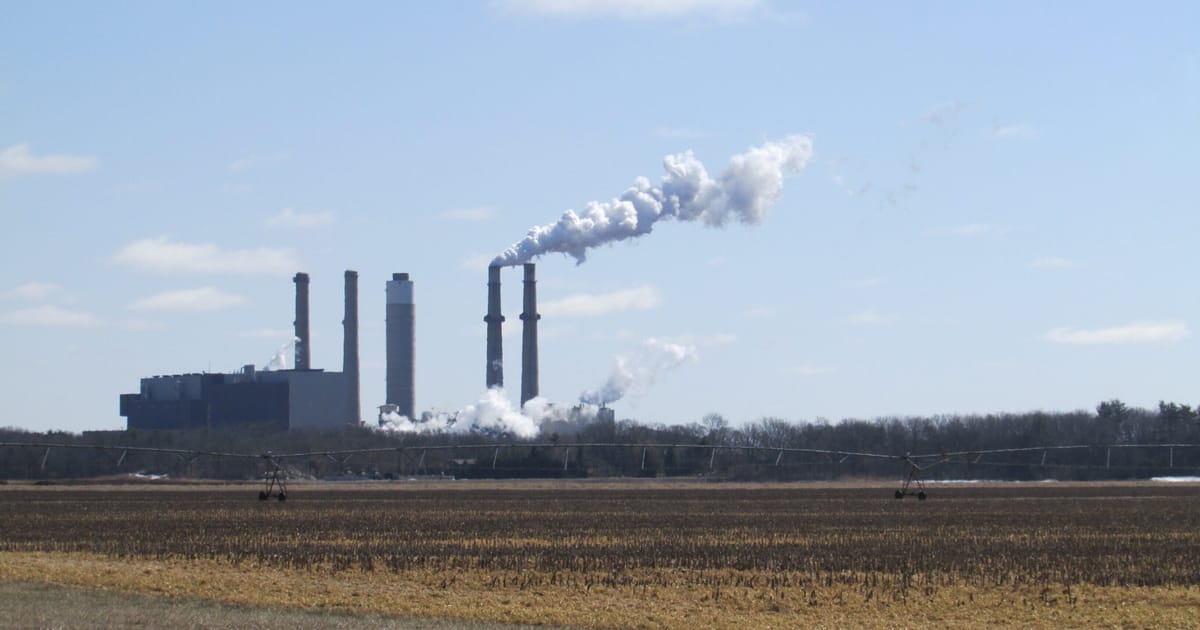

The Trump administration has spent the last year demanding that old, inefficient coal plants stay online long past their retirement dates. But one of those plants in Indiana hasn’t operated in months and won’t be able to until costly repairs are completed — undermining federal officials’ claims that their mandates will make energy more affordable and are needed to avoid imminent blackouts.
The Trump administration first ordered Indiana’s R.M. Schahfer coal plant to continue running in December, just a week before its scheduled closure date and after regulators had already determined that the polluting plant was not needed to keep the region’s lights on. That 90-day emergency must-run order was reupped on March 23.
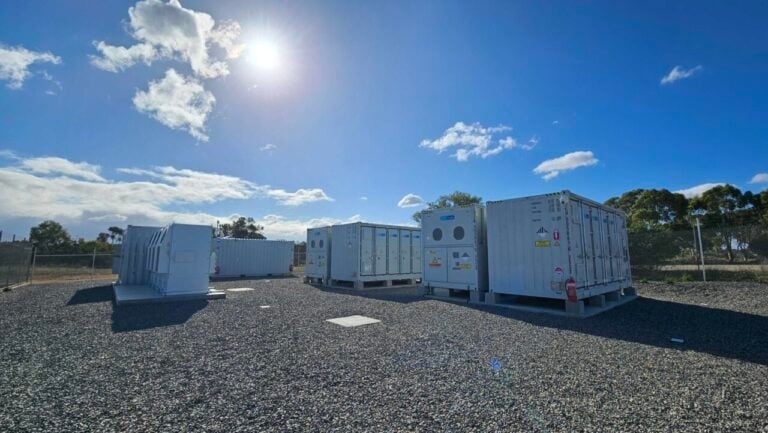
Yet the coal plant has been offline for repairs since the end of February and is not expected to start running again until this fall, facility owner Northern Indiana Public Service Co. (NIPSCO) told regional grid operators at their May 19 hearing on summer electricity reliability. The utility added that even without that energy, it is well positioned to meet power demand this summer, in large part thanks to new wind, solar, and batteries.
In other words, “the coal-fired units couldn’t produce electricity for an emergency even if one existed, which it doesn’t,” Sameer Doshi, a senior attorney for the nonprofit law firm Earthjustice, said in a statement. Earthjustice is asking a federal appeals court to overturn the administration’s must-run orders for Schahfer and another Indiana plant.
In total, President Donald Trump’s Department of Energy has ordered seven fossil-fueled plants in the U.S. to run past their retirement dates — sometimes against the wishes of the plant owners themselves — in an unprecedented flex of authority under Section 202(c) of the Federal Power Act. The agency had previously used that power only temporarily on request from utilities and grid operators facing immediate energy threats.
Even before the DOE ordered Schahfer to stay online, one of the plant’s two coal-fired units had been out of service since July 2025 because of mechanical failures.
The plant’s other coal-fired unit operated in January, helping to meet demand during Winter Storm Fern. But it has been offline since Feb. 28 for “planned maintenance,” NIPSCO said. Both units are scheduled for a “tentative” return to service by October, company officials said at the May forum held by the Midcontinent Independent System Operator (MISO), which operates the grid covering parts of 15 states.
“The conditions of both those units were deteriorated,” said NIPSCO environmental compliance director Rockey Pollard, citing issues with equipment including boiler feed pumps and tubes, as well as last summer’s turbine failure.
The company told MISO that “significant boiler and turbine work” is ongoing on both coal units, which were built in the mid-1980s.
Households and businesses will bear the financial brunt of propping up coal plants, which are more expensive to operate than newer gas plants and renewable energy paired with batteries. In March, federal regulators approved NIPSCO’s request to spread the costs of the coal plant repairs among customers across the north and central part of the region. The company has estimated that keeping the coal plant running past its 2025 scheduled retirement date will cost more than $1 billion through the end of 2027.
Local residents are also furious that, along with keeping Schahfer running, NIPSCO is planning to develop a massive data center, and a gas plant to power it, adjacent to the coal plant.
While experts are skeptical of the Trump administration’s “energy emergency,” the U.S. does need to quickly build generation as data centers, factories, and electrification spike demand. But many say wind and solar — the cheapest, fastest types of electricity to build — are the solution, rather than running antiquated coal plants.
NIPSCO, for one, explained at the hearing that it expects to have a surplus of power in the coming months, and that it had added three wind farms, eight solar farms, and two battery sites to its portfolio since 2021. Across MISO’s territory, solar and storage plants — along with some new gas plants — mean that the grid is prepared to meet demand over the summer, the organization reported this month.
“The DOE is using 202(c) emergency orders to force ratepayers to pay for plant rebuilds at this dilapidated coal plant even as Indiana regulators have already approved replacement power plants, which are now operating or under construction,” Earthjustice’s Doshi said.
The Trump administration is expected to issue yet another 90-day must-run order at Schahfer when the current one expires on June 21. But as NIPSCO has made clear, the coal plant won’t be able to run at all for the entirety of that three-month mandate.
Consumers “will be forced to absorb additional costs for facilities that are not delivering any benefit to the public,” Kerwin Olson, executive director of the Indiana consumer watchdog group Citizens Action Coalition, said in a statement. “Ratepayers need relief, not further punishment.”
{
if ($event.target.classList.contains(‘hs-richtext’)) {
if ($event.target.textContent === ‘+ more options’) {
$event.target.remove();
open = true;
}
}
}”
>
Kari Lydersen
is a contributing reporter at Canary Media who covers Illinois, Indiana, and Wisconsin.